


Efficient server rack cooling is the backbone of any well-functioning data center. As servers generate immense heat during operation, maintaining optimal temperatures is critical to prevent hardware failures, ensure consistent performance, and extend the lifespan of equipment. From understanding the unique cooling needs of high-density racks to exploring advanced techniques like liquid cooling and airflow management, this guide dives into practical solutions and emerging trends. Whether you’re managing a small server room or a sprawling data center, the right cooling strategy can save energy, reduce costs, and future-proof your infrastructure.
Introduction to Server Rack Cooling
Why Effective Cooling is Critical for Server Performance
Servers are the backbone of modern businesses, powering everything from websites to critical applications. However, these machines generate substantial heat during operation, and without effective cooling, this heat can quickly become a major problem. Excessive heat can cause hardware components like CPUs, GPUs, and memory modules to overheat, leading to performance throttling, unexpected shutdowns, or even permanent damage. Over time, consistent exposure to high temperatures can degrade sensitive components, reducing their lifespan and increasing the frequency of replacements or repairs.
Moreover, overheating can disrupt business operations, resulting in costly downtime and potential data loss. For example, a server crash during peak business hours could lead to lost revenue and damage to a company’s reputation. Effective cooling not only prevents these risks but also ensures that servers operate at peak efficiency, delivering consistent performance. By investing in robust cooling solutions, businesses can safeguard their IT infrastructure, reduce maintenance costs, and maintain uninterrupted operations.
Common Challenges in Managing Heat in Server Rooms
Server rooms face a variety of heat management challenges, many of which stem from the increasing demand for high-density computing. One of the most significant issues is uneven airflow, where certain areas of the room—often referred to as “hotspots”—experience higher temperatures due to poor ventilation or improper equipment placement. These hotspots can strain cooling systems and lead to localized overheating, even if the overall room temperature appears stable.
Another challenge is the rising heat output of modern servers. As businesses adopt more powerful hardware to handle growing workloads, the amount of heat generated per rack increases, making traditional cooling methods less effective. This is particularly problematic in high-density data centers, where racks are packed tightly together, leaving little room for airflow optimization.
Energy inefficiency is another critical concern. Outdated cooling systems often consume excessive amounts of electricity, driving up operational costs and contributing to a larger carbon footprint. Additionally, limited physical space in server rooms can make it difficult to implement advanced cooling solutions, such as hot aisle/cold aisle containment or in-row cooling units.
Finally, the cost of electricity required to power cooling systems is a growing burden for many organizations. As energy prices rise, businesses must find ways to balance effective cooling with cost efficiency. Addressing these challenges requires a multi-faceted approach that includes strategic planning, the adoption of modern cooling technologies, and regular maintenance to ensure systems operate at peak performance.
Understanding Cooling Needs for Different Server Racks
High-Density Server Requirements: Managing Heat in Compact Spaces
High-density server racks are engineered to maximize computing power within a limited physical footprint, making them a popular choice for modern data centers. However, this compact design creates significant heat management challenges. The more servers packed into a single rack, the greater the heat output, which can lead to hotspots and strain cooling systems. These hotspots not only compromise the performance of individual servers but can also disrupt the overall efficiency of the data center.
To address these challenges, businesses must adopt advanced cooling strategies tailored to high-density environments. Liquid cooling, for instance, is highly effective in these setups as it directly targets heat at its source, using water or specialized coolants to dissipate heat more efficiently than air-based systems. In-row cooling is another viable option, where cooling units are placed between racks to minimize the distance between the heat source and the cooling system. This targeted approach ensures that heat is removed quickly and effectively.
Proper airflow management is equally critical in high-density racks. Using blanking panels to seal unused rack spaces prevents hot air from recirculating into the cold air stream, maintaining consistent temperatures across the rack. Additionally, implementing hot aisle/cold aisle configurations can further optimize airflow, ensuring that cool air reaches server intakes while hot air is efficiently expelled. Without these measures, high-density racks are at risk of overheating, which can lead to hardware failures, reduced reliability, and increased maintenance costs.

Matching Cooling Solutions to Rack Types and Configurations
The cooling needs of server racks vary significantly based on their type and configuration, making it essential to choose solutions that align with specific requirements. Open-frame racks, for example, are designed to allow maximum airflow and are often used in environments where passive cooling methods, such as increased room ventilation, are sufficient. These racks rely on the overall room cooling system to maintain optimal temperatures, making them a cost-effective option for low to medium-density setups.
Enclosed racks, on the other hand, present a different set of challenges. These racks, which often feature doors and side panels, can trap heat if not properly ventilated. Active cooling systems, such as rack-mounted air conditioners or liquid cooling units, are typically required to manage the heat generated in these setups. Rack-mounted cooling systems provide localized temperature control, ensuring that heat is dissipated directly at the source.
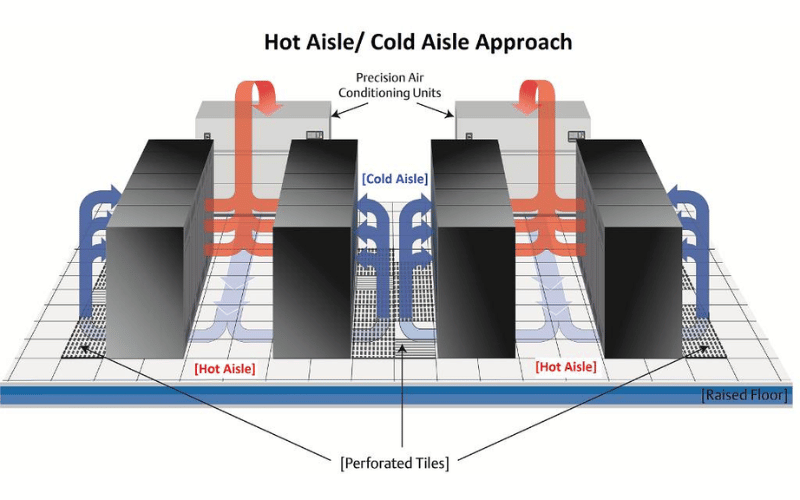
The placement of racks within the server room also plays a crucial role in determining cooling efficiency. Hot aisle/cold aisle configurations are a widely adopted strategy, where racks are arranged to create separate pathways for hot and cold air. This setup prevents air mixing and allows cooling systems to operate more efficiently. For data centers with limited space, close-coupled cooling solutions, such as rear-door heat exchangers, can be an effective way to manage heat without requiring extensive room modifications.
By aligning cooling solutions with the specific type and configuration of server racks, businesses can achieve better temperature control, reduce energy consumption, and extend the lifespan of their equipment. This tailored approach ensures that cooling systems are not only effective but also cost-efficient, meeting the unique demands of each data center environment.
Cooling Techniques for Server Racks
In-Row Cooling Explained: How It Works and When to Use It
In-row cooling is a highly targeted cooling method designed to address the heat challenges of modern server environments. In this setup, cooling units are strategically placed between server racks, ensuring that the cooling system is as close as possible to the heat source. This proximity minimizes the time and distance required to remove heat, resulting in faster and more efficient temperature regulation. Unlike traditional room-based cooling, which cools the entire space, in-row cooling focuses on specific rows of racks, making it particularly effective in high-density configurations.
One of the key advantages of in-row cooling is its ability to reduce hotspots, which are common in densely packed server environments. By delivering cool air directly to the servers and extracting hot air immediately, this method ensures consistent temperature control across the row. Additionally, in-row cooling systems are modular, allowing businesses to scale their cooling capacity as server loads increase. This makes them an excellent choice for modular data centers or facilities that anticipate future growth. However, the initial investment in in-row cooling systems can be higher than traditional methods, so it’s best suited for environments where precision and scalability are critical.

Close-Coupled Cooling Solutions: Benefits for High-Efficiency Cooling
Close-coupled cooling systems are designed to bring cooling as close as possible to the heat source, offering a localized and highly efficient approach to temperature management. These systems include technologies like rear-door heat exchangers, which are mounted directly on the back of server racks, and rack-mounted cooling units that integrate seamlessly with the rack structure. By capturing and dissipating heat directly at the rack level, close-coupled cooling eliminates the need to cool the entire room, significantly reducing energy consumption.
One of the primary benefits of close-coupled cooling is its energy efficiency. By targeting heat at its source, these systems minimize energy waste and reduce the workload on larger, room-based cooling systems. This localized approach also provides precise temperature control, making it ideal for environments with varying server loads or high-density configurations. For example, in a data center with mixed-density racks, close-coupled cooling can be deployed selectively to address the most heat-intensive areas without overcooling the entire space. Additionally, this method extends the lifespan of server components by maintaining stable operating conditions, reducing the risk of overheating and hardware failure.

Core Cooling Methods for Data Centers: Air-Based vs. Liquid-Based Systems
Data centers rely on two primary cooling methods: air-based and liquid-based systems, each with its own strengths and limitations.
Air-Based Cooling:
Air-based cooling is the most traditional and widely used method, relying on fans and air circulation to remove heat from server racks. Techniques like hot aisle/cold aisle configurations, where racks are arranged to separate hot and cold airflows, enhance the efficiency of air-based systems. Raised floors with perforated tiles can further optimize airflow by directing cool air to specific areas. While air-based cooling is cost-effective and relatively easy to implement, it can struggle to keep up with the heat output of high-density racks. The limited cooling capacity of air systems makes them less suitable for modern data centers with compact, high-performance servers.
Liquid-Based Cooling:
Liquid-based cooling, on the other hand, offers superior heat removal capabilities by using liquids like water or specialized coolants to absorb and dissipate heat. Methods such as liquid immersion cooling, where servers are submerged in non-conductive liquids, and direct-to-chip cooling, which delivers coolant directly to heat-generating components, are highly effective for managing extreme heat loads. Liquid cooling systems are particularly advantageous in high-density or high-performance computing environments, where air-based systems may fall short. Although liquid cooling requires a higher upfront investment and more complex infrastructure, its unmatched efficiency and ability to handle extreme heat make it an increasingly popular choice for modern data centers.
Choosing between air-based and liquid-based cooling depends on several factors, including server density, energy costs, and long-term scalability. While air-based systems remain a practical option for low to medium-density setups, liquid cooling is quickly becoming the go-to solution for high-performance and future-proof data centers.
Airflow Management in Server Rooms
Effective Airflow Strategies: Preventing Hot Spots and Recirculation
Proper airflow management is critical for maintaining consistent cooling and preventing hot spots in server rooms. Hot spots occur when certain areas of the room experience higher temperatures due to poor ventilation or improper airflow patterns. These localized heat zones can strain cooling systems and lead to equipment overheating if not addressed.
One effective strategy to combat hot spots is the use of blanking panels. These panels are installed in unused rack spaces to block the flow of hot air from recirculating into the cold air stream. Without blanking panels, hot air can mix with cool air, reducing the efficiency of the cooling system and creating uneven temperatures. By sealing these gaps, blanking panels ensure that cool air is directed only to active equipment, improving overall cooling performance.
Cable management is another essential component of airflow optimization. Tangled or poorly routed cables can obstruct airflow, creating barriers that trap heat and disrupt the cooling process. Using cable trays, ties, and organizers to route cables neatly along the sides or rear of racks helps maintain unobstructed airflow. Regularly inspecting and adjusting cable layouts can further prevent airflow blockages and ensure consistent cooling.
Additionally, perforated floor tiles play a vital role in directing cool air to where it’s needed most. These tiles are typically placed in cold aisles, allowing cool air from underfloor systems to rise and flow directly into server intakes. Strategic placement of these tiles ensures that cool air is evenly distributed across the room, reducing the risk of hot spots. Combining these techniques—blanking panels, cable management, and perforated tiles—creates a robust airflow management system that maintains even temperatures and prevents overheating.

Impact of Airflow on Rack Cooling: Optimizing Cold and Hot Aisle Containment
Cold and hot aisle containment systems are among the most effective methods for optimizing airflow and improving rack cooling efficiency. These systems are designed to separate cold air from hot air, preventing them from mixing and ensuring that cooling resources are used as efficiently as possible.
In a cold aisle containment setup, cold aisles are enclosed with barriers, such as doors or panels, to ensure that cool air is directed exclusively into server intakes. This containment prevents cool air from dissipating into the room and ensures that it reaches the equipment that needs it most. By focusing cooling efforts on the cold aisle, businesses can reduce energy waste and improve the effectiveness of their cooling systems.
Conversely, hot aisle containment isolates the hot air expelled from servers, directing it away from the room and into return ducts or exhaust systems. This separation ensures that hot air does not mix with the cold air, which would otherwise force cooling systems to work harder to maintain desired temperatures. Hot aisle containment is particularly effective in high-density server environments, where heat output is significant and requires precise management.
The benefits of cold and hot aisle containment extend beyond temperature control. By maintaining a clear distinction between cold and hot airflows, these systems reduce the workload on cooling equipment, leading to lower energy consumption and operational costs. Additionally, containment systems enhance the performance of high-density racks by ensuring that each server receives the cooling it requires, even in demanding environments.
Implementing these airflow management strategies—whether through blanking panels, cable organization, perforated tiles, or aisle containment—ensures that server rooms operate efficiently and reliably. By optimizing airflow, businesses can prevent overheating, reduce energy costs, and extend the lifespan of their equipment.
Comparative Analysis of Cooling Solutions
Pros and Cons of In-Row Cooling: Efficiency, Cost, and Scalability
In-row cooling is a targeted cooling solution designed to address the specific needs of high-density server environments. By placing cooling units directly between server racks, this method minimizes the distance between the heat source and the cooling system, ensuring efficient heat removal. This proximity allows for precise temperature control, making in-row cooling particularly effective in environments with fluctuating workloads or high-performance computing demands.
One of the key advantages of in-row cooling is its efficiency. By focusing cooling efforts directly on the heat source, it reduces energy loss compared to room-based cooling systems, which must cool the entire space. This targeted approach also helps prevent hotspots, ensuring consistent temperatures across all racks. Additionally, in-row cooling systems are modular, allowing businesses to scale their cooling capacity as server demands grow. This adaptability makes them an excellent choice for data centers that anticipate future expansion or changes in server density.
However, in-row cooling does come with some drawbacks. The initial cost of these systems is often higher than traditional cooling methods, as they require specialized equipment and installation. Furthermore, their complexity may lead to increased maintenance requirements, which can add to operational costs over time. Despite these challenges, the long-term benefits of in-row cooling—such as energy savings, improved performance, and scalability—often outweigh the upfront investment, making it a valuable solution for high-density and mission-critical data centers.
Evaluating Other Cooling Solutions: CRAC Units, Liquid Cooling, and More
When considering alternatives to in-row cooling, several options stand out, each with its own strengths and limitations.
Computer Room Air Conditioning (CRAC) Units:
CRAC units are a traditional and widely used cooling solution that relies on air circulation to manage server room temperatures. These systems are relatively affordable and easy to install, making them a popular choice for small to medium-sized data centers. However, CRAC units can struggle to maintain efficiency in high-density setups, where the heat output exceeds their cooling capacity. Additionally, they often require significant energy to cool the entire room, leading to higher operational costs in larger facilities.
Liquid Cooling:
Liquid cooling is an advanced method that uses water or specialized coolants to remove heat directly from servers. Techniques such as direct-to-chip cooling, where coolant is delivered directly to heat-generating components, and liquid immersion cooling, where servers are submerged in non-conductive liquids, offer unparalleled heat removal capabilities. Liquid cooling is particularly effective in environments with extreme heat loads, such as high-performance computing or AI workloads. While the upfront cost of liquid cooling systems is higher than air-based methods, their energy efficiency and ability to handle high-density configurations make them a long-term investment for modern data centers.
Rear-Door Heat Exchangers:
Rear-door heat exchangers are a form of close-coupled cooling that attaches directly to the back of server racks. These systems capture and dissipate heat as it exits the rack, preventing it from entering the room and mixing with cool air. Rear-door heat exchangers are highly efficient and can be integrated into existing setups with minimal disruption. However, they may not be suitable for all rack configurations and require careful planning to ensure compatibility.
Raised Floor Systems:
Raised floor systems are a passive cooling solution that enhances airflow by creating an underfloor plenum for distributing cool air. Perforated tiles are strategically placed to direct air to specific areas, improving cooling efficiency. While raised floors are cost-effective and easy to implement in new data centers, they may not provide sufficient cooling for high-density racks and are less effective in retrofitted spaces.
Choosing the Right Solution
Each cooling solution has its own set of advantages and limitations, making it essential to evaluate them based on specific data center requirements. Factors such as server density, energy efficiency, budget, and scalability should guide the decision-making process. For example, CRAC units may be suitable for smaller, low-density setups, while liquid cooling or in-row cooling is better suited for high-density, high-performance environments. By carefully assessing these options, businesses can select a cooling strategy that meets their current needs while preparing for future growth.
Choosing the Right Cooling Strategy for Your Setup
Factors to Consider: Rack Density, Room Size, and Budget
Selecting the most effective cooling strategy for your server setup requires a detailed evaluation of several critical factors, including rack density, room size, and budget. Each of these elements plays a significant role in determining the type of cooling system that will best meet your needs.
Rack Density:
Rack density refers to the number of servers housed within a single rack. High-density racks, which are common in modern data centers, generate substantial heat due to the compact arrangement of powerful hardware. These setups often require advanced cooling solutions like liquid cooling or in-row cooling, which are designed to handle extreme heat loads efficiently. Liquid cooling, for example, directly targets heat sources using water or specialized coolants, while in-row cooling places cooling units between racks to minimize heat buildup. For low to medium-density racks, traditional air-based systems, such as CRAC units or raised floor configurations, may be sufficient to maintain optimal temperatures.
Room Size:
The size of the server room also influences the choice of cooling strategy. Larger server rooms benefit from hot aisle/cold aisle containment systems, which separate hot and cold airflows to improve cooling efficiency. These systems are particularly effective in facilities with multiple rows of racks, as they prevent air mixing and reduce the workload on cooling equipment. In smaller server rooms, where space is limited, close-coupled cooling solutions like rear-door heat exchangers or rack-mounted cooling units are often more practical. These systems provide localized cooling directly at the rack level, ensuring efficient heat removal without requiring extensive room modifications.
Budget Constraints:
Budget is a key consideration when selecting a cooling strategy. While advanced solutions like liquid cooling and in-row cooling offer superior performance, they come with higher upfront costs for equipment and installation. However, these systems often deliver long-term savings through reduced energy consumption and lower maintenance requirements. On the other hand, traditional air-based systems are more affordable to implement initially but may incur higher operational costs over time due to their energy inefficiency in high-density environments. Balancing upfront investment with long-term operational costs is essential to choosing a solution that aligns with both your technical and financial goals.
By carefully evaluating these factors—rack density, room size, and budget—you can identify a cooling strategy that ensures optimal performance, energy efficiency, and scalability for your specific setup.
How to Calculate Cooling Requirements for Your Server Racks
Accurately calculating cooling requirements is essential to ensure that your cooling system can handle the heat output of your servers without overcooling or wasting energy. The process involves several key steps:
-
Determine Heat Output in BTUs:
Start by identifying the total power consumption of your servers, which is typically listed in their specifications. Power consumption is measured in watts. To convert this value into BTUs (British Thermal Units), multiply the total wattage by 3.41. For example, if your servers consume 10,000 watts, their heat output would be 34,100 BTUs. -
Account for Cooling System Efficiency:
Not all cooling systems operate at 100% efficiency. Some systems may lose cooling capacity due to heat recirculation or inefficiencies in airflow management. To account for this, add a buffer to your calculated BTU requirement. For instance, if your system operates at 85% efficiency, you may need to increase your cooling capacity by 15% to compensate. -
Factor in Room-Specific Variables:
Consider additional factors that may impact cooling performance, such as airflow patterns, insulation, and the presence of external heat sources. For example, server rooms with poor insulation or inadequate airflow may require additional cooling capacity to maintain stable temperatures. Similarly, the placement of racks within the room can affect airflow efficiency—hot aisle/cold aisle configurations can help optimize cooling performance. -
Select the Appropriate Cooling System:
Once you have calculated the total BTU requirement, choose a cooling system that matches or exceeds this capacity. For high-density setups, consider advanced solutions like liquid cooling or in-row cooling, which are designed to handle significant heat loads. For lower-density environments, traditional air-based systems may suffice.
By following these steps, you can ensure that your cooling system is properly sized to meet the demands of your server room. This not only prevents overheating but also optimizes energy efficiency, reducing operational costs and extending the lifespan of your equipment.
Future Trends in Rack Cooling Technologies
Innovations in Cooling Solutions: Liquid Cooling, Immersion Cooling, and AI-Driven Systems
The future of rack cooling is being driven by advanced technologies designed to meet the growing demands of high-performance computing and data-intensive workloads. Among these, liquid cooling is emerging as a leading solution due to its ability to efficiently remove heat directly from components. Unlike traditional air-based systems, liquid cooling uses water or specialized coolants to absorb and dissipate heat more effectively. Techniques such as direct-to-chip cooling, where coolant is delivered directly to processors and GPUs, and cold plate cooling, which uses metal plates to transfer heat to the liquid, are becoming increasingly popular in high-density data centers. These methods not only improve cooling efficiency but also reduce energy consumption by minimizing the reliance on large-scale air conditioning systems.
Immersion cooling takes liquid cooling a step further by submerging entire servers in non-conductive liquids. This approach provides unparalleled heat dissipation, as the liquid comes into direct contact with all heat-generating components. Immersion cooling eliminates the need for fans and other traditional cooling infrastructure, significantly reducing noise, energy usage, and maintenance requirements. It is particularly well-suited for environments with extreme heat loads, such as AI training clusters or cryptocurrency mining operations, where traditional methods may fall short.
AI-driven cooling systems are also revolutionizing the way data centers manage heat. These systems leverage real-time data from sensors placed throughout the facility to monitor temperature, humidity, and airflow. Using machine learning algorithms, AI can dynamically adjust cooling output, optimize airflow patterns, and predict maintenance needs before issues arise. For example, AI can identify hotspots and redirect cooling resources to those areas, ensuring consistent performance while minimizing energy waste. As data centers become more complex, AI-driven systems will play a critical role in maintaining efficiency and reliability.
Sustainability in Data Center Cooling: Reducing Energy Consumption and Carbon Footprint
As the global focus on sustainability intensifies, data centers are under increasing pressure to reduce their environmental impact. Cooling systems, which account for a significant portion of a data center’s energy consumption, are a key area for improvement. One of the most promising trends in sustainable cooling is the adoption of free cooling, which uses outside air or water to lower temperatures without relying on energy-intensive air conditioning. This method is particularly effective in regions with cooler climates, where natural resources can be leveraged to maintain optimal server temperatures.
Liquid cooling systems also contribute to sustainability by offering higher energy efficiency compared to traditional air-based methods. While the initial implementation of liquid cooling may require more resources, the long-term energy savings are substantial. For example, liquid cooling systems can operate at higher temperatures than air-based systems, reducing the need for additional cooling infrastructure and lowering overall energy usage. Additionally, the heat generated by liquid cooling systems can be captured and repurposed for other applications, such as heating nearby buildings, further enhancing their environmental benefits.
The integration of renewable energy sources into cooling operations is another critical step toward sustainability. Solar, wind, and hydroelectric power are increasingly being used to offset the energy demands of data center cooling systems. By combining renewable energy with efficient cooling technologies, data centers can significantly reduce their carbon footprint while meeting the growing demand for computing power. These sustainable practices not only align with global climate goals but also help businesses reduce operational costs and improve their reputation as environmentally responsible organizations.
Adapting to Increasing Data Center Demands: Scalable and Modular Cooling Options
As data centers continue to expand to accommodate rising workloads, the need for scalable and modular cooling solutions has become more pressing. Traditional cooling systems, which often require significant upfront investment and infrastructure changes, are no longer sufficient to meet the dynamic needs of modern facilities. Instead, businesses are turning to modular cooling systems, which offer flexibility and adaptability.
In-row cooling units and rack-mounted cooling systems are prime examples of modular solutions that allow businesses to add cooling capacity incrementally. These systems can be deployed as needed, enabling data centers to scale their cooling infrastructure in line with server growth. This approach not only reduces initial costs but also ensures that cooling resources are used efficiently, avoiding overcooling or undercooling.
Modular cooling solutions are also well-suited for edge computing environments, where smaller, distributed data centers require compact and efficient cooling systems. These facilities often operate in remote or space-constrained locations, making traditional cooling methods impractical. Modular systems provide the flexibility to adapt to these unique challenges, ensuring consistent performance regardless of location or workload.
In addition to scalability, modular cooling systems support the growing trend of hybrid data centers, which combine on-premises infrastructure with cloud-based resources. As workloads shift between these environments, modular cooling systems can be adjusted to meet changing demands, ensuring optimal efficiency and performance. By focusing on scalability and adaptability, these technologies enable data centers to remain future-proof in an ever-evolving digital landscape.
Practical Tips for Improving Cooling Efficiency
Organizing Cables to Avoid Airflow Obstruction
Effective cable management is a cornerstone of maintaining efficient airflow in server racks. Poorly routed or tangled cables can obstruct the flow of cool air, creating hotspots that compromise cooling performance and increase the risk of overheating. To prevent this, cables should be neatly arranged using cable trays, ties, and organizers. These tools help keep cables secured and routed along the sides or rear of racks, ensuring that airflow paths remain unobstructed.
When designing cable layouts, prioritize separation of power and data cables to reduce electromagnetic interference and improve organization. Use color-coded cables or labels to make identification easier during maintenance, minimizing the time spent on adjustments. Regular inspections are also critical—over time, cables can shift or accumulate, leading to blockages. By periodically reviewing and reorganizing cable layouts, you can maintain optimal airflow and ensure consistent cooling performance.
Additionally, consider implementing vertical cable managers for high-density racks. These systems allow cables to be routed vertically along the sides of the rack, freeing up horizontal airflow space. For larger setups, underfloor or overhead cable trays can further enhance organization while keeping airflow pathways clear. Proper cable management not only improves cooling efficiency but also simplifies maintenance and reduces the risk of accidental disconnections.
Using Blanking Panels to Prevent Air Leakage
Blanking panels are a simple yet highly effective solution for improving cooling efficiency in server racks. These panels are designed to fill unused rack spaces, preventing cool air from escaping and hot air from recirculating into the cold aisle. Without blanking panels, gaps in the rack can disrupt airflow patterns, forcing cooling systems to work harder to maintain desired temperatures.
To maximize the benefits of blanking panels, install them in all unused rack slots, regardless of their size. This ensures that airflow is directed exclusively to active equipment, improving cooling efficiency and reducing energy consumption. For racks with frequent equipment changes, consider using tool-less blanking panels, which can be easily installed or removed as needed.
In addition to blanking panels, brush grommets can be used to seal cable entry points in racks. These grommets prevent air leakage around cables, further enhancing airflow control. By combining blanking panels with other sealing solutions, you can create a more efficient cooling environment that minimizes energy waste and extends the lifespan of your equipment.
Monitoring Temperature and Humidity for Proactive Adjustments
Proactive monitoring of temperature and humidity levels is essential for maintaining stable operating conditions in server rooms. Fluctuations in these parameters can lead to overheating, condensation, or other issues that compromise equipment performance. To address this, deploy temperature and humidity sensors at multiple points within the server room, including intake and exhaust areas of racks. This provides a comprehensive view of environmental conditions and helps identify potential problem areas.
Set thresholds for acceptable temperature and humidity ranges based on industry standards, such as those outlined by ASHRAE (American Society of Heating, Refrigerating, and Air-Conditioning Engineers). For example, ASHRAE recommends maintaining server intake temperatures between 64.4°F and 80.6°F (18°C to 27°C) and relative humidity levels between 40% and 60%. Configure alerts to notify you of deviations from these ranges, enabling quick responses to potential issues.
In addition to monitoring, use the data collected by sensors to make proactive adjustments to your cooling systems. For instance, if sensors detect rising temperatures in a specific area, you can increase airflow, adjust fan speeds, or recalibrate cooling units to address the issue. Advanced monitoring systems with AI-driven analytics can automate these adjustments, optimizing cooling performance in real time.
Finally, consider implementing environmental monitoring software that integrates with your cooling systems. These platforms provide detailed insights into temperature and humidity trends, helping you identify inefficiencies and plan for future upgrades. By actively monitoring and managing environmental conditions, you can prevent overheating, reduce energy costs, and ensure the long-term reliability of your server infrastructure.
Frequently Asked Questions
Q: What are effective cooling techniques for server racks?
A: Effective cooling techniques for server racks include optimizing airflow management, strategically placing cooling units, and using advanced solutions like in-rack cooling systems. Ensure cold air enters at the front of the rack and hot air exits at the back to maintain optimal temperature and humidity levels. Combining these methods helps prevent hotspots and ensures consistent cooling performance.
Q: How does cooling architecture impact server rack cooling?
A: Cooling architecture plays a critical role in server rack cooling efficiency. Implementing strategies like cold aisle containment or hot aisle containment enhances airflow, reduces hotspots, and improves overall cooling performance. A well-designed cooling infrastructure ensures that cooling resources are used effectively, even in high-density environments.
Q: What are the benefits of using close-coupled cooling in server racks?
A: Close-coupled cooling systems maximize efficiency by placing cooling units close to the heat source. These systems direct chilled air to server racks, effectively managing heat loads and preventing hot exhaust air from mixing with cold intake air. This results in precise temperature control and improved cooling performance within the rack enclosure.
Q: How do I calculate the cooling requirements for my server racks?
A: To calculate cooling requirements, determine the total heat load generated by your equipment, typically measured in kilowatts (kW). Multiply the power consumption of your servers (in watts) by 3.41 to convert it to BTUs. Ensure your cooling system can handle this load while accounting for future increases in rack density or additional equipment.
Q: What role does airflow play in effective server rack cooling?
A: Airflow is essential for effective server rack cooling as it ensures cold air reaches the servers and hot air is efficiently expelled. Establish proper airflow paths to prevent hot air from recirculating into intake areas. Techniques like raised floors and perforated tiles can further enhance airflow, ensuring cold air is distributed effectively to maintain optimal temperatures.
Q: What are the common cooling solutions for a small server room?
A: Small server rooms can benefit from cooling solutions like air conditioning units, portable cooling devices, and in-row cooling systems. These options efficiently manage heat generated by servers while maintaining appropriate temperature and humidity levels to protect equipment and ensure reliable operation.
Q: How can I improve cooling efficiency in my server rack enclosure?
A: You can improve cooling efficiency by organizing cables to prevent airflow obstruction, using blanking panels to seal unused rack spaces, and optimizing server placement to enhance airflow. Regularly monitor temperature and humidity levels to make proactive adjustments to your cooling methods as needed.
Q: What is the importance of maintaining temperature and humidity in server racks?
A: Maintaining proper temperature and humidity levels is crucial for the reliability and longevity of server equipment. Excessive heat can cause hardware failures, while high humidity can lead to condensation and corrosion. Regular monitoring and effective cooling systems help mitigate these risks, ensuring stable and efficient operation.
Concluding Summary
Server rack cooling is no longer a one-size-fits-all solution. With options ranging from in-row cooling and liquid immersion to modular and AI-driven systems, businesses have more tools than ever to tackle heat challenges. By aligning cooling strategies with rack density, room size, and budget, and adopting sustainable practices, data centers can achieve both efficiency and scalability. As technology evolves, staying ahead of trends like immersion cooling and renewable energy integration will be key to meeting the growing demands of modern computing while minimizing environmental impact.
