


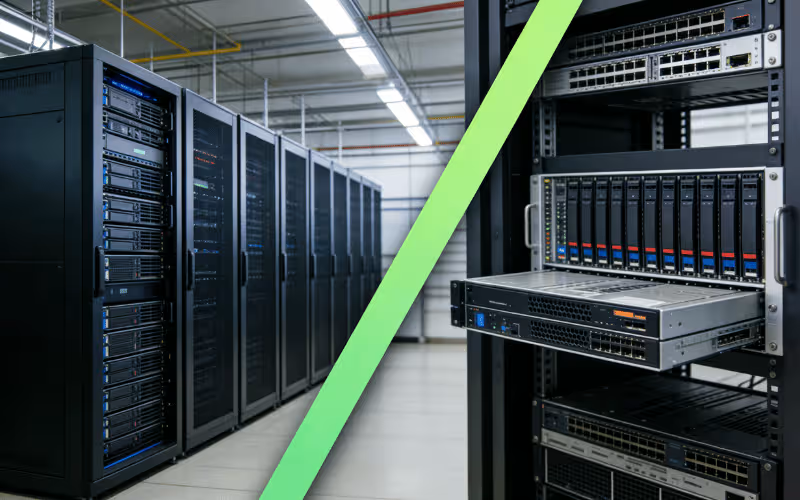
Know the difference between rack and blade servers to better inform your choice between these powerful infrastructure options.
The march toward optimizing every part of IT infrastructure gives businesses lots of options, but makes selecting the best one for them a bit more complex. Where a buyer may have once decided between a simple tower server and a more robust system, now there’s the added consideration of form factors, density, power consumption, and management capabilities.
Two such server options—rack servers and blade servers—share many similarities but are suited to different uses and buyers. Understanding the differences can help you make the choice that’s best for your needs.
Rack Servers Explained
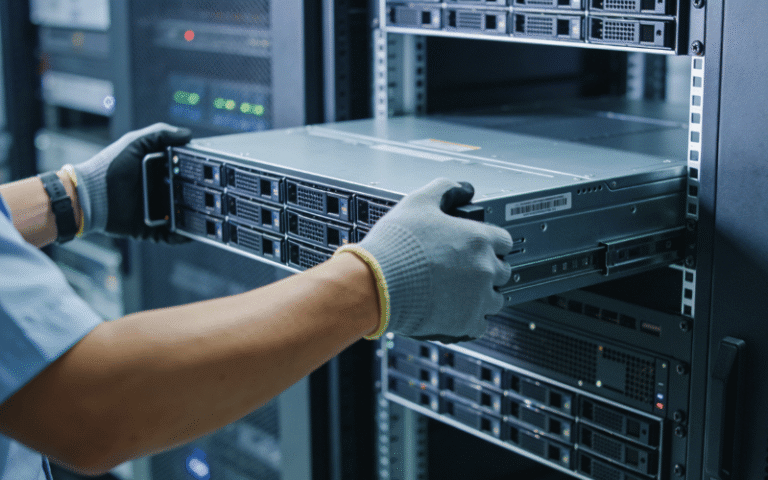
While more and more infrastructure is consolidating, rack servers remain a foundational, self-contained unit. They draw power from individual power supply units (PSUs) and contain all necessary components, such as processors, memory, storage, and networking, in a single chassis that must be mounted in a standard 19-inch server rack.
The main operational advantage of a rack server is its total independence. Each unit is a complete server, making it simple to deploy for specific, varied tasks. This modularity allows for incredible flexibility; you can mix and match different models and brands within the same rack to handle diverse workloads. On the technical side, a rack server has fewer shared dependencies, making troubleshooting straightforward. Maintenance is often easier, as a single server can be powered down and removed without directly impacting others. They also offer more internal expansion slots for additional components.
That said, cabling can become complex, and each server requires its own power and network connections, leading to a “cable spaghetti” situation if not managed carefully. A large deployment of rack servers consumes significant physical space and generates considerable heat, often requiring more robust data center cooling solutions. This is mostly a consideration for those scaling up, as the per-unit cost is generally lower, but the operational costs for power, cooling, and space can increase significantly with scale.
There’s also the management overhead to consider, as each server is an individual entity that needs to be configured, monitored, and maintained separately. While management tools can consolidate these tasks, it lacks the inherent centralization found in other form factors.
Also Read:

Blade Servers Explained
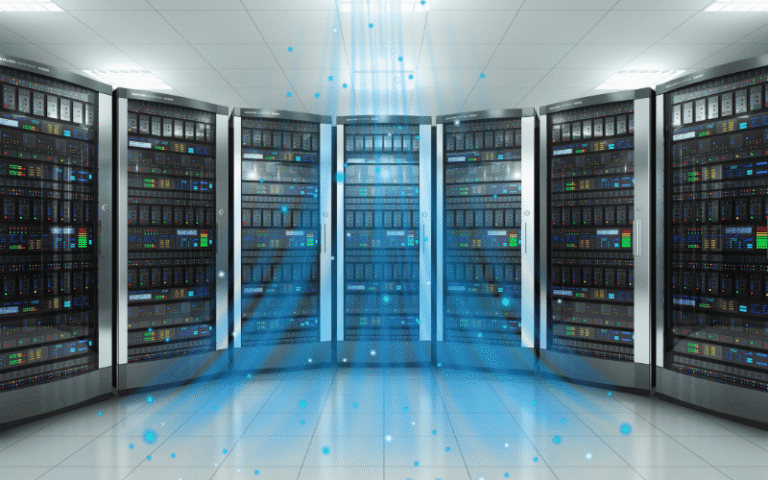
Blade servers are sometimes considered the most efficient option for high-density environments, packaging multiple server “blades” into a single chassis that shares power, cooling, networking, and management. The chassis provides the core infrastructure, and each blade contains the core processing components, such as CPUs, memory, and sometimes storage. The system decides how to allocate shared resources, so you may not need to manage individual power supplies or network switches for each server.
But the combination of shared infrastructure and individual server nodes makes for a complex, integrated system. Most blade systems rely on the chassis to provide redundancy and high-speed interconnects, with the server blades providing the computational horsepower. Centralized management is a key benefit, allowing administrators to control all blades through a single interface, which simplifies deployment and ongoing maintenance.
Compared to rack servers, blades have a smaller physical footprint per server, allowing for extremely high density in a single rack. This consolidation significantly reduces cabling and lowers power consumption per server, yet they still require a specialized chassis. There are variations on that theme, chief among them the disaggregated blade, which allows for even greater flexibility in pooling resources like storage and accelerators across different blades.
Deciding Between Rack and Blade Servers
Blade servers, especially for large enterprises, are a great consolidation option for those interested in but not yet sold on hyperscale infrastructure. A blade chassis lets you dabble in high-density computing with centralized management, still carrying the flexibility to add different types of blades for various workloads. If you operate in a large data center or are in a growth phase of your company, a blade system that consolidates resources will give you the scalability you may need while being cleaner and more power-efficient than a large rack server farm.
When you’re ready to build out a more traditional or mixed-use environment, the expanding array of available rack servers provides both cost-effective and performance-oriented options. Choice can be overwhelming, but there’s something for every business in the evolving future of server technology. For smaller businesses or those with diverse, siloed applications, the simplicity and lower entry cost of rack servers make them an ideal choice.
