


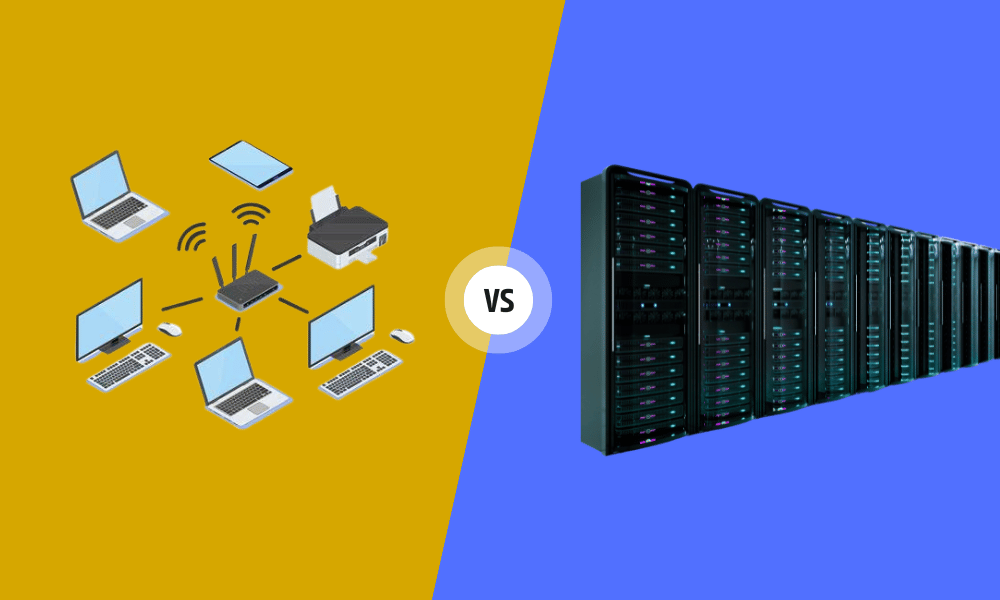
Modern IT systems depend on many connected parts, but two terms often cause confusion: node and server. People sometimes use them as if they mean the same thing. They do not. While both exist in networks and computing environments, they describe different ideas and play different roles.
A node is usually any device or unit on a network that can send, receive, or process data. A server is a system that provides services, resources, or data to other devices. In some setups, a single machine can serve as both a node and a server. In others, the distinction matters a lot for design, scaling, and performance.
Understanding this difference is important if you are building an application, planning infrastructure, deploying cloud services, or working with distributed systems. The right design depends on knowing whether you need many connected nodes, dedicated servers, or a mix of both.
This guide breaks down the key differences between nodes and servers in plain language. You will learn what each term means, how they compare, where they overlap, and how to choose the right approach for your project or environment.
Node vs. Server: Key Differences Explained
Nodes and servers are both important components of computing systems, but they are not the same. A node is a broad term. It usually refers to any device or unit connected to a network that can communicate, process information, or participate in a larger system. A laptop, phone, printer, sensor, router, or virtual machine can all be called nodes depending on the context.
A server is more specific. It is a system designed to provide services, resources, or data to other devices. Those other devices are often called clients. A server may host a website, store files, run a database, manage email, or handle user authentication across a network.
The key difference is role. A node is defined as being part of a network or system. A server is defined by what it does for other devices. That means every server is usually a node, but not every node is a server.
This matters more in modern systems because networks are no longer simple. In distributed computing, cloud platforms, IoT deployments, and blockchain networks, many nodes may work together, while only some act as servers. In other cases, a single machine may shift roles depending on workload and architecture.
Nodes and servers also depend on each other. Servers often rely on other nodes to request data, send commands, or share computation. Nodes may rely on servers for storage, coordination, security, or access to shared applications.
So when you compare node vs. server, the real question is not which one is better. The question is what role each one plays in the system you are building or managing.
What Is a Node?
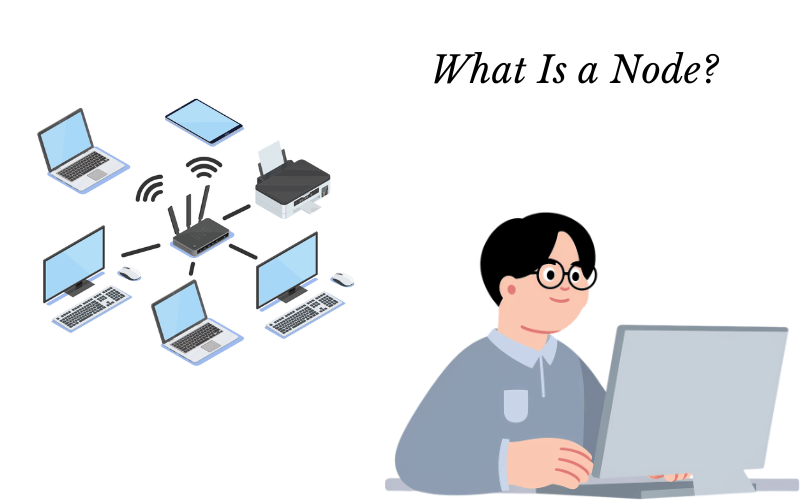
A node is any device or unit in a network that can send, receive, or process data. It is one of the broadest terms in computing and networking because it applies to many types of connected systems. If a device can participate in a network in some meaningful way, it is usually considered a node.
In simple networks, nodes include desktop computers, laptops, printers, routers, smartphones, and tablets. In more advanced systems, nodes may include virtual machines, containers, IoT sensors, edge devices, or even blockchain participants. The exact meaning depends on the environment, but the core idea stays the same: a node is a point of activity in a network or system.
Nodes matter because they enable communication. They exchange data, respond to requests, and sometimes perform local processing. In an office network, one employee’s laptop is a node. In a smart factory, each connected sensor may be a node. In a peer-to-peer system, every participating machine may be a node that both receives and shares information.
Nodes are especially important in distributed systems. In these setups, work is distributed across multiple connected units rather than handled by a single central machine. Each node may carry part of the load, store some data, or help maintain availability. This makes the system more scalable and often more resilient.
Peer-to-peer networks also depend heavily on nodes. In these systems, there may be no single central server controlling everything. Instead, the nodes communicate directly with one another.
So, a node is not defined by one specific job. It is defined by participation. If it exists within a network and helps move, store, or process data, it is likely a node.
What Is a Server?

A server is a system or device that provides services, resources, or data to other devices on a network. Those other devices are often called clients. While a node is a general participant in a network, a server has a more specific purpose: it serves something useful to others.
Servers come in many forms. A web server delivers websites and web applications. A database server stores, organizes, and returns data for software systems. A file server lets users access shared files across a network. Other common examples include mail servers, application servers, print servers, and authentication servers.
A server may be a physical machine, a virtual machine, a cloud instance, or even a containerized service. What makes it a server is not the hardware alone. It is the role it performs. If the system is primarily responding to requests and providing resources to other devices, it is acting as a server.
Servers are a key part of centralized and client-server architectures. In a client-server model, user devices send requests, and the server responds. For example, when you open a website, your browser sends a request to a web server. When you log into a company platform, an authentication server may verify your identity. When a business app loads customer records, a database server may provide the data.
Servers usually need more specialized software and often stronger hardware than ordinary client devices. They may require more memory, faster storage, more powerful CPUs, network redundancy, and better uptime reliability because many users or systems depend on them.
In short, a server is built or configured to provide services consistently and reliably. It is not just part of the network. It is one of the systems that other parts of the network depend on.
What Is the Difference Between a Node and a Server?
The difference between a node and a server starts with scope. A node is a general term for any connected device or unit in a network. A server is a more specific term for a system that provides services to other devices. This means a server is often one kind of node, but a node is not always a server.
One major difference is functionality. Nodes can be general-purpose participants in a system. They may collect data, forward traffic, run local tasks, or simply connect to the network. Servers are more service-specific. Their main purpose is to respond to requests, provide shared resources, or host applications for others.
Their role in the network also differs. A node may act as a client, a relay, a peer, a sensor, a compute unit, or sometimes a server. A server usually has a more defined role. It serves content, manages access, stores data, or runs shared workloads. In some architectures, one machine may be both. For example, in a distributed cluster, each machine may be called a node, but some or all of those nodes may also host server functions.
There are differences in hardware and software requirements, too. Many nodes are lightweight devices. Think of IoT sensors, smartphones, or edge devices with limited power and storage. Servers often need stronger hardware, more memory, higher network throughput, more reliable storage, and software built for continuous service delivery. They may also include redundancy, remote management, and security controls.
A real-world example helps. In an office, every connected laptop is a node. The shared file machine in the back room is a server. In a blockchain network, every participating computer may be a node, but not all nodes provide the same services. In a cloud cluster, each machine may be called a node, while certain systems also serve databases, applications, or web traffic.
The key point is this: a node describes position and participation in a system, while a server describes function. If you keep that distinction in mind, the terms become much easier to use correctly.
Why Are There Two Different Concepts?
There are two different concepts because computing systems need language for both participation and purpose. The word “node” describes any unit in a network or distributed system. The word server helps describe a system with a specific job: serving data, services, or resources to others.
Historically, these ideas developed as networks became more complex. In early computing, systems were often centralized. Large computers handled most of the work, and user terminals were mainly connected to them. As networking grew, more devices began communicating directly or indirectly. That made the broader term node useful because not every connected device was a server.
At the same time, the client-server model became a major foundation of business and internet computing. Some systems were built specifically to host websites, manage files, run applications, or store shared records. These machines needed a separate term because their role differed from that of ordinary connected devices. That is where the server became important.
Both concepts still matter because modern infrastructure uses many architectures. In a simple office network, you may have many user nodes and one or two central servers. In a peer-to-peer network, there may be many nodes and no traditional server at all. In cloud and distributed systems, machines may be called nodes because they form part of a cluster, but some of those nodes may still run server functions.
So the reason both concepts exist is practical. We need one term to describe membership in a network and another to describe systems that provide centralized or shared services. Without both terms, it would be much harder to explain how modern networks are built and how different machines interact inside them.
Node vs. Server: Which One Should You Focus On?
Whether you should focus on nodes or servers depends on what you are building. The answer is not always one or the other. In many systems, you need both. But the priority changes based on architecture, workload, and scale.
If your project depends on centralized service delivery, servers deserve most of your attention. This is common in web applications, company databases, file sharing systems, and enterprise software. In these cases, the server handles the main workload, stores shared data, or controls access for many users. You need to think about uptime, performance, security, and server-side scaling first.
If your project depends on distributed participation, nodes may matter more. This is common in IoT systems, edge computing, blockchain networks, and peer-to-peer platforms. Here, the challenge is often managing many connected devices, handling communication across locations, or distributing workloads across multiple units rather than a single central machine.
Your application requirements also matter. A simple internal app may only need a few strong servers. A smart city deployment may involve thousands of nodes that collect and send data. A content platform may need both: edge nodes near users and central servers in the cloud.
You should also think about scalability and performance. If growth means more users requesting the same shared service, server architecture is the main concern. If growth means more devices joining the system, node management becomes more important.
In practice, focus on the part of the system that creates the biggest design challenge. If service delivery, central storage, and reliability are the bottlenecks, focus on servers. If connectivity, coordination, and distributed operation matter more, focus on nodes. The right answer comes from the system’s role, not the label alone.
How Do Nodes and Servers Work Together?
Nodes and servers often work together as part of the same system, even when their roles are different. A server provides services or resources. Nodes request, process, forward, or exchange data. The exact relationship depends on the architecture.
In a client-server architecture, the relationship is clear. User devices such as laptops, phones, and tablets act as nodes that send requests. A server responds by delivering a website, returning database results, storing files, or running application logic. This is one of the most common models in business IT and on the internet.
In peer-to-peer networks, the relationship is less centralized. Each device is still a node, but nodes can communicate directly with one another rather than relying on a single central server. Even in these systems, some nodes may take on stronger coordination roles, but the design reduces the need for a single service provider.
In distributed systems, the line can blur even more. A group of machines may all be called nodes because they are part of a larger cluster. Some of those nodes may run server functions, such as hosting APIs, managing storage, or balancing workloads. Others may process jobs, cache data, or collect information at the edge.
Real-world examples make this easier to see. In a cloud application, your phone is a node, the app backend is a server, and the cloud cluster behind it may contain many nodes. In a smart factory, sensors are nodes, edge gateways may be nodes with local server-like behavior, and central management systems run on servers. In blockchain, all participants may be nodes, but some nodes may also host services for wallets, explorers, or APIs.
So nodes and servers do not compete. They cooperate. The server often gives structure, storage, or shared access, while nodes extend the system, interact with users, or help distribute work across the network.
Specialized Use Cases for Nodes and Servers
Nodes and servers each play especially important roles in certain types of systems. The right choice depends on what the system is trying to achieve and how it is designed.
Nodes are critical in environments where many distributed devices need to communicate or process data close to where it is created. In IoT networks, sensors, meters, cameras, and controllers all act as nodes. They collect information, send updates, and sometimes process data locally. In blockchain systems, nodes help maintain the ledger, verify transactions, and keep the network decentralized. In edge computing, nodes near users or devices handle local tasks to reduce latency and lower the load on central infrastructure.
Servers are more important in systems that depend on centralized service delivery, heavy processing, or shared storage. In cloud computing, servers host applications, databases, storage systems, and virtual environments for users across many regions. In data centers, racks of servers power websites, enterprise applications, analytics platforms, and internal business systems. In enterprise environments, servers often manage email, authentication, ERP platforms, backups, and file access.
The difference in use cases often comes down to distribution versus centralization. Nodes are often closer to the edge of the network. Servers are often closer to the center of control or service delivery.
Still, the two often overlap. An edge node may run lightweight server functions. A server inside a distributed cluster may also be considered a node in that cluster. The key is to look at the main role in context.
If the system needs many connected participants, local data handling, or decentralized coordination, nodes take the lead. If it needs shared services, centralized access, or large-scale hosting, servers take the lead. Most modern systems use both in different layers.
How to Identify the Right Solution for Your Needs
To choose the right approach, start with the job your system must do. Are you primarily delivering a shared service, or connecting many distributed devices? That question usually tells you whether servers or nodes should be the main focus.
If your project centers on hosting applications, storing shared data, or serving many users, you likely need to design around servers. Think about processing power, uptime, storage performance, backup strategy, and security. This is common in web platforms, databases, file systems, and internal business tools.
If your project centers on many connected endpoints, nodes may be the bigger concern. This is common in IoT deployments, edge networks, distributed sensors, and peer-based systems. In these environments, device count, connectivity, local processing, and coordination often matter more than one central service machine.
You should also weigh scalability. If growth means adding more devices in more places, node planning is critical. If growth means handling more requests or more users on the same application, server scaling becomes more important.
Performance matters too. Central servers are usually better suited to workloads that require strong compute power, large memory, or centralized control. Distributed nodes are often better when latency needs to stay low or when data should be processed closer to where it is created.
Then there is cost-effectiveness. A strong central server may be cheaper and easier to manage for small or medium workloads. But in very large, distributed environments, relying solely on central servers can introduce latency, increase bandwidth costs, and create bottlenecks. In those cases, adding more capable nodes can make better long-term sense.
A simple checklist helps:
- What is the system’s main purpose?
- Will it be centralized or distributed?
- Where does the data come from?
- Where should processing happen?
- How will the system grow?
- What budget and support model can you manage?
The right solution is the one that fits the real workload, not the one with the more impressive label.
Future Trends in Nodes and Servers
Nodes and servers are both evolving fast as computing moves toward more distributed, data-heavy, and AI-driven environments. The old idea of a simple client device talking to a single central server is still useful, but it no longer captures the full picture.
One major trend is the rise of AI-driven nodes at the edge. Devices near users, sensors, cameras, and industrial systems are becoming smarter. Instead of sending all raw data back to the cloud, edge nodes can now process images, detect events, filter data, and make local decisions. This reduces latency and saves bandwidth.
At the same time, high-performance servers are becoming even more important for AI, analytics, and big data workloads. Modern servers now support powerful GPUs, large memory pools, high-speed networking, and specialized accelerators. They remain essential for training models, managing large applications, and handling centralized enterprise workloads at scale.
Another trend is the growth of hybrid systems that combine node and server functions. An edge gateway, for example, may be called a node because it sits in a distributed network, but it may also run local server services for nearby devices. In cloud-native systems, cluster nodes often host containerized services that act like mini-servers within a larger platform.
We are also seeing more software-defined infrastructure, where the distinction between nodes and servers depends more on role than on fixed hardware. A machine may serve one function today and another tomorrow based on orchestration tools and workload needs.
So the future is not about choosing one concept over the other. It is about understanding how both are blending into more flexible architectures. As systems grow smarter and more distributed, nodes and servers will remain distinct ideas, but the way they work together will become even more dynamic.
Conclusion
Nodes and servers are both essential to modern computing, but they describe different things. A node is any connected device or unit that can send, receive, or process data in a network. A server is a system that provides services, resources, or data to other devices. In many environments, a server is also a node, but not every node is a server.
That difference matters because it affects how you design systems, plan scaling, and choose infrastructure. Distributed networks, IoT systems, and blockchain platforms often place more focus on nodes. Centralized applications, cloud platforms, and enterprise software often place more focus on servers. Most real-world systems use both.
If you are planning a project, start by looking at the role each part of the system needs to play. Think about where data is created, where services should run, how the system will grow, and what level of performance and reliability you need. Once you understand that, the choice between node-focused and server-focused design becomes much clearer.
The next step is simple: review your system requirements, map out the workload, and choose the architecture that best fits your real needs.
