


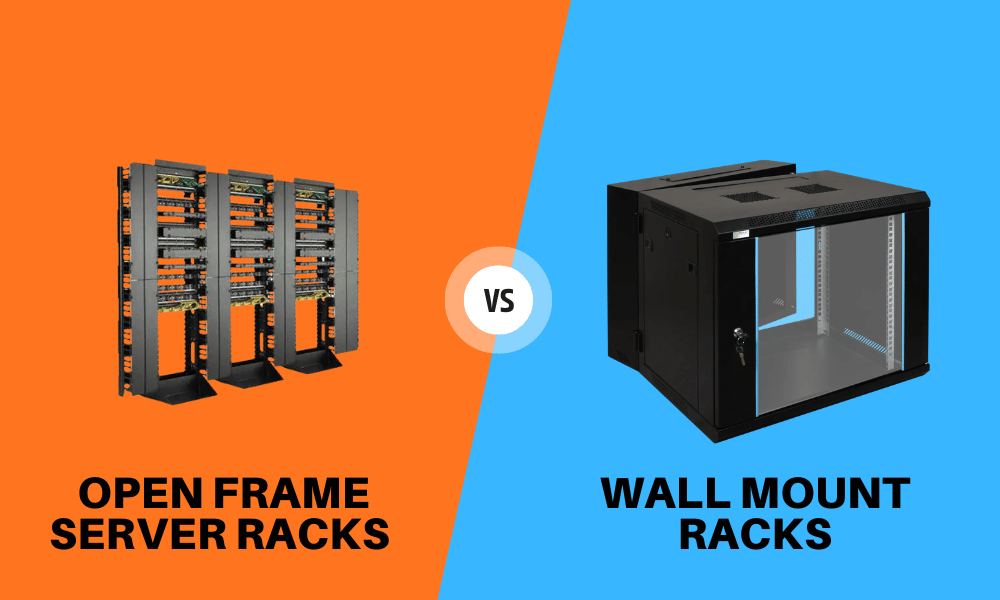
Compare. Decide. Build Smarter IT Infrastructure for Your Business.
Open-Frame Server Racks vs. Wall-Mount Racks: Which Fits Your Business?
Choosing the right rack is a strategic infrastructure decision that affects far more than where your equipment sits. The way you mount and house your servers, switches, and networking gear shapes how you use floor space, how air moves around your hardware, how cleanly you route cables, how secure your equipment stays, and how much you spend over the life of the deployment. When you compare open-frame server racks vs wall-mount racks, you’re really comparing two different philosophies of physical IT design. One prioritizes density, airflow, and easy access in a dedicated space. The other prioritizes a compact footprint and flexible placement in tight spaces. Getting this choice right early saves you from costly rework later.
Both solutions organize and protect your IT equipment, and both support standardized 19-inch gear. But they differ sharply in footprint, accessibility, load capacity, and the environments they suit best. An open-frame rack stands on the floor and supports dense, heavy deployments, while a wall-mounted rack attaches to a wall and keeps a smaller set of equipment off the ground. This article walks you through the factors that matter most—installation environment, airflow, cabling, security, scalability, weight, cost, and maintenance—and ends with clear guidance to help you select the option that fits your business.
What Is an Open Frame Server Rack?
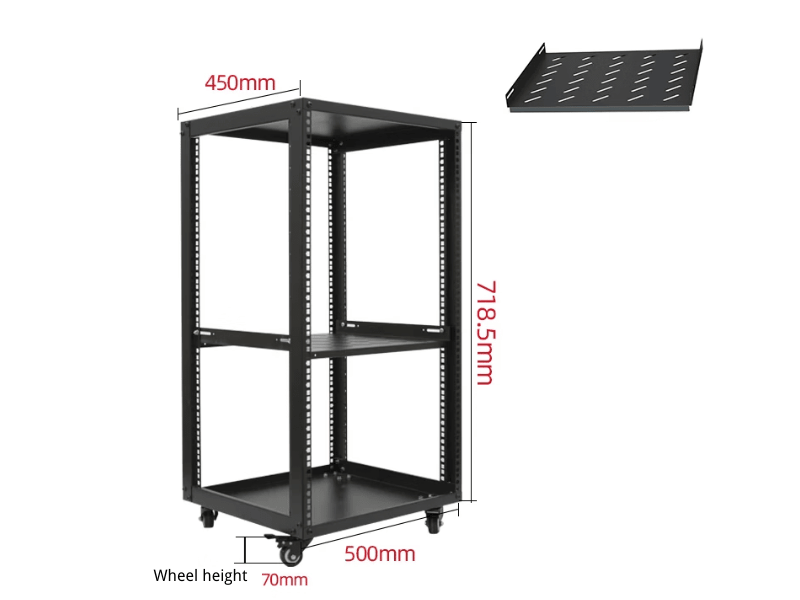
An open frame server rack is a freestanding structure—typically a two-post or four-post frame—built to hold standardized 19-inch equipment without enclosed sides, doors, or panels. As the name suggests, the frame is open on all sides, leaving your hardware exposed to the surrounding air. Two-post versions are common for lightweight networking and patch panels, while four-post versions support heavier servers and deeper equipment. Because there are no walls or doors to work around, open frame racks make installation, cabling, and maintenance straightforward. They are designed for environments where space, airflow, and easy access take priority over physical enclosure—usually rooms that are already secured and climate-controlled, where the rack’s open design becomes an advantage rather than a risk.
Key Features of Open Frame Server Racks
The open-air design is the defining feature, allowing heat to dissipate naturally without relying on enclosed cooling. This passive ventilation suits dense, high-output equipment that generates significant heat. Full front-and-rear access means technicians can reach every cable and component from any side, which speeds up installation, troubleshooting, and routine servicing. Open frame racks also offer high load capacity, supporting stacks of heavy servers and storage arrays. They scale well as your equipment count grows, and they cost less than fully enclosed cabinets because they use fewer materials. You’ll typically find these racks in data centers, network operation centers, and dedicated server rooms where access and airflow matter most.
What Is a Wall Mount Rack?

A wall mount rack is a compact frame or enclosure that attaches directly to a wall, holding a limited amount of IT equipment off the floor. Instead of consuming valuable ground space, it uses vertical wall space, making it ideal for locations where every square foot counts. These racks usually accommodate a modest number of rack units, making them well-suited to networking gear, patch panels, small switches, and a server or two. Many models come as enclosed cabinets with lockable doors and side panels, adding physical security and dust protection. Wall-mounted racks shine in distributed environments—branch offices, retail stores, clinics, classrooms, and remote sites—where a full floor-standing rack would be impractical, and equipment must stay tidy and out of the way.
Key Features of Wall Mount Racks
The small footprint is the headline feature, freeing up floor space in tight or shared rooms. Off-floor installation protects equipment from ground-level spills, foot traffic, and dust, while keeping cabling neat and elevated. Wall-mount racks have a lower equipment capacity than floor-standing options, which suits compact, fixed deployments. Many include enclosed, lockable designs that secure hardware against tampering and shield it from dust—useful in customer-facing or non-secured areas. They install easily in offices, retail sites, and wiring closets. Some models feature swing-out or hinged designs that pivot away from the wall, giving technicians rear access to cabling and components despite the compact, wall-mounted format.
Key Differences Between Open Frame Server Racks and Wall Mount Racks
The clearest way to weigh open-frame server racks vs wall-mount racks is to compare them across the factors that drive real-world business decisions. Below, we look at footprint and environment, airflow and cooling, cable management and accessibility, and load capacity and security. Each one affects performance, safety, and cost in different ways.
Footprint and Installation Environment
Open frame racks are floor-standing structures that require dedicated room space and a stable surface to sit on. They suit environments where a footprint isn’t a constraint, such as server rooms and data centers built specifically to house IT gear. Wall-mount racks take a different approach, attaching to a wall and using vertical space to keep the floor clear. This makes them ideal for small offices, branch locations, retail counters, and distributed sites where floor area is scarce or already in use. Your available space and the nature of the installation site often point clearly toward one option over the other.
Airflow and Cooling
Airflow is where the two designs diverge most dramatically. Open frame racks expose equipment on all sides, allowing heat to escape naturally and supporting high-density deployments that generate substantial heat. This open ventilation reduces the need for complex enclosed cooling. Wall-mounted racks, especially enclosed models, restrict airflow due to their compact, sealed design. They can handle light-to-moderate equipment, but packing dense, heat-intensive gear into a small enclosure invites overheating unless you add fans or ventilation. For high-output hardware, open-frame airflow is a clear advantage; for lighter loads in controlled spaces, a wall-mounted unit manages heat adequately.
Cable Management and Accessibility
Open-frame racks provide full 360-degree access, allowing technicians to reach the front, rear, and sides of every device without obstruction. This makes cabling, labeling, and servicing fast and simple, which matters in deployments with frequent moves, adds, and changes. Wall-mount racks offer more limited access because one side faces the wall, and cable routing can be tighter in the compact frame. Swing-out models help by pivoting away from the wall to expose the rear, but access is still more constrained than an open frame. If your team services equipment often or manages heavy cabling, open frame accessibility saves real time and effort.
Load Capacity and Security
Open frame racks tolerate heavy loads, supporting dense stacks of servers and storage with sturdy four-post construction. The trade-off is exposure: with no doors or panels, hardware sits unprotected, offering little physical security or dust resistance. That’s acceptable in a locked, controlled room but risky in open areas. Wall-mount racks carry lower load limits, since both the rack and the wall must bear the weight. However, enclosed wall mount models offer lockable doors and panels that secure equipment and block dust. The right choice depends on how much weight you need to support and how secure the surrounding environment already is.
Advantages and Disadvantages of Open Frame Server Racks
Open frame racks excel in dense, access-heavy deployments within secure rooms, but their open design isn’t right for every setting. Here’s a balanced view.
Advantages of Open Frame Server Racks
The biggest strength is superior airflow. With no enclosing panels, heat dissipates passively, making these racks ideal for high-density equipment that runs hot and demands consistent cooling. High load capacity is another major benefit—sturdy four-post frames support heavy servers, storage arrays, and stacked deployments without strain. The open structure delivers easy all-around access, so technicians can install, cable, label, and troubleshoot equipment quickly from every side, reducing maintenance time. Cabling is faster and cleaner thanks to unobstructed routing paths. Open frame racks also cost less than fully enclosed cabinets because they use fewer materials. Finally, they scale gracefully, accommodating growing equipment counts as your infrastructure expands, which protects your investment as business demands increase over time.
Disadvantages of Open Frame Server Racks
The open design’s main drawback is the lack of physical security and dust protection. With no doors or side panels, equipment is exposed to tampering, accidental contact, and airborne dust, posing a liability in shared or public spaces. Open-frame racks also occupy a larger floor footprint, requiring dedicated space that smaller businesses may not have. Their performance depends heavily on a controlled environment with stable temperatures and clean air. As a result, they’re poorly suited to open office areas, retail floors, or any location where exposed hardware creates a security or safety concern rather than a practical advantage.
Advantages and Disadvantages of Wall Mount Racks
Wall-mounted racks offer space-saving flexibility and security for smaller deployments, though their compact format has clear limits. Here’s an honest look at both sides.
Advantages of Wall Mount Racks
The standout benefit is a minimal floor footprint. By mounting on a wall, these racks free up valuable ground space, making them perfect for offices, closets, and sites where floor area is limited. Off-floor installation protects equipment from spills, foot traffic, and ground-level dust while keeping cabling elevated and tidy. Wall-mount racks are an ideal fit for branch offices, retail locations, and remote sites that need reliable, compact infrastructure. Many models include optional lockable enclosures that provide strong physical security and dust resistance, shielding hardware in non-secured areas. They also cost less for small deployments and present a clean, professional appearance in shared or customer-facing spaces where exposed equipment would look out of place or invite tampering.
Disadvantages of Wall Mount Racks
The compact design comes with real constraints. Wall-mounted racks have limited equipment capacity and lower load capacity, so they can’t support large or heavy deployments. Their enclosed, small format restricts airflow and cooling, making dense or high-output gear prone to overheating without added ventilation. Access is tighter too—cabling and servicing can be awkward when one side faces the wall, even with swing-out models. Performance also depends on wall strength, since a weak or improperly mounted wall can’t safely bear the load. Finally, these racks offer limited room for scaling, which can force an upgrade as your equipment needs outstrip the rack’s modest capacity.
How to Choose the Right Rack for Your Business: Open Frame vs Wall Mount
Comparison only matters when it leads to a decision. Use the factors below as a practical framework. Most businesses align more naturally with one option once they honestly weigh their environment, equipment volume, and growth plans.
Assess Your Installation Environment
Start with where the rack will live. Data centers, dedicated server rooms, and secure, climate-controlled spaces are natural homes for open-frame racks, where airflow and access shine, and exposure isn’t a concern. Offices, wiring closets, retail spaces, clinics, and remote or branch sites are well-suited to wall-mounted racks, which save floor space and keep equipment tidy and secure in shared or non-dedicated areas. Matching the rack to its environment is the single most important step in the decision.
Match Equipment Volume and Load Needs
Next, consider how much equipment you need to house and how heavy it is. High equipment counts, dense server stacks, and heavy storage arrays call for the sturdy, high-capacity construction of open frame racks. Small, fixed deployments—a few switches, a patch panel, and maybe a server or two—fit comfortably in a wall mount rack. Be realistic about current loads and avoid forcing heavy gear into a format that can’t safely support it.
Plan for Airflow, Cooling, and Heat
Heat management should guide your choice as much as space. Dense, high-output equipment that runs hot benefits from the ventilation of an open-frame rack, which lets heat escape naturally. Lighter gear in a controlled, comfortable space can sit safely in a wall-mounted rack, though enclosed models may need additional fans for warmer equipment. Always match the rack’s cooling capability to the heat your hardware generates to avoid performance issues and premature failures.
Weigh Security and Accessibility Needs
Think about who can reach your equipment and how often you service it. In exposed or customer-facing areas, a lockable wall mount enclosure protects hardware from tampering and dust. In a secured, locked server room, an open-frame rack’s easy all-around access makes servicing fast and simple, without the security trade-off becoming a problem. Balance the need for physical protection against the need for quick, convenient maintenance.
Consider Cost, Scalability, and Future Growth
Finally, look beyond the purchase price. Open-frame racks cost less than enclosed cabinets and scale well for growing deployments, while wall-mounted racks are economical for small, stable setups. Think about where you’ll be in three to five years—if your equipment count is likely to climb, choose an option with room to grow. Factoring in expansion headroom and total cost of ownership prevents an early, disruptive upgrade.
Common Pitfalls to Avoid When Choosing a Server Rack
Even experienced buyers make avoidable mistakes. Watching for these common pitfalls helps you choose with confidence and sidestep costly errors.
Ignoring Airflow and Heat Buildup
A common mistake is packing dense, high-output equipment into a small, enclosed wall-mounted unit without proper ventilation. Heat builds up quickly in a sealed, compact space, and without added fans or airflow, that trapped heat leads to throttled performance, shortened hardware lifespan, and outright failures. Always match the rack’s cooling capacity to your equipment’s heat output, and add ventilation when housing warmer gear in an enclosed format.
Underestimating Weight and Wall Capacity
Another costly error is overlooking load limits. Exceeding a rack’s weight capacity or mounting a wall rack on a weak, hollow, or improperly anchored wall poses serious risks to safety and may cause serious damage. A rack that pulls loose can destroy expensive equipment and injure staff. Confirm both the rack’s rated load capacity and the wall’s structural strength before installation, and use proper anchors rated for the full weight.
Overlooking Security and Scalability
Two related oversights trip up many buyers. Placing an exposed open-frame rack in a public or shared area leaves hardware vulnerable to tampering, accidents, and dust. Choosing a rack with no room to grow forces a premature, disruptive replacement when equipment needs expand. Match security to the environment, and always leave headroom for future growth so your investment keeps paying off.
Summing Up: Open Frame or Wall Mount for Your Business?
There’s no universal winner in the open frame versus wall mount debate—only the option that best fits your needs. Open frame server racks suit dense, high-load deployments in secure, climate-controlled rooms where airflow, capacity, and easy access matter most. Their open design speeds up cabling and servicing while supporting heavy equipment that runs hot. Wall-mount racks suit space-limited, distributed, or remote sites that need a compact, secure, off-floor solution for a modest amount of gear. Their small footprint and lockable enclosures make them ideal for offices, branch locations, and customer-facing spaces. The right choice ultimately depends on your installation environment, equipment volume, security needs, and growth plans over the next several years.
Get Expert Guidance Before You Buy
Before you finalize a purchase, consider a site and load assessment with experienced IT infrastructure specialists who can match your equipment, space, and environment to the right rack. They can help you confirm airflow and cooling requirements, verify wall strength and load limits, and plan for future scalability. Request a tailored quote and compare open-frame and wall-mount configurations side by side to see which one aligns with your business goals. Taking this step turns a complex decision into a confident one—and ensures that the rack you choose will reliably support your infrastructure for years to come.
