Onechassis

Efficient Rackmount Solutions: Tailored 1U-4U Chassis from a Premier Manufacturer for Enhanced Server Management
Compact Server Case with Hot-Swap Rackmount Storage for Efficient Management
Mining Rig and 8-Bay Hot-Swap Solutions
Advanced Wallmount Chassis: Optimized MINI-ITX Case for Wall-Mounted Desktop Solutions

The OCDS5000B-W Dual Node Server is a high-performance, dual-controller storage solution built on Intel’s advanced platform. Ideal for cloud computing, big data, and enterprise applications, it offers scalability, reliability, and cutting-edge efficiency.

Sleek Aluminum Design, Gaming-Optimized, with Customizable Airflow Options

What is a GPU Server?

Learn what GPU servers are, how they work, and their benefits. Explore types, key features, and tips for choosing the right GPU server for your needs.

What is a GPU Server

READ TIME

5 min

Overview of GPU Servers

GPU servers provide accelerated processing capabilities, enabling high-performance computing, deep learning, and intensive graphics rendering. Whether you’re training AI models, analyzing massive datasets, or streaming complex simulations, GPU servers handle your workloads—surpassing the capabilities of standard processors.

Key takeaways

Definition

Discover GPU Servers

A GPU server is a specialized computer system equipped with one or more graphics processing units (GPUs) designed for high-performance computing tasks. Unlike traditional servers that rely on a central processing unit (CPU), GPU servers leverage the parallel processing power of GPUs to accelerate complex calculations.

GPU servers are built on an architecture that allows thousands of processing cores to run simultaneously. This parallel structure makes them ideal for workloads like artificial intelligence, machine learning, and scientific modeling, enabling significantly faster data processing and analysis.

Functionality

How Do GPU Servers Work?

GPU servers function by offloading complex, parallelizable tasks from the central processing unit (CPU) to the graphics processing unit (GPU). While a CPU handles sequential tasks effectively, a GPU is designed to process thousands of operations at once. This makes it exceptionally efficient for data-intensive workloads.

The parallel architecture of a GPU server allows it to accelerate a wide range of applications, from artificial intelligence and deep learning to scientific computing and video rendering. By distributing tasks across thousands of cores, GPU servers can complete calculations in a fraction of the time, providing the power needed for modern high-performance computing.

Differences 

GPU Servers vs. CPU Servers

GPU servers function similarly to CPU servers since they both execute instructions, run software, and process data. However, because they rely on parallel processing architectures and thousands of cores, they tend to be far more efficient and faster for heavy computational tasks.

The primary difference between a GPU server and a CPU server is that a GPU server breaks complex problems into thousands of smaller tasks running at once, often for deep learning or rendering. A CPU server focuses on completing tasks one by one quickly. While GPU servers handle specific high-throughput workloads like physical servers, GPU servers are utilized as specialized accelerators alongside CPUs rather than operating as standalone general-purpose processors for system management.

Additionally, GPU servers offer massive parallelism for data-heavy operations, while CPU servers are limited by their lower core counts for such tasks. CPU servers are typically more flexible than GPU servers, offering superior single-core performance, complex logic handling, and essential operating system control.

Benefits

Benefits of GPU Servers

Frame 2147223707.png
Performance

GPU servers deliver massive parallel processing power, making it easy to handle complex calculations and renderings for heavy workloads. This capability makes them an ideal choice for industries requiring speed.

Frame 2147223707 1.png
Efficiency

Modern GPU servers aren’t limited to sequential processing like standard CPUs. Additionally, complex computational tasks, such as deep learning and large-scale data modeling, are significantly accelerated within your infrastructure.

Frame 2147223707 2.png
Throughput

High-performance GPU servers are engineered to process massive datasets across thousands of cores, making them essential for training AI models, simulations, or analytics.

Frame 2147223707 3.png
Scalability

GPU servers provide a scalable, high-bandwidth environment and rapid access for demanding applications.

Frame 2147223707 4.png
Versatility

GPU servers deliver optimized performance for a wide range of applications. They also adapt to evolving technologies by effortlessly handling both graphics rendering and scientific computing demands.

Frame 2147223707 5.png
Cost-effectiveness

GPU servers reduce processing time and energy consumption for organizations. With their immense speed, project timelines and resource usage shrink dramatically.

Types

Types of GPU Servers

High-Performance Computing (HPC) Server

In high-performance computing, specialized service providers deliver immense computational power through servers optimized for complex calculations. This model allows organizations to run intensive simulations and data analyses without managing the underlying hardware. The provider owns and manages all components, software, and supporting infrastructure.

Deep Learning and AI Server

A provider can host a dedicated deep learning server, accessible through a secure, high-speed network. This configuration offers accelerated training and inference, making it ideal for businesses developing AI models or meeting strict performance and data privacy requirements.

Virtualization and VDI Server

Hybrid GPU servers combine on-premise and cloud resources, allowing graphics-intensive applications and virtual desktops to move between them. This setup provides businesses with greater flexibility, more deployment options, and the ability to optimize performance, user experience, and resource allocation.

How to choose

Choosing Your gPU Server

Choosing the right GPU server comes down to what your workload requires. Budget, technology stack, and performance benchmarks all play a role in the decision.

High-performance computing (HPC) servers are the most common for scientific research, with providers managing the infrastructure while customers access computing power as needed. Deep learning servers are dedicated to a single project or team, offering more focused performance and data control.

Before selecting a solution, take time to assess your priorities—whether it’s raw power, data throughput, or cost-efficiency—so you can choose the best GPU configuration for your needs.

Steps to choosing the right GPU server

  1. Determine if you have parallelizable workloads or latency-sensitive tasks. GPU servers are best for parallel workloads while CPU servers are better for single-threaded tasks.
  2. Categorize your needs based on budget, GPU model, and software requirements.
  3. Assess your performance needs and decide whether you require specialized hardware or can use general-purpose GPUs that might be shared resources.
  4. Consider a hybrid deployment, combining GPU and CPU resources, to access the benefits of both for diverse computational demands.
RESOURCES

Discover more resources

How to Tell if Your GPU Broke Your Motherboard
Read More
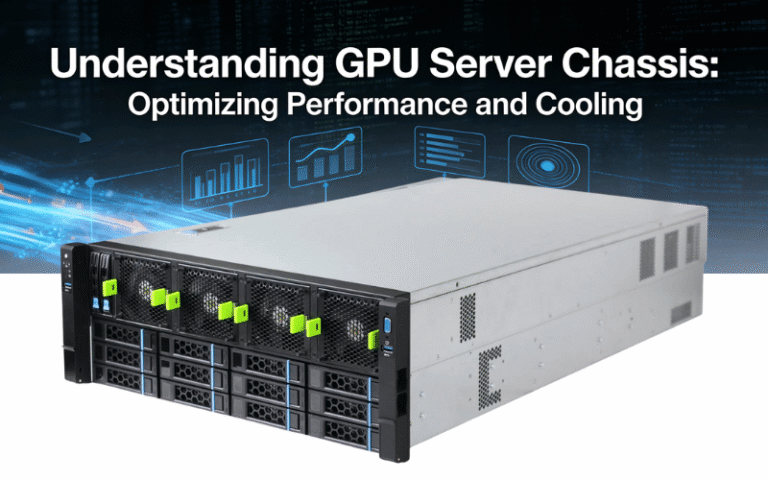
Understanding GPU Server Chassis Optimizing Performance and Cooling
Read More
How AMD and NVIDIA Handle Scaling in Graphics Cards
Read More

Frequently Asked Questions

A Gpu Server Is a High-Performance Computer Equipped with Graphics Processing Units (Gpus) to Accelerate Parallel Processing Tasks. It’s Designed for Computationally Intensive Workloads like Ai, Deep Learning, And Scientific Modeling, Delivering Results Far Faster Than Traditional Servers.

A Gpu Server Uses Thousands of Cores for Massive Parallel Processing, Ideal for Repetitive, Data-Heavy Tasks. A Cpu Server Uses Fewer, More Powerful Cores for Sequential, Logic-Based Operations. Gpus Accelerate Specific Workloads, While Cpus Handle General System Tasks.

Gpu Servers Deliver Significant Performance Gains for Complex Calculations, Resulting in Faster Results and Greater Efficiency. They Offer Superior Throughput for Large Datasets, Scalability for Demanding Applications, And Cost-Effectiveness by Reducing Processing Time and Energy Consumption for Heavy Workloads.

Gpu Servers Are Primarily Used for Artificial Intelligence and Machine Learning Model Training, High-Performance Computing (Hpc) in Scientific Research, Complex Financial Modeling, Video Rendering, And Virtual Desktop Infrastructure (Vdi) to Support Graphics-Intensive Applications for Multiple Remote Users.

Assess Your Specific Workload Requirements, Including the Software Stack and Performance Needs. Consider Your Budget, The Available Gpu Models, And Whether You Need Dedicated or Shared Resources. A Hybrid Approach That Combines Gpu and Cpu Resources Can Optimize Performance Across Diverse Tasks.

No, A Gpu Server Is Unnecessary for Basic Web Hosting. Standard Cpu-Based Servers Are More Than Capable of Efficiently and Cost-Effectively Handling Website Traffic, Databases, And Content Management Systems. Gpus Are Specialized for Computational Tasks, Not Web Serving.

Yes, A Gpu Server Can Significantly Improve a Video Streaming Service, Particularly for Transcoding. Gpus Can Simultaneously and at High Speed Process and Convert Video Files into Different Formats and Resolutions, Ensuring a Smooth, High-Quality Viewing Experience for Users.

Gpu Servers Are More Expensive Due to the High Cost of the Specialized Graphics Processing Units They Contain. These Gpus Are Complex Pieces of Hardware with Thousands of Processing Cores, Advanced Memory, And High Power Requirements, All of Which Contribute to Their Higher Price.

Power Consumption Varies Widely but Is Significantly Higher Than That of Standard Servers. A Single High-End Gpu Can Draw 300-700 Watts, And a Server with Multiple Gpus Can Easily Consume Several Kilowatts Under Full Load, Requiring Specialized Cooling and Power Infrastructure.

Renting a Cloud-Based Gpu Server Is Ideal for Variable Workloads, Avoiding High Upfront Costs and Maintenance. Buying Hardware Offers More Control and Can Be Cost-Effective for Constant, Long-Term Use, But Requires a Significant Initial Investment and Ongoing Management.

Get in touch with Us !

Contact Form Demo