


Choosing the right chassis matters more than most people think. It determines how your hardware is housed, cooled, and scaled over time—and the wrong choice can create real headaches down the line.
Both rackmount and wallmount chassis serve the same fundamental purpose: protecting and organizing IT equipment. But they’re built for very different environments. This guide breaks down each chassis type, what it includes, and how to decide which one fits your setup.
What is a Rackmount Chassis?
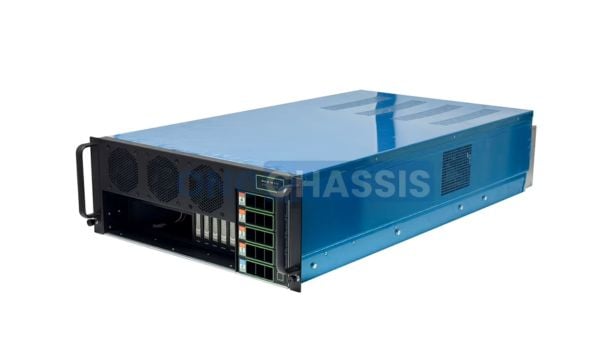
A rackmount chassis is a horizontal enclosure designed to slide into a standard equipment rack. Measured in rack units (U), these chassis are built for environments that house a high volume of servers, switches, and networking hardware.
Data centers and enterprise server rooms are the natural home for rackmount chassis. Their standardized sizing makes it easy to stack multiple units in a single rack, maximizing vertical space while keeping everything organized and accessible. For organizations running large-scale operations, rackmount chassis offer the density and structure that wallmount alternatives simply can’t match.
What’s in a Rackmount Chassis?
Rackmount chassis are equipped for performance and scalability. Common components and features include:
- Multiple drive bays — Support for large numbers of HDDs or SSDs
- Redundant power supply units (PSUs) — Ensure uptime if one PSU fails
- Hot-swap drive trays — Allow drives to be replaced without powering down
- High-capacity cooling fans — Manages heat from dense hardware configurations
- Front and rear I/O panels — Easy access for cabling and connectivity
- Tool-less mounting rails — Simplifies installation and hardware swaps
- Cable management arms — Keep the rack organized and airflow unobstructed
- LED indicators — Status lights for power, drive activity, and fault alerts
What is a Wallmount Chassis?
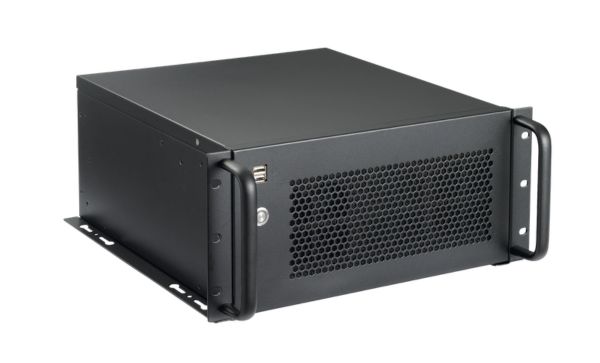
A wall-mount chassis is a compact enclosure designed to be mounted vertically on a wall rather than installed in a rack. These units are purpose-built for smaller deployments where floor space and physical footprint are key constraints.
Small offices, retail locations, and remote network closets are common environments for wall-mount chassis. Because they don’t require a dedicated server rack, they’re quicker to install and easier to fit into tight spaces. They won’t support the same hardware density as a rackmount setup, but for lightweight networking tasks and edge deployments, they’re a practical and cost-effective solution.
What’s in a Wallmount Chassis?
Wall-mount chassis are designed for simplicity and space efficiency. Typical components include:
- Compact drive bays — Fewer bays suited to low-storage requirements
- Single power supply unit — Sufficient for lighter workloads
- Integrated ventilation slots — Passive or low-noise active cooling
- Wall-mounting brackets — Secure installation on vertical surfaces
- Front-facing I/O access — Convenient connectivity in tight spaces
- Locking panel or door — Basic physical security for the hardware inside
- Lightweight steel or aluminum construction — Easy to handle during installation
Difference Between Rackmount and Wallmount Chassis
The two chassis types serve distinct needs. Here’s a direct comparison across the most important factors:
| Feature | Rackmount Chassis | Wallmount Chassis |
|---|---|---|
| Size | Larger; measured in rack units (U) | Compact; designed for small spaces |
| Cooling | High-capacity fans are suited for dense setups | Passive or low-noise fans; lighter loads |
| Installation | Requires a standard server rack | Mounts directly to a wall |
| Scalability | High; easily expanded within the rack | Limited; fixed capacity |
| Use Cases | Data centers, enterprise server rooms | Offices, retail, remote locations |
| Cost | Higher upfront investment | Lower cost, easier to deploy |
The core trade-off is simple: Rackmount chassis offer power and scalability; wallmount chassis offer convenience and compactness.
Which Chassis is Right for You?
The right choice depends on three things: the space you’re working with, your growth plans, and your budget.
If you’re managing a data center or an enterprise server room with dozens of components, a rackmount chassis is the obvious fit. The standardized rack format makes scaling easy, and the robust cooling systems can handle high-density hardware without issue.
If you’re setting up a small office, a branch location, or a remote network closet, a wall-mount chassis is likely all you need. Installation is faster, costs are lower, and the compact form factor works well in spaces with limited floor space.
Still unsure? Ask yourself whether you anticipate significant hardware expansion over the next two to three years. If yes, the rackmount’s scalability is worth the investment. If your requirements are likely to stay stable, wall mount is a perfectly capable and more affordable option.
Environmental Considerations for Chassis Selection
Sustainability is becoming a more prominent factor in hardware purchasing decisions, and chassis selection is no exception.
Rackmount chassis with energy-efficient PSUs and optimized airflow designs reduce overall power consumption across large deployments—a meaningful consideration at data center scale. Many manufacturers now offer chassis built from recycled steel or aluminum, reducing the environmental cost of production.
Wallmount chassis, given their smaller size and lower power draw, naturally have a lighter energy footprint. For organizations working toward sustainability targets, choosing hardware with energy-efficiency certifications (such as 80 PLUS for power supplies) is a straightforward way to reduce operational impact without compromising performance.
Frequently Asked Questions
Can a wall-mount chassis support enterprise-grade hardware?
Wall-mount chassis are typically designed for lighter networking equipment, such as switches and routers, rather than full enterprise server loads. For high-performance or mission-critical workloads, a rackmount chassis is the more reliable and scalable option.
How much weight can a wall-mount chassis hold?
The weight capacity of a wall-mount chassis varies by model, but most are rated to support between 15 and 30 kg. Always consult the manufacturer’s specifications to ensure the chassis can safely handle your equipment.
Are rackmount chassis compatible with all server racks?
Most rackmount chassis adhere to the EIA-310 standard, making them compatible with standard 19-inch server racks. However, it’s important to verify the rack unit (U) height and depth of both the chassis and the rack to ensure a proper fit.
What’s the lifespan of a typical chassis?
With proper maintenance, including regular cleaning and effective airflow management, a high-quality chassis can last 10 years or more, providing reliable service throughout its lifespan.
Choosing the Right Chassis for Your Needs
Rackmount and wallmount chassis are both dependable solutions—they’re just designed for different problems. Rackmount chassis excel in high-density, scalable enterprise environments. Wall-mount chassis are the smarter choice for compact, cost-conscious deployments with modest hardware requirements.
Getting this decision right from the start saves time, money, and frustration later. Prioritize your environment, growth plans, and energy-efficiency goals, and the right chassis will become clear.
