


Ever wondered how OEM parts keep your data center running smoothly? In the fast-paced world of IT infrastructure, every component plays a critical role in ensuring reliability and performance. Original Equipment Manufacturer (OEM) parts, designed specifically for your hardware, act as the unsung heroes behind the scenes, delivering the precision and compatibility your data center needs to operate seamlessly.
OEM parts are more than just replacements—they are purpose-built to meet the exact specifications of your servers, storage systems, and networking equipment. Unlike generic alternatives, OEM components ensure optimal performance, reduce downtime, and extend the lifespan of your infrastructure. For data centers handling mission-critical workloads, the importance of using reliable, high-quality parts cannot be overstated.
This guide dives into the world of OEM in data centers, exploring its benefits and why it matters. You’ll learn how to identify the correct OEM parts for your setup, balance cost with quality, and make informed decisions that enhance both reliability and customization. Let’s unlock the full potential of OEM and ensure your data center remains a powerhouse of efficiency and performance.
What Is OEM?
Understanding the role of OEMs is essential for anyone managing or building data center infrastructure. OEM, or “Original Equipment Manufacturer,” refers to companies that design and produce components specifically for integration into another company’s products. These parts are not generic; they are purpose-built to meet the exact specifications of the systems they support, ensuring compatibility, reliability, and performance.
Definition
OEM stands for “Original Equipment Manufacturer.” These companies specialize in creating parts or components that other businesses incorporate into their final products. For example, a server manufacturer like Dell or HPE may source hard drives, power supplies, or cooling systems from OEMs to include in their servers. The OEM’s role is to deliver components that seamlessly integrate with the larger system, ensuring everything works as intended.
Building on the definition, let’s examine some real-world examples to gain a deeper understanding of how OEMs contribute to data center operations.
Examples
OEMs play a crucial role in the data center ecosystem by providing specialized components designed specifically for various hardware platforms. Here are a few examples:
-
Hard Drives by Maxtor: Maxtor, an OEM, produces hard drives that Dell or HPE integrates into their servers. These drives are designed to meet the performance and reliability standards required for enterprise environments, ensuring they can handle the demands of data-intensive workloads.
-
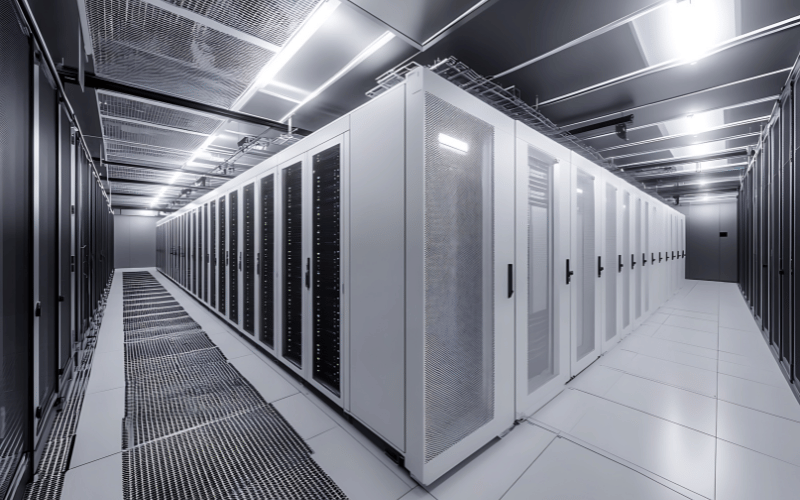
Server Racks and Rails: Many OEMs design server racks, rails, and mounting kits specifically for specific brands or models. For instance, a rack designed for GPU server chassis will include features such as reinforced frames and optimized airflow patterns to support the weight and cooling requirements of high-performance GPUs.
By using OEM components, manufacturers ensure their products deliver consistent performance and meet the rigorous demands of data center operations. This precision and reliability are why OEMs are indispensable in the IT industry.
The OEM Ecosystem
The OEM ecosystem forms the backbone of modern data centers, providing the specialized components that enable operations to run smoothly. However, understanding how OEMs differ from other players in the supply chain, such as ODMs and VARs, is crucial for making informed decisions. Let’s explore these distinctions and dive into the key products and solutions OEMs bring to the table.
OEM vs. ODM vs. VAR
While OEMs, ODMs (Original Design Manufacturers), and VARs (Value-Added Resellers) all contribute to the IT hardware landscape, their roles differ significantly:
-
OEM (Original Equipment Manufacturer): OEMs design and produce components that are integrated into another company’s final product. For example, an OEM might supply GPU server chassis or power supplies to a server manufacturer like Dell or HPE. These parts are designed to meet stringent specifications, ensuring optimal compatibility and performance.
-
ODM (Original Design Manufacturer): ODMs take a different approach by designing and manufacturing entire products that other companies rebrand and sell as their own. For instance, an ODM might create a complete server system that a brand like Lenovo markets under its name. ODMs focus on end-to-end product creation rather than individual components.
-
VAR (Value-Added Reseller): A VAR purchases hardware from OEMs or ODMs and enhances it with additional features or services before reselling it. For example, a VAR might take a standard server chassis and add custom cooling solutions or pre-installed software to meet specific customer needs.
Understanding these distinctions helps you navigate the supply chain and choose the right partners for your data center projects. Now, let’s examine the specific products that OEMs contribute to data centers.
Key OEM Products in Data Centers
OEMs provide a wide range of products that form the foundation of data center infrastructure. Here are some of the most critical components:
-
Servers: OEMs supply server components like motherboards, processors, and GPU server chassis. These parts are designed to handle the high-performance demands of AI workloads, virtualization, and other data-intensive applications.
-
Networking Hardware: Switches, routers, and network interface cards (NICs) from OEMs ensure seamless connectivity and data flow within the data center. For example, an OEM might produce high-speed NICs optimized for low-latency GPU clusters.
-
Storage Systems: OEMs manufacture hard drives, SSDs, and storage controllers tailored for enterprise environments. These components are built to deliver high capacity, speed, and reliability for critical data storage.
-
Cooling Units: Effective cooling is crucial for high-density setups, such as GPU server racks. OEMs design cooling units, such as liquid cooling systems or high-efficiency fans, to manage the heat generated by powerful hardware.
-
Power Supplies: OEM power supplies ensure stable and efficient energy delivery to servers and other equipment. For instance, a redundant power supply from an OEM can prevent downtime in the event of a failure.
These products highlight the essential role OEMs play in building reliable and scalable data center infrastructure. But what about unbranded components? Let’s explore their role in the ecosystem.
White-Label Components
White-label components, often produced by OEMs, are unbranded parts designed for integration into custom solutions. These components enable businesses to create customized systems without the limitations of pre-branded hardware. For example:
- A company building a private cloud might use white-label GPU server chassis to design a solution optimized for its specific workloads.
- System integrators can source white-label power supplies or cooling units to create bespoke configurations for their clients.
White-label components offer flexibility and customization while maintaining the quality and reliability associated with OEM products. They are particularly valuable for businesses looking to differentiate their offerings or meet unique operational requirements.
By understanding the OEM ecosystem, including the distinctions between OEMs, ODMs, and VARs, as well as the key products and white-label solutions available, you can make strategic decisions that enhance your data center’s performance and scalability.
Why OEM Matters in Data Centers
In the high-stakes world of data centers, where uptime and performance are non-negotiable, the role of OEM components is crucial. OEM parts are not just another option—they are the backbone of reliability, customization, and compatibility in your infrastructure. Let’s break down why OEM matters and how it directly impacts your data center’s success.
Key Benefits
OEM components bring a host of advantages that make them indispensable for data center operations. Here’s a closer look at the key benefits:
-
Reliability: OEM parts are designed and manufactured to meet strict quality standards, ensuring they perform consistently under demanding conditions. For example, an OEM GPU server chassis is engineered to handle the weight, heat, and airflow requirements of high-performance GPUs, reducing the risk of failure during critical workloads. This level of reliability minimizes downtime and protects your investment.
-
Customization: OEMs provide tailored solutions that are specifically designed to align with individual workloads and applications. Whether you’re running AI training models, high-frequency trading, or large-scale data analytics, OEM components can be customized to meet your unique needs. For instance, an OEM might provide a chassis with enhanced cooling capabilities or additional PCIe slots to support your GPU-intensive setup.
-
Compatibility: Seamless integration is a hallmark of OEM components. These parts are designed to work seamlessly with your existing systems, eliminating the guesswork and potential issues that often accompany generic alternatives. For example, an OEM power supply intended for a specific server model ensures proper voltage regulation and connector compatibility, safeguarding your equipment from electrical issues.
Transitioning from these benefits, let’s explore a practical tip to maximize the value of OEM components in your data center.
Pro Tip: Partner with Trusted OEM Suppliers
To fully leverage the benefits of OEM components, it is essential to build strong relationships with trusted OEM suppliers. A reliable supplier not only provides high-quality parts but also offers ongoing support, ensuring your data center remains scalable and efficient. For example, partnering with an OEM that specializes in GPU server chassis can give you access to the latest innovations in cooling, power management, and design, keeping your infrastructure ahead of the curve.
By focusing on reliability, customization, and compatibility, OEM components ensure your data center operates at peak performance. Partnering with the right suppliers amplifies these benefits, creating a foundation for long-term success.
Economic and Operational Advantages
OEM components do more than ensure compatibility and reliability—they also deliver significant economic and operational benefits. From cost efficiencies to streamlined maintenance and lifecycle management, OEM solutions help data centers optimize their budgets and operations without compromising performance. Let’s explore these advantages in detail.
Cost Efficiencies
Investing in OEM components can lead to substantial cost savings, especially when you leverage the right purchasing strategies:
-
Volume Discounts and Contract Pricing: Many OEM suppliers offer volume discounts or contract pricing for bulk purchases. For example, if you’re outfitting an entire rack with GPU server chassis, negotiating a contract with the OEM can significantly reduce per-unit costs. This approach is particularly beneficial for large-scale deployments where every dollar counts.
-
Reduced Procurement Costs: Building direct relationships with OEMs eliminates the middleman, reducing procurement costs and ensuring you get the best value. For instance, sourcing power supplies or cooling units directly from the OEM not only saves money but also ensures you receive components that meet your exact specifications.
Transitioning from cost efficiencies, let’s examine how OEMs simplify maintenance and support, thereby further enhancing operational efficiency.
Streamlined Maintenance
OEM components make maintenance more straightforward and predictable, saving both time and resources:
-
Simplified Warranties: OEMs typically offer comprehensive warranties that cover their components, making it easier to address issues without having to navigate multiple vendors. For example, if a GPU server chassis experiences a failure, the OEM warranty ensures quick replacement or repair, minimizing downtime.
-
Access to Specialized Technical Support: OEMs offer technical support specifically designed for their products, ensuring faster issue resolution. For instance, if you encounter a cooling problem with an OEM-designed chassis, their support team can offer precise guidance based on the product’s design and specifications.
With streamlined maintenance in place, let’s explore how OEMs contribute to effective lifecycle management.
Lifecycle Management
OEMs play a critical role in managing the lifecycle of your data center components, ensuring long-term reliability and predictability:
-
Predictable Updates: OEMs provide regular updates and upgrades for their components, allowing you to plan for future improvements. For example, an OEM might release a new version of a GPU server chassis with enhanced airflow or additional expansion slots, giving you the option to upgrade without overhauling your entire setup.
-
Availability of Replacement Parts: OEMs ensure the availability of replacement parts throughout the product’s lifecycle. This predictability means you can replace a failed component, such as a power supply or fan module, without worrying about compatibility or sourcing delays.
By leveraging the economic and operational advantages of OEM components—such as cost efficiencies, streamlined maintenance, and effective lifecycle management—you can build a data center that is not only high-performing but also cost-effective and easy to manage. These benefits make OEM solutions a cornerstone of any successful IT infrastructure strategy.
Challenges and Considerations
While OEM components offer numerous benefits, they also come with challenges that require careful navigation. From vendor lock-in to balancing customization with standardization, and even addressing intellectual property concerns, understanding these considerations is essential for making informed decisions. Let’s break down these challenges and explore effective strategies to address them.
Vendor Lock-In
Relying on a single OEM provider can streamline operations, but it also introduces risks that could impact your flexibility and long-term strategy. Here’s what to watch for and how to mitigate these risks:
-
Risks of Dependency on a Single OEM Provider: When you rely on a single OEM for critical components, you risk being tied to their pricing, lead times, and product availability. For example, if your GPU server chassis supplier experiences delays or increases prices, your entire operation could face disruptions.
-
Strategies for Maintaining Flexibility: To avoid vendor lock-in, diversify your supply chain by working with multiple OEMs or ensuring that your chosen OEM offers a broad product portfolio. Additionally, negotiate contracts that include price caps, guaranteed lead times, and access to alternative components. For instance, if you rely on a specific chassis design, ensure the OEM can provide variations or compatible alternatives to meet evolving needs.
Transitioning from vendor lock-in, let’s explore the trade-offs between customization and standardization in your data center infrastructure.

Customization vs. Standardization
Balancing the need for tailored solutions with the benefits of scalability and efficiency is a common challenge in data center design. Here’s how to approach this balancing act:
-
Balancing Tailored Solutions with Scalability: Customization allows you to optimize your infrastructure for specific workloads, such as AI training or high-performance computing. For example, a custom GPU server chassis with enhanced cooling and additional PCIe slots can significantly improve performance for GPU-intensive tasks. However, excessive customization can limit scalability and increase costs.
-
Finding the Right Balance: Standardize where possible to simplify maintenance and reduce costs, while reserving customization for areas that directly impact performance. For instance, use standardized racks and power supplies across your data center, but customize chassis designs for GPU-heavy workloads. This approach ensures you maintain scalability without sacrificing performance.
With customization and standardization in mind, let’s address another critical consideration: intellectual property concerns.
Intellectual Property Concerns
When working with OEMs, intellectual property (IP) agreements play a crucial role in protecting your designs and ensuring clarity around ownership. Here’s what to consider:
-
Ensuring Clear Agreements on Design and Specifications: If you collaborate with an OEM to develop custom components, such as a GPU server chassis with unique airflow patterns, ensure the contract clearly defines who owns the design and specifications. Without clear agreements, you risk losing control over proprietary innovations.
-
Protecting Your Interests: Work with legal and procurement teams to draft contracts that specify IP ownership, usage rights, and confidentiality. For example, suppose you co-develop a chassis design with an OEM. In that case, the agreement should outline whether the OEM can sell the design to other customers or if it remains exclusive to your organization.
By addressing challenges such as vendor lock-in, striking a balance between customization and standardization, and ensuring clear IP agreements, you can navigate the complexities of working with OEMs while maximizing the benefits they bring to your data center. These considerations empower you to build a resilient, scalable, and high-performing infrastructure.
The Future of OEM in Data Centers
As data centers evolve to meet the demands of emerging technologies and global challenges, OEMs are stepping up with innovative solutions that redefine what’s possible. From specialized hardware for cutting-edge applications to sustainability initiatives and supply chain resilience, the future of OEM in data centers is both exciting and transformative. Let’s explore these trends and their implications.
Specialized Hardware for Emerging Technologies
The rise of AI, machine learning, and high-performance computing (HPC) is driving demand for highly specialized hardware. OEMs are at the forefront of designing components that cater to these advanced workloads, ensuring data centers can keep pace with technological advancements.
-
AI, Machine Learning, and HPC: These workloads require immense computational power, and OEMs are responding with GPU server chassis optimized for density, cooling, and power efficiency. For example, a modern chassis might support up to 8 double-width GPUs, feature liquid cooling options, and include high-speed PCIe 5.0 connectivity to handle the data throughput required for AI training models.
-
Solutions for Edge Computing Environments: As edge computing gains traction, OEMs are developing compact, ruggedized server chassis designed for deployment in remote or harsh environments. These solutions often feature enhanced dust protection, vibration resistance, and modular designs for easy upgrades. For instance, an edge-focused chassis might integrate both compute and storage capabilities in a single unit to minimize footprint while maximizing performance.
Transitioning from specialized hardware, let’s examine how OEMs are addressing the growing need for sustainability in data center operations.
Sustainability
Sustainability is no longer optional—it’s a core requirement for modern data centers. OEMs are leading the charge by designing energy-efficient components and improving thermal regulation to reduce environmental impact.
-
Energy-Efficient Components: OEMs are prioritizing power efficiency in everything from GPUs to power supplies. For example, a high-efficiency power supply with an 80 PLUS Titanium certification can reduce energy waste and lower operating costs, making it a wise choice for GPU-intensive setups.
-
Improved Thermal Regulation: Advanced cooling solutions, such as liquid cooling systems and airflow-optimized chassis, help reduce energy consumption while maintaining optimal operating temperatures. An OEM-designed liquid cooling system for a GPU server chassis can reduce cooling energy consumption by up to 40%, significantly enhancing overall efficiency.
With sustainability in focus, let’s turn to another critical area shaping the future of OEMs: supply chain resilience.
Supply Chain Resilience
The global supply chain has faced unprecedented challenges in recent years, highlighting the importance of resilience. OEMs are playing a pivotal role in mitigating disruptions and ensuring data centers have access to the components they need.
-
Mitigating Disruptions Through Strong OEM Partnerships: Building strong relationships with OEMs ensures a steady supply of critical components, even during periods of uncertainty. For example, an OEM with diversified manufacturing facilities can continue delivering GPU server chassis and other parts despite regional disruptions.
-
Proactive Inventory Management: Many OEMs now offer inventory forecasting and management services to help data centers plan for future needs. By working closely with an OEM, you can secure long-term contracts that guarantee the availability and pricing of essential components, thereby reducing the risk of shortages.
The future of OEM in data centers is defined by innovation, sustainability, and resilience. By embracing specialized hardware, energy-efficient solutions, and robust supply chain strategies, OEMs are empowering data centers to meet the challenges of tomorrow while driving efficiency and performance today.
FAQs About OEM in Data Centers
Q: What’s the difference between OEM and aftermarket parts?
A: OEM parts are designed and manufactured to meet the exact specifications of the original equipment, ensuring compatibility, reliability, and performance. Aftermarket parts, on the other hand, are produced by third-party manufacturers and may not always meet the same quality or compatibility standards. For example, an OEM GPU server chassis will align perfectly with your system’s airflow and mounting requirements, while an aftermarket option might require modifications or compromise performance.
Q: Are OEM servers always more expensive than custom solutions?
A: Not necessarily. While OEM servers may have a higher upfront cost, they often provide better long-term value through reliability, energy efficiency, and reduced maintenance needs. Custom solutions may initially save money, but they could lead to higher costs due to compatibility issues, increased downtime, or a lack of support. Evaluate the total cost of ownership (TCO) when comparing options to make an informed decision.
Q: How do I ensure compatibility with my existing equipment?
A: Work closely with your OEM supplier to verify that the components meet your system’s specifications. Provide detailed information about your current setup, including rack dimensions, power requirements, and cooling configurations. For example, if you’re adding a new GPU server chassis, confirm that it supports the size, power draw, and thermal output of your GPUs. Many OEMs also provide compatibility guides and technical support to help with this process.
Q: What should I look for in an OEM partnership?
A: Look for an OEM that offers high-quality products, strong technical support, and a proven track record in your industry. Prioritize suppliers who provide clear documentation, flexible customization options, and reliable warranties. For example, an OEM specializing in GPU server chassis should offer tailored designs, scalable solutions, and responsive customer service to address your specific needs.
Q: How do OEM warranties compare to standard retail warranties?
A: OEM warranties often provide more comprehensive coverage tailored to the specific component or system. For instance, an OEM warranty for a GPU server chassis might include on-site support, expedited replacement parts, and extended coverage periods. Retail warranties, while useful, may not offer the same level of detail or support, especially for enterprise-grade equipment. Always review the warranty terms to ensure they align with your operational requirements.
Conclusion
OEMs play a critical role in ensuring reliability, customization, and cost efficiency for data centers. Assess your specific needs carefully and collaborate with trusted OEM suppliers to build a foundation that supports your operational goals. OEM solutions serve as the backbone of scalable and reliable data center operations, empowering you to meet both current demands and future challenges with confidence.
