


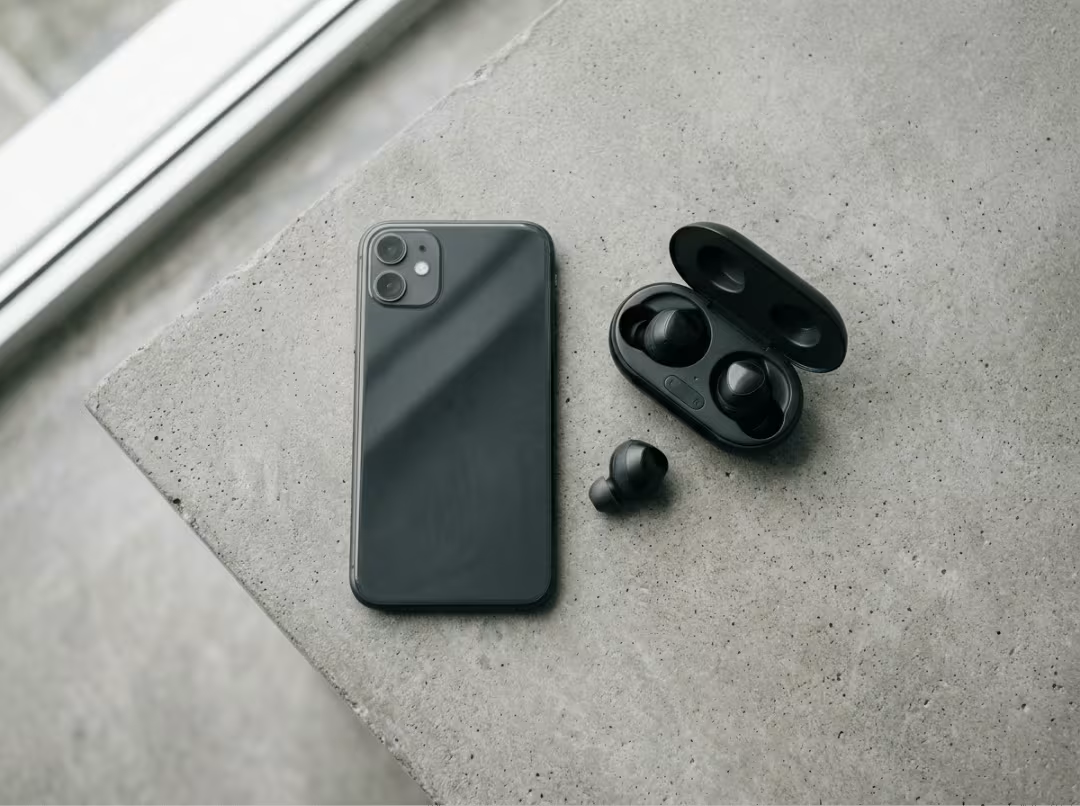
You’re comparing two devices. Both advertise water resistance. One says IPX8, the other IP68. Most buyers assume they’re close enough to call it equal. They’re not.
The difference comes down to dust, not water. That one missing digit can quietly shape how long your device holds up — not just on unboxing day, but after a year of real-world wear. Here’s what each rating actually means, where both fall short, and how to decide which one you need.
IPX8 vs IP68: The Short Answer
IP68 is the more complete rating.
Both share the same final digit — “8” — which covers water protection. Their tested submersion performance is identical on paper.
The real gap is the first digit. IP68’s “6” means the device passed a verified dust-tightness test. IPX8’s “X” means dust was never rated. Not failed — never tested.
For a phone or smartwatch living in pockets, bags, and mixed environments, that missing digit matters. IP68 is the safer pick. For fully sealed audio gear like earbuds, IPX8 is often fine — a sealed shell leaves few gaps for dust to enter. “Better” depends on the device, not the number.
How to Read an IP Rating
IP stands for Ingress Protection. Every IP rating follows the same format: IP + [dust digit] + [water digit], defined under the international standard IEC 60529.
- First digit (0–6): protection against solid particles and dust. A 6 is the highest — fully dust-tight.
- Second digit (0–9): protection against water, from drips to continuous submersion.
The “X” means that category was not tested or not rated — not that protection is zero. It means there’s no verified claim to rely on.
Quick reference:
- IP54: limited dust protection, splash-resistant.
- IP67: dust-tight, brief submersion up to 1 meter.
- IP68: dust-tight, continuous submersion beyond 1 meter.
- IPX8: dust untested, continuous submersion beyond 1 meter.
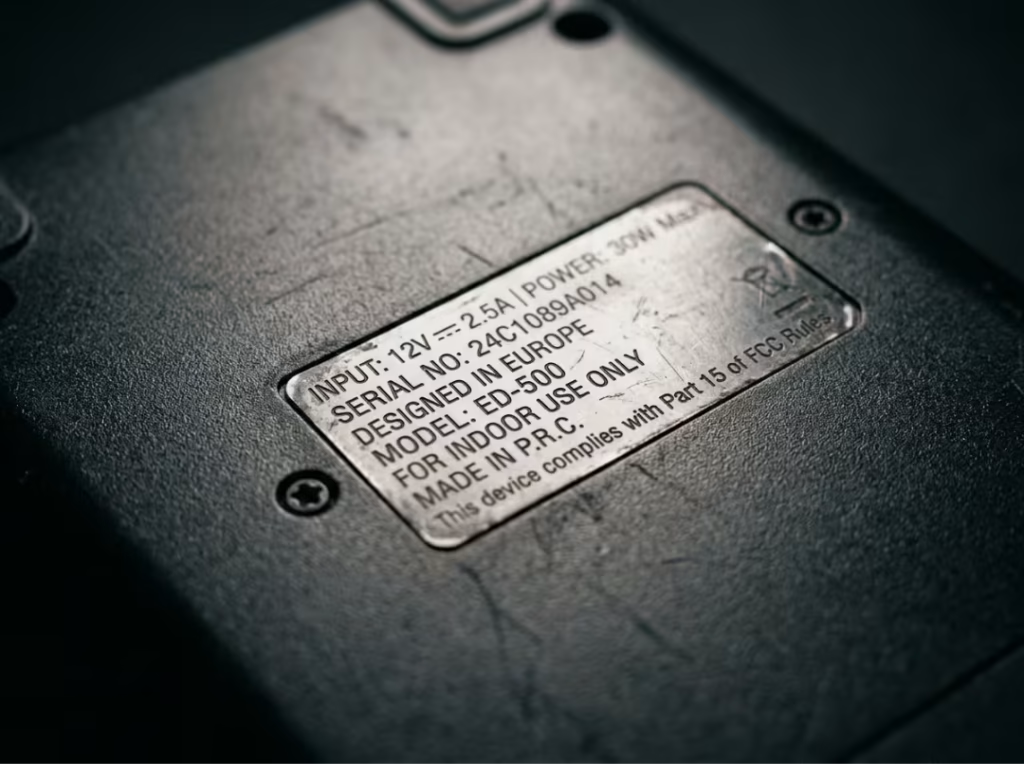
The Real Difference Between IPX8 and IP68
Both carry the “8,” so their water resistance has been tested the same way. If submersion is your only concern, neither rating holds a clear edge over the other.
The split is dust. IP68 earned a “6” by passing a standardized test confirming fine particles can’t get inside. IPX8’s “X” means the manufacturer either didn’t test for dust or chose not to publish a rating.
Here’s the mistake buyers most often make: they see “X” and assume the device has no dust protection. That’s not accurate. It means there’s no verified claim — the device might resist dust well or poorly, and you’re buying on trust.
Context makes this concrete. A sealed pair of earbuds labeled IPX8 has almost no gaps for dust to enter — testing for a dust rating probably wouldn’t change anything meaningful. A phone labeled IP68 is a different situation entirely: charging ports, speaker grilles, mic holes, and buttons are all potential entry points. For that device, a verified dust rating isn’t a nice-to-have; it’s something you actually need.
IP68 is more complete on paper. Whether that completeness matters to you depends entirely on whether the unrated dust category costs you something in real use.
What the Shared “8” Really Means
The “8” sounds like a firm guarantee. It isn’t.
It means the device survived continuous submersion to a depth beyond 1 meter — but the exact depth and duration are set by the manufacturer, not specified by the standard. One brand might rate its “8” as 1.5 meters for 30 minutes. Another might claim 6 meters for a longer stretch.
Same digit, potentially very different limits. Always find the specific depth and time behind the number. If the manufacturer doesn’t publish them, the rating tells you less than it appears to.
There’s a second catch: certification tests still use fresh, room-temperature water. Chlorinated pools, the ocean, a hot shower — none of those are what the test simulates.
Treat the “8” as a floor, not a ceiling. It tells you the minimum the device survived under controlled conditions, not a blanket clearance for every wet situation.
Why Dust Protection Matters More Than Most Buyers Think
Most people focus on water and treat the dust rating as a technicality. That’s a mistake.
For many devices, dust is the slower, less dramatic threat — but it’s the one that does lasting structural damage. Fine particles work into charging ports, speaker grilles, mic holes, and buttons. Over months of daily use, that buildup doesn’t just muffle audio or clog a port. It grinds against the seals and gaskets that keep water out.
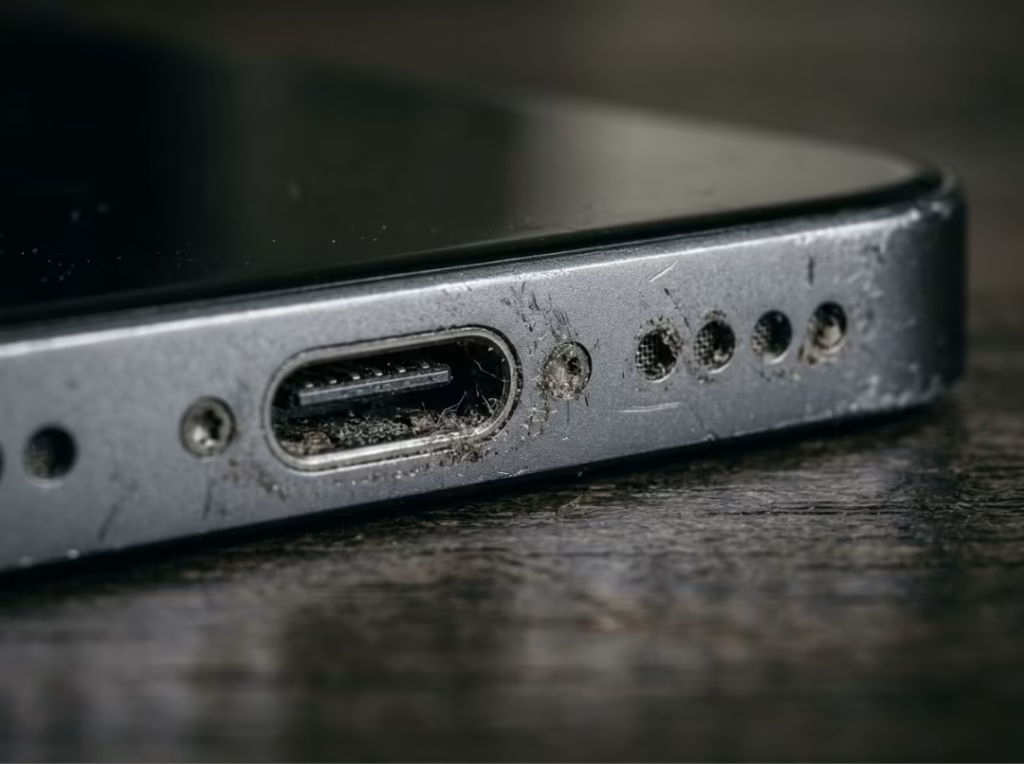
The consequence most buyers don’t see coming: dust degrading those seals can eventually compromise the water resistance they paid for. Dust and water protection aren’t separate issues. Dust damage today opens the door to water damage later.
Think about where your device actually spends its time:
- A beach day, where fine sand works into everything.
- A construction site, thick with concrete dust and grit.
- A hiking trail, where every step kicks up dirt.
- The gym, where sweat and airborne grime combine.
- Your pocket or bag, constantly collecting lint, crumbs, and debris.
In every one of those environments, dust — not water — is the constant background threat. A device without a verified “6” hasn’t proven it can handle that. That’s not a paperwork detail. It’s the gap between what you assume you’re getting and what’s actually been confirmed.
What IP Ratings Don’t Tell You
An IP rating describes a brand-new device tested under controlled lab conditions. It doesn’t describe your device a year from now, after real life has had its way with it.
The tests are narrow by design. Clean, still, fresh water at a fixed temperature and pressure — not a rainy run, a beach day, or an accidental drop in a hot tub. The rating certifies performance in that single controlled scenario. Nothing beyond it.
Then real use takes over. Every drop, every temperature swing, every heating-and-cooling cycle stresses the seals. Rubber gaskets stiffen. Adhesives weaken. The device that passed its factory test isn’t the same device after eighteen months in your pocket — and the rating never updates to reflect that.
Real-world liquids add another layer of risk. Saltwater corrodes. Chlorine degrades seals. Soap reduces surface tension, helping water slip into gaps more easily. Pressurized water from a jet or shower hits with force; the submersion test was never designed to simulate.
IP ratings say nothing about drop resistance or corrosion resistance. A phone can carry an IP68 rating and shatter on its first fall, or slowly corrode after one dunk in the ocean.
Read every IP rating as a starting point. Then factor in your actual environment, your habits, and how long you plan to keep the device.
Which Rating Makes More Sense for Your Device?
The right question isn’t which number is higher. It’s which rating fits how the device is built and how you’ll actually use it.
Phones and Everyday Electronics
Favor IP68. Phones, tablets, and cameras live in unpredictable environments — pockets, bags, beaches, kitchens — and they’re full of ports, grilles, and buttons where dust accumulates. The “6” protects the openings you use every day, in the kinds of mixed environments those devices inevitably face. For everyday electronics, it earns its place.
Earbuds, Speakers, and Sealed Audio Gear
IPX8 is often the right call. A sealed earbud or compact speaker has few meaningful dust-entry points — the enclosure is already designed to be sealed shut. The real threats are sweat, rain, and the occasional water exposure, and the “8” covers all of those. For a sealed unit built around water and sweat resistance, the unrated dust category rarely costs you anything in practice.
Outdoor Gear and Rugged Devices
Aim for IP68 or better. Outdoor equipment faces everything at once: dust, mud, water, and temperature swings. You need verified dust-tightness and solid water resistance, and you want the manufacturer to have published the specific depth and duration so you know what you’re actually counting on. When the gear is meant for rough conditions, an unrated dust category isn’t a minor detail.
A Simple Decision Rule Before You Buy
Three checks will cover most situations:
- Choose IP68 if the device has ports, grilles, or moving parts and spends time in a pocket, bag, or dusty outdoor setting. The dust rating is protecting something real.
- IPX8 may be enough if the device is a sealed, one-piece design used for water-focused activities with minimal dust exposure — sealed earbuds and waterproof speakers typically fit this.
- Be cautious with claims like “waterproof” or “IPX8 equivalent” that name no formal standard. If a product avoids stating a rating, treat that as a warning.
Match the rating to the device’s design and where it will spend its time. That habit will serve you better than chasing the highest number on the spec sheet.
How to Verify an IP Rating Before You Buy
Marketing copy oversells. Spec sheets don’t. Before you pay, go to the right source.
Start with the manufacturer’s official spec sheet — not the retailer listing or the marketing copy on the box. Retail descriptions simplify; the spec sheet has the details that actually matter.
Look for the stated submersion depth and duration behind the “8.” A real claim reads something like “up to 1.5 meters for 30 minutes.” If that specific information is missing, the rating is less useful than it appears.
Watch for red flags: vague terms like “water-resistant” or “splash-proof” without an IP code often signal that the device was never formally tested. Also check whether the rating references IEC 60529 or is self-reported — the difference separates a verified standard from marketing language.
For high-stakes purchases, look for third-party teardowns or independent durability tests. They show what happens beyond the lab, and they’re worth ten minutes of searching before you spend a significant amount.
Common Misunderstandings About IPX8 and IP68
- “X means no dust protection.” It means untested and unrated — there may be real protection; there’s just no verified claim.
- “IP68 is always better than IPX8.” Only when dust exposure is a genuine concern. For a fully sealed earbud, the dust digit is often irrelevant.
- “IP68 means waterproof forever.” No. Ratings reflect a new device in a lab. Seals age, and the rating doesn’t account for real-world wear.
- “If both are rated 8, they’re basically equal.” Not necessarily. The depth and duration behind the “8” are manufacturer-defined — two products with the same digit can have meaningfully different real-world limits.
Frequently Asked Questions
Can IPX8 devices handle rain or splashes?
Yes. An “8” covers full submersion, so everyday rain and splashes are comfortably within range — as long as you stay within the manufacturer’s stated limits.
Is IP68 worth paying extra for?
For devices with ports and grilles used in dusty or outdoor environments, yes. For a sealed indoor unit, the difference is unlikely to matter in day-to-day use.
Does “X” mean no dust protection?
No. It means dust was never rated. The device may resist dust well or poorly — you simply have no verified claim to rely on.
Can I use an IP68 phone in saltwater?
It’s risky. IP68 tests use fresh water. Salt, chlorine, and water pressure can all breach a rated device, and saltwater also accelerates corrosion over time.
Does a cracked screen affect the IP rating?
Yes. Physical damage — a cracked screen, a bent frame, a worn charging port — can break the internal seal and void the water resistance entirely, regardless of what the rating says.
The Bottom Line on IPX8 vs IP68
IPX8 and IP68 share the same water-resistance rating. The only real difference is dust: IP68 adds a verified, standardized dust-tight rating that IPX8 leaves unrated.
For phones, smartwatches, and anything with ports or grilles that sees mixed environments daily, IP68 is the safer long-term choice. For sealed audio gear and devices built specifically for water exposure with minimal dust risk, IPX8 is a reasonable fit. Before your next purchase, look past the badge — find the manufacturer’s stated depth, duration, and usage limits. That’s the information that actually tells you what you’re getting.
