


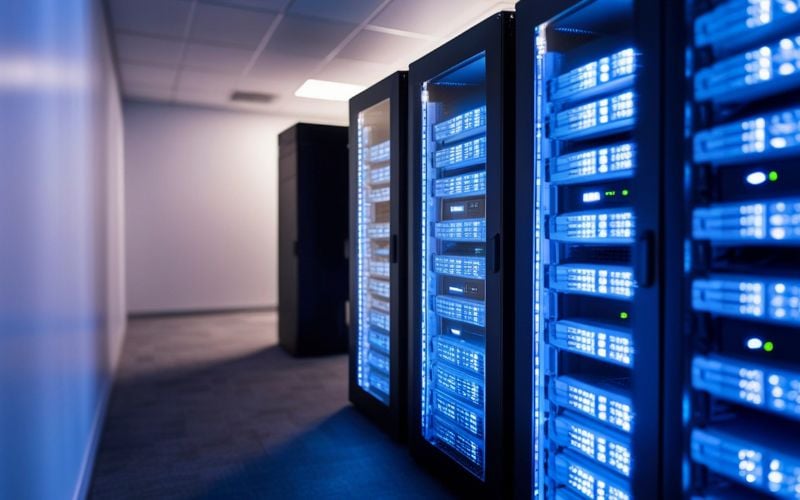
As organizations embrace data-driven business models, remote and hybrid work environments, and global supply chains, data center infrastructure is expanding at an unprecedented rate. To support this growth, new capabilities and deployment models continue to emerge, offering businesses of all sizes greater choice in how they manage their computing power. However, as server densities increase to support artificial intelligence and machine learning workloads, the physical environments housing these servers face a critical challenge: immense heat generation.
Companies can take advantage of powerful computing resources only if their facilities can safely handle the thermal output. That is where advanced data center cooling steps in. Proper thermal management has become a foundational requirement for modern IT infrastructure. It is particularly attractive to forward-thinking businesses that understand how optimized environments prevent hardware failure, reduce energy consumption, and ultimately conserve IT budgets. As we look ahead, data center cooling remains a paramount concern for ensuring sustainable, uninterrupted operations in the digital age.
What is Data Center Cooling?
Simply put, data center cooling encompasses the technology, systems, and practices used to regulate the temperature and humidity of a facility housing computer servers and IT equipment. When servers process data, they consume electricity and generate substantial amounts of heat. Without a dedicated system to remove this heat, the equipment would rapidly overheat, leading to thermal throttling, hardware damage, and catastrophic system failures. Common data center cooling services include computer room air conditioners (CRACs), computer room air handlers (CRAHs), hot- and cold-aisle containment, and advanced liquid cooling systems. This list is hardly exhaustive, with new cooling solutions continually emerging to meet the evolving demands of high-density businesses and large cloud providers. For instance, in just a few short years, liquid immersion cooling and direct-to-chip cooling have transitioned from niche applications to standard requirements for businesses operating AI-heavy environments.
Companies can choose to implement traditional air-based cooling for lower-density facilities or adopt sophisticated liquid and hybrid cooling solutions for more demanding operations. Typically, the choice depends on the specific power density of the server racks and the organization’s overall sustainability goals. Modern cooling systems do not merely blow cold air; they carefully manage airflow, pressure, and humidity to create the optimal microclimate for sensitive microprocessors. By continuously monitoring and adjusting these environmental variables, data center cooling systems ensure that IT infrastructure operates safely and efficiently. As processing demands scale upward, these cooling frameworks are evolving into highly intelligent, dynamically adjustable systems that are integral to the very survival of the modern data center.
Why Data Center Cooling Matters
Data center cooling trends demonstrate how thermal management technology is changing how businesses operate and allocate their IT budgets. Significantly, facility operators no longer rely solely on brute-force air conditioning; instead, they utilize targeted, efficient systems that protect hardware while minimizing energy waste. This allows businesses and their IT teams to focus on core business objectives, such as innovation and operational efficiency, rather than constantly worrying about hardware degradation.
Preventing Overheating
The primary function of any cooling system is to prevent sensitive electronic components from overheating. Modern processors, especially those used for artificial intelligence and big data analytics, generate an astonishing amount of thermal energy. If this heat is not rapidly dissipated, servers will automatically reduce their processing speed to cool down—a process known as thermal throttling. Prolonged exposure to high temperatures drastically shortens the lifespan of motherboards, memory modules, and storage drives. By maintaining strict temperature thresholds, advanced cooling systems ensure that hardware operates within its safe thermal envelope, entirely eliminating the physical risks associated with extreme heat.
Improving Energy Efficiency
Cooling accounts for a massive percentage of a data center’s total energy consumption, often matching or exceeding the power used by the servers themselves. Improving the efficiency of these cooling systems is crucial for modern businesses looking to reduce their carbon footprint and meet aggressive sustainability goals. By adopting smarter technologies such as variable-speed fans, economizers, and precision liquid cooling, facilities can significantly improve their Power Usage Effectiveness (PUE) ratings. Energy-efficient cooling directly translates to a more sustainable operation, allowing organizations to scale their computing capabilities without proportionately scaling their energy grid demands or harming the environment.
Reducing Operational Costs
The financial impact of data center cooling cannot be overstated. Inefficient legacy cooling systems waste massive amounts of electricity, driving up monthly utility bills and draining IT budgets. Furthermore, poor thermal management leads to frequent hardware replacements and increased maintenance labor. By investing in optimized, state-of-the-art cooling infrastructure, data center operators significantly reduce their ongoing operational expenditures. These savings can then be redirected into purchasing advanced servers, developing new software, or expanding the business. In the long run, highly efficient cooling architectures pay for themselves by lowering utility costs and extending the functional lifecycle of expensive IT assets.
24 Key Data Center Cooling Trends
Data center cooling is now seen as a linchpin for businesses that want to work smarter, focus on what they do best, and scale computing power faster. From hyperscale facility managers looking to strip complexity from their thermal networks to enterprise CIOs spearheading the deployment of high-density AI clusters, the use cases for advanced cooling are limitless. Below, we outline 24 key trends, grouped into four categories, that are shaping the future of data center cooling in 2026.
1. Cooling Technologies
Cooling technologies can be deployed in a variety of ways. The deployment model a company chooses varies based on its rack density and thermal requirements. While traditional air cooling remains common, vendors increasingly offer advanced solutions for high-performance customers.
- Liquid Cooling Systems: Liquid cooling uses specialized coolants that absorb and transfer heat from servers far more efficiently than air. As rack densities push past 50 kilowatts, liquid cooling is becoming a mandatory standard for enterprise facilities.
- Immersion Cooling: In this highly advanced setup, entire servers are fully submerged in a non-conductive dielectric fluid. This method completely eliminates the need for server fans, drastically reducing noise and energy use while capturing nearly 100% of the generated heat.
- Direct-to-Chip Cooling: This approach delivers cold liquid directly to the hottest components, such as CPUs and GPUs, via microchannel cold plates. It is highly favored for localized heat extraction in intensive supercomputing applications.
- Free Cooling Techniques: Facilities located in cooler climates increasingly use outside air or water to cool their environments, bypassing energy-heavy mechanical chillers. This “free” cooling dramatically lowers energy costs during the winter months.
- AI-Driven Cooling Optimization: Artificial intelligence algorithms are now being used to analyze real-time thermal data from thousands of facility sensors. The AI autonomously adjusts pump speeds, fan rotations, and coolant flow to optimize temperatures perfectly.
- Two-Phase Evaporative Cooling: This emerging trend uses a coolant that absorbs heat until it boils, turning into vapor. The phase-change process absorbs large amounts of thermal energy, making it highly effective for the highest-density semiconductor arrays.
2. Energy Efficiency and Sustainability
The modern data center has emerged as more than a vehicle for computing power; it must also be an environmental steward. Cooling innovations drive more sustainable working practices and energy savings.
- Renewable Energy Integration: Cooling systems are increasingly powered by dedicated renewable energy sources, such as on-site solar panels or wind turbines. This integration helps facilities offset the massive electricity demands of their chillers and pumps.
- Heat Reuse and Recycling: Instead of venting hot air into the atmosphere, forward-thinking data centers capture server exhaust heat and redirect it to warm nearby office buildings, greenhouses, or district heating networks, turning waste into a valuable resource.
- Modular Cooling Systems: Modular cooling units allow operators to scale their thermal management precisely to their IT load. Instead of over-cooling a half-empty room, companies deploy modular, scalable cooling blocks that save significant energy.
- Advanced Airflow Management: Perfecting the physical layout of the facility using strict hot-aisle/cold-aisle containment and precision blanking panels ensures cold air only goes exactly where it is needed, eliminating wasteful mixing of hot and cold airstreams.
- Carbon-Neutral Data Centers: Major cloud providers are aggressively pushing to make their entire cooling infrastructures carbon-neutral. This involves using ultra-efficient technologies combined with carbon offset credits to completely neutralize the facility’s climate impact.
- Water Usage Effectiveness (WUE) Focus: Since many cooling systems consume millions of gallons of water, there is a massive trend toward minimizing water use. Facilities are shifting toward closed-loop systems and zero-water cooling solutions to preserve local water tables.
3. Compliance and Security in Cooling Systems
Facility security and environmental compliance are major concerns for businesses, and today’s cooling solutions have evolved to address these requirements robustly.
- Compliance with Environmental Regulations: Governments are enacting strict environmental regulations regarding refrigerants, energy use, and water consumption. Cooling systems are trending toward using eco-friendly refrigerants with ultra-low global warming potential (GWP) to meet strict legal compliance.
- Enhanced Monitoring and Control Systems: IT teams are implementing highly advanced environmental monitoring tools that track temperature, humidity, and fluid pressure down to the micro-level, ensuring that operations continuously comply with strict service-level agreements.
- Cybersecurity for Cooling Infrastructure: As cooling systems become internet-connected and AI-managed, they become targets for hackers. Securing the industrial control systems (ICS) that run the chillers and pumps against cyberattacks is now a top-tier security priority.
- Disaster Recovery for Cooling Failures: Facilities are building robust disaster recovery protocols specifically for cooling outages. This includes deploying redundant backup chillers and implementing automated failover protocols to prevent hardware meltdown if the primary cooling loop fails.
- Zero-Trust Cooling Models: Applying the “never trust, always verify” cybersecurity model to building management systems ensures that no unauthorized user or compromised device can manipulate the facility’s temperature controls or cooling infrastructure.
- IoT Sensor Auditing: With thousands of IoT temperature sensors deployed, data centers are actively auditing these devices for accuracy and security, ensuring that rogue sensors cannot feed false thermal data to the central AI cooling manager.
4. Innovation in Cooling Infrastructure
As companies look to differentiate themselves by quickly launching complex AI services, cooling platforms are evolving to support their physical development needs at a record pace.
- Edge Data Center Cooling: Edge computing brings processing closer to the user, often resulting in small, remote server closets. Developing compact, maintenance-free cooling solutions for these rugged edge environments is an increasingly necessary requirement.
- Cooling for High-Density Racks: With the explosion of AI, single racks are now generating unprecedented heat. Innovations are focusing heavily on rear-door heat exchangers and advanced liquid loops tailored specifically for ultra-high-density deployments.
- Hybrid Cooling Solutions: Most facilities cannot afford to rip out all their air cooling. Therefore, hybrid solutions that combine traditional air handlers with targeted direct-to-chip liquid cooling are becoming the standard transition strategy for older data centers.
- Cooling for AI and Quantum Computing: Quantum computers and advanced AI clusters require near-absolute-zero temperatures or highly specialized thermal dynamics. Designing bespoke, extreme-cooling infrastructure for these next-generation processors is a massive innovation frontier.
- Continuous Cooling System Upgrades: Rather than waiting for a system to break, data centers are engaging in continuous, incremental upgrades of their cooling hardware, ensuring they are always leveraging the latest fan designs, pump efficiencies, and thermal materials.
- Acoustic Cooling Materials: High-speed cooling fans produce dangerous noise levels. Innovations in acoustic damping materials and silent liquid pumps are improving the physical working conditions for data center technicians and reducing occupational noise hazards.
The Role of Cooling in Data Center Operations
In addition to supporting more efficient technology environments, data center cooling has improved performance across all facets of IT infrastructure. By ensuring a stable physical environment, cooling systems act as the silent partner, enabling all digital innovation.
Scalability and Flexibility
The ability to quickly scale IT operations depends entirely on the scalability of the cooling infrastructure. A highly flexible cooling architecture allows organizations to seamlessly add new, powerful servers without the fear of overwhelming the room’s thermal capacity. Modular cooling solutions and scalable liquid cooling loops enable data center managers to increase their cooling capacity as computing grows. This means companies can rapidly adapt to sudden spikes in customer demand or deploy new high-density AI nodes without undertaking massive, multi-year facility redesigns.
Reliability and Uptime
Server reliability and network uptime are intimately tied to optimal temperature management. Thermal stress is one of the leading causes of hardware failure; therefore, robust cooling infrastructure acts as an insurance policy for continuous operation. By completely eliminating hot spots and maintaining perfect humidity levels, modern cooling systems prevent unexpected server crashes and data corruption. Redundant cooling pathways ensure that even if one chiller fails, the backup systems engage instantly, guaranteeing the five-nines (99.999%) uptime that enterprise customers demand for their mission-critical applications.
Cost Management
The upfront costs of advanced cooling systems, such as immersion tanks, are higher than those of traditional air conditioning. However, if managed properly, these systems dramatically lower total costs over the long run. Energy-efficient cooling significantly reduces monthly electricity and water bills, freeing up substantial operational capital. Furthermore, by protecting the hardware from heat degradation, organizations extend the lifecycle of their expensive servers, delaying costly hardware refreshes. Strategic investments in AI-driven and liquid-cooling technologies ultimately transform thermal management from a massive financial burden into an area of cost savings and profound operational efficiency.
Conclusion
Data center cooling has become the absolute starting point for modern IT infrastructure planning, and the demand for advanced thermal management shows no signs of slowing. As companies continue to embrace advances in computing power, artificial intelligence, and edge deployments, they must equally embrace the innovative cooling systems that make these technologies physically possible. The 24 trends outlined above illustrate a clear trajectory toward highly efficient, liquid-based, and AI-optimized environments. The pace of adoption will undoubtedly vary from one business to the next, but the direction is undeniable. Staying ahead of these vital cooling trends will ensure that organizations maintain the efficiency, reliability, and sustainability needed to thrive in 2026 and well into the future.
