


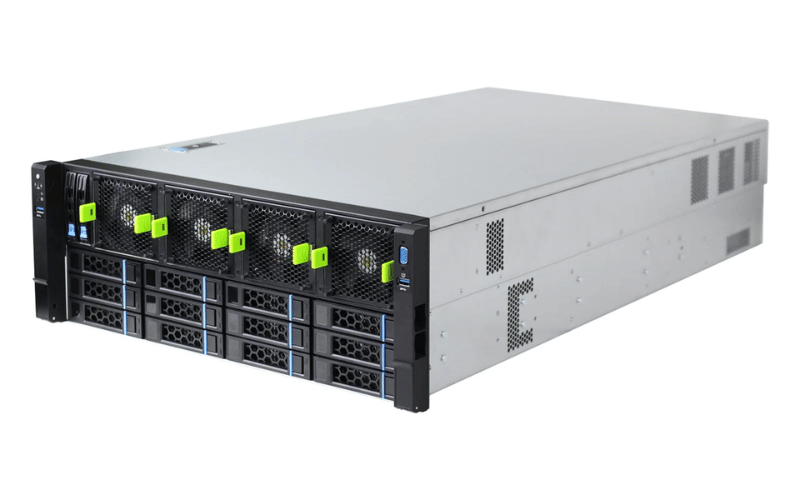
A rackmount case is a specialized chassis designed to house server components, network equipment, and IT hardware within a standardized rack framework. While traditional tower cases are mostly built for standalone, general-purpose computing in office environments, rackmount cases excel at maximizing space and efficiency in centralized data centers. They are vital for enterprise IT infrastructure, cloud computing, and high-performance computing because they allow organizations to securely stack multiple servers vertically in a single cabinet. These cases are often used in fields and programs that require high hardware density, enabling better airflow, easier cable management, and streamlined maintenance. You will typically find rackmount cases utilized in telecommunications, artificial intelligence (AI) data centers, enterprise networking, and large-scale web hosting operations, where physical space, system stability, and systematic organization are paramount to operational success.
What Are the Benefits of a Rackmount Case?
Advantages of Rackmount Cases:
1. Space Efficiency
Optimizing Data Center Footprints: A rackmount case drastically improves space efficiency by allowing businesses to consolidate multiple servers into a single vertical rack. By mounting hardware vertically, you save physical space in data centers and server rooms, freeing up valuable floor real estate. This space-saving design enables faster expansion and higher hardware density. It allows data center managers to scale their infrastructure without needing to acquire additional physical rooms. By standardizing equipment size, these cases make them ideal for expanding data center environments where traditional tower servers would quickly consume all available floor space and struggle to scale efficiently.
2. Enhanced Cooling and Ventilation
Directional Airflow: Rackmount cases are meticulously designed for optimal airflow and cooling. They typically employ a front-to-back airflow design, drawing cool air from the front aisle of the data center and exhausting hot air out the back. This specific arrangement efficiently manages concurrent heat generation from high-performance components, keeping hardware running smoothly.
Temperature Management: These cases easily accommodate heavy-duty cooling fans and liquid cooling solutions, making them perfect for environments running heat-intensive applications. This robust cooling capability enhances the reliability of complex network architectures, extending the lifespan of the enclosed components.
3. Easy Maintenance and Accessibility
Streamlined Hardware Swaps: Rackmount cases feature a modular design that speeds up maintenance, essential for IT technicians working on complicated network configurations. Sliding rails allow administrators to easily pull a server from the rack to swap hard drives or power supplies without dismantling the entire setup.
Hot-Swappable Components: These cases often include front-facing hot-swappable drive bays, reducing repair time and costs by enabling real-time hardware updates. Maintenance operations are smoother and enable rapid upgrades thanks to the rackmount case’s highly organized layout, improving workflow and minimizing downtime.
4. Security and Durability
Physical Protection: Rackmount cases swiftly protect sensitive hardware from physical damage and environmental hazards, offering robust enclosures made from heavy-duty steel or aluminum. This structural integrity enables more secure and reliable hardware housing in busy data centers.
Access Control: Server racks and the cases within them often feature locking bezels and secure access points that require physical keys or keycards. This design protects against unauthorized access and tampering. The enclosed metal chassis allows data center managers to maintain strict physical security protocols, ensuring that expensive networking equipment remains safe.
5. Versatility Across Applications
Enterprise IT: Rackmount cases speed up and improve network organization in traditional corporate server rooms, improving daily operations.
Healthcare and Life Sciences: These cases house the critical servers needed to process medical imaging and store sensitive patient data securely.
Media and Entertainment: They provide the foundational hardware for broadcast and entertainment studios, accelerating the rendering and distribution of multimedia data. By adapting to various motherboards and power supplies, rackmount cases easily accommodate a wide range of industry requirements, making them universally beneficial across numerous sectors.
Types of Rackmount Cases
Types of Rackmount Cases:
There are different kinds of rackmount cases, depending on the organization’s needs:
1. 1U Rackmount Cases
Compact Footprint: Also known as a 1U chassis, this design utilizes exactly 1.75 inches of vertical rack space. Its ultra-compact size and low vertical profile make it suitable for massive data centers where maximizing density is the primary goal.
Targeted Use Cases: In this configuration, IT teams deploy basic web servers, firewalls, and network switches. While it is challenging to manage massive cooling or fit large expansion cards due to the limited height, the 1U case is well-suited for lightweight, single-purpose applications stacked tightly together.
2. 2U Rackmount Cases
Balanced Design: The 2U rackmount case occupies 3.5 inches of vertical space, providing a highly sought-after balance between physical size and internal expandability.
Increased Capacity: By offering twice the height of a 1U system, 2U cases comfortably accommodate full-height PCIe expansion cards, multiple high-capacity power supplies, and larger cooling fans.
Ideal Workloads: These cases centralize network storage and dual-processor server motherboards, simplifying the deployment of virtualization servers and database management systems. The 2U footprint gives organizations the flexibility to build powerful systems without sacrificing much vertical space.
3. 4U and Larger Rackmount Cases
Maximum Capacity: 4U cases and larger take up 7 inches or more of vertical rack space. Software controllers, massive enterprise databases, and AI training servers often require these larger dimensions to house multiple GPUs and robust cooling solutions.
High-Performance Housing: Because they offer ample internal space, they accommodate specialized hardware such as oversized motherboards and liquid-cooling reservoirs. These large cases optimize resource use and reduce hardware limitations, making them better suited to current data-intensive applications, high-performance 3D rendering workstations, and cloud environments.
4. Custom Rackmount Cases
Tailored Solutions: Custom rackmount cases allow organizations to govern and design their hardware housing by specifying exact dimensions, port layouts, and mounting brackets. Manufacturers design these chassis to meet the precise operational demands of niche industries.
Specialized Environments: Whether designed for rugged military vehicles, telecommunications towers, or unique audiovisual setups, custom cases handle unique physical constraints. By abandoning standard configurations in favor of tailored engineering, custom rackmount designs provide agility, performance, and resilience for key business applications and services.
When Do You Need a Rackmount Case?
1. High-Density Server Environments
Data Centers and Cloud Computing: Rackmount cases are strictly required in high-density server environments, such as enterprise data centers. They enable quick expansion and rapid scaling by allowing IT teams to stack dozens of servers vertically in a standard rack.
Space Optimization: In these scenarios, rackmount enclosures manage spatial constraints far better than standard tower cases.
Consolidated Infrastructure: Rackmount cases can organize and improve complicated power and networking cables. By keeping hardware uniformly aligned, they support the massive, interconnected infrastructures required by cloud service providers.
2. Applications Requiring Scalability
Growing IT Infrastructures: Growing businesses and IT departments scale their networks faster using rackmount cases. These enclosures allow network engineers to add new storage arrays or servers without needing a completely new physical footprint.
Rapid Deployment: Rackmount cases excel at supporting rapid prototyping and network expansion at scale. As your organization adds more users, sliding a new server into an existing rack is highly efficient.
Future-Proofing: Deploying your enterprise applications is the final stage of IT planning, and a rackmount infrastructure ensures seamless expansion.
3. Industries with High Cooling Demands
AI and Machine Learning: Rackmount cases are required for housing the densely packed servers that run AI and machine learning models. They improve airflow, directing cool air exactly where high-wattage processors need it most.
Gaming and Rendering: Cloud gaming providers and 3D rendering farms rely on rack-mount cases to manage extreme heat output. The structured ventilation removes heat faster, improving continuous hardware performance.
Thermal Management: Rackmount enclosures enhance overall system stability by seamlessly integrating with advanced HVAC systems in enterprise environments.
4. Secure and Durable Hardware Housing
Protecting Sensitive Equipment: Rackmount cases can boost the physical security of sensitive IT hardware for corporate and government organizations. This is extremely important for enterprises handling proprietary data or financial records that must prevent physical tampering.
Rugged Environments: Industrial workspaces benefit from rack-mount cases’ improved durability and structural integrity, which protect components from dust and vibration.
Overall Reliability: These enclosures reduce physical risks and boost IT management efficiency by centralizing hardware into locked cabinets, ensuring only authorized personnel have access to internal components.
5. Video Processing and Encoding
Multimedia Production: Rackmount cases help broadcast studios and video producers house the massive storage arrays and rendering servers required for high-resolution video. The standardized cases keep edit bays quiet by moving loud hardware to dedicated server rooms.
Streaming Services: Video encoding hardware is efficiently stacked using rackmount cases. This achieves high-density processing power, keeping latency low for live streaming platforms.
Content Creation: Rackmount enclosures enable highly organized and easily accessible hardware configurations in multimedia workflows, allowing rapid hardware upgrades.
Rackmount Cases vs Tower Cases
GPU vs CPU: What’s the difference?
| Features | Tower Case | Rackmount Case |
|---|---|---|
| Form Factor & Space | Versatile and requires no specialized furniture, easily sitting on a desk or floor for independent use. | Ideal for high-density environments, stacking vertically in server cabinets to save massive amounts of floor space. |
| Cooling Design | Optimal for standalone cooling with multidirectional airflow, suitable for standard office temperatures. | Highly optimized for front-to-back airflow, perfectly aligning with data center HVAC designs for fast heat removal. |
| Scalability | Suitable for small offices or individual workstations with limited anticipated network growth. | High scalability, allowing network engineers to easily add dozens of new servers to a single centralized rack. |
| Cost & Maintenance | Lower upfront cost and highly convenient for independent workspaces without requiring rack hardware. | Increases enterprise efficiency with hot-swappable drive bays and centralized cable management for large-scale infrastructure. |
Key Differences
Tower cases offer a plug-and-play solution suitable for individual workstations and small office environments. They do not require a specialized rack cabinet, reducing initial setup costs, and they operate quietly with basic cooling fans. However, they lack the scalability required for growing enterprise networks. Conversely, rackmount cases excel in centralized IT infrastructures. While they require an upfront purchase of server racks, their standardized dimensions enable unparalleled hardware density. They simplify cable management, optimize directional cooling, and enhance physical security, making them the ultimate choice for data centers.
Partner With Onechassis
Partner With Onechassis:
Onechassis Rackmount Solutions
Onechassis Data Center Solutions: Partner with Onechassis for a scalable, high-quality hardware housing solution to accelerate your data center deployment. It gives IT teams strong, durable enclosures to experiment and scale while controlling their physical infrastructure. The Onechassis 4U and 2U series offer ultra-scalable layouts for corporate IT. These enclosures accommodate advanced cooling solutions, feature industry-leading structural security, provide simpler lifecycle management, and offer enterprise-grade manufacturing support from Onechassis specialists worldwide. They support complex server boards and massive storage arrays effortlessly.
Why Choose Onechassis?
Ultra-scalable solutions for Enterprise IT: Onechassis provides premium rackmount cases optimized for high-performance servers, with extensive support for hot-swappable drives and redundant power supplies. By combining strict quality control with cutting-edge chassis design, Onechassis offers robust scalability options while protecting your expensive hardware. These server cases work well with larger motherboard form factors and complex cooling matrices, increasing data center capacity. With a strong commitment to continuous innovation, Onechassis ensures your IT infrastructure is built on a durable foundation. Contact your Onechassis representative to select your case.
