


When building a robust IT infrastructure, one of the most critical choices you will make is selecting the right hardware enclosure. The case defines not only the physical footprint of your setup but also determines the cooling efficiency, hardware capacity, and overall longevity of your system. If you are aiming for a reliable, high-performing network or storage array, understanding the equipment’s exact purpose is essential.
So, what is a server case? This article will explain the core concepts of server enclosures, their distinct benefits, and the potential challenges of building and maintaining high-density hardware. We will also highlight a standout option from OneChassis to demonstrate how modern server cases combine exceptional functionality with professional aesthetics. Whether you are upgrading an existing network or starting from scratch, this guide will help you make an informed decision for your hardware.
What is a Server Case?
A server case is a highly specialized enclosure designed specifically to house and protect server-grade computer hardware. Unlike standard desktop computer towers, these chassis are engineered to handle the rigorous demands of continuous, 24/7 operation. They provide the necessary physical framework to securely mount complex internal components, creating a stable environment for critical data processing and storage without interruption.
These robust enclosures are built to accommodate large, enterprise-grade motherboards, including standard ATX, Extended ATX (E-ATX), and even dual-socket SSI EEB form factors. By supporting these larger boards, a server case can comfortably house multiple high-performance CPUs, extensive arrays of RAM, multiple graphics processing units (GPUs), and high-capacity redundant power supplies. They also feature numerous drive bays to support vast amounts of hard drive storage, ensuring the system can scale alongside your data needs.
Due to their specialized design and flexible mounting options, server cases are incredibly versatile and suitable for a wide range of environments. They are the backbone of modern IT infrastructure, heavily utilized in:
- Data centers: Server cases are standard equipment in large-scale data centers, where they are typically mounted in massive racks to maximize space and centralize computing power.
- Enterprise-level applications: Businesses rely on these enclosures to run internal networks, host corporate websites, manage secure databases, and support employee workstations.
- Home server setups: Tech enthusiasts and professionals working from home often use server cases to build personal cloud storage, run media servers, or host dedicated gaming servers.
Key Characteristics of a Server Case
- Compact or Large Size Options: Server cases are available in a wide range of sizes to accommodate different operational scales and space restrictions. In rackmount configurations, their height is measured in standard Rack Units (U), ranging from ultra-slim 1U cases to massive 4U or 5U enclosures. A 1U case is perfect for basic web hosting or firewall applications where space is extremely limited. Conversely, larger 4U cases provide the immense internal volume required for massive storage arrays or multi-GPU processing setups. This variety ensures that administrators can select a chassis size that perfectly aligns with their specific hardware requirements.
- High Component Density: One of the most defining characteristics of a server case is its ability to pack a tremendous amount of computing power into a strictly defined space. These chassis are meticulously designed to maximize internal volume, allowing builders to install dozens of hard drives, multiple network interface cards, and specialized RAID controllers side by side. This high component density is crucial for data centers and enterprise environments that need to maximize their computational output per square foot. Every square inch of the enclosure is optimized for maximum hardware placement.
- Cooling and Airflow: Because server cases house tightly packed, high-performance components, they generate a massive amount of heat. Consequently, sophisticated cooling and airflow management are defining characteristics of these enclosures. Server cases feature high-RPM, industrial-grade cooling fans that forcefully push cold air through the chassis and pull hot air out. The internal layout is strategically designed to create clear thermal channels, ensuring that cold air reaches the CPUs and storage drives before exiting the rear. This relentless focus on thermal management prevents overheating and ensures optimal performance under heavy workloads.
- Durability and Security: Server cases are built to last, using heavy-duty materials such as cold-rolled steel or thick extruded aluminum. This rugged construction protects the delicate internal hardware from physical impacts, vibrations, and environmental hazards. In addition to physical durability, security is a major design priority. Most server cases include locking front bezels, secure drive caddies, and intrusion-detection switches that alert administrators when the chassis is opened. These features ensure that sensitive company data and expensive hardware remain safe from unauthorized physical access or tampering.
Advantages of Server Cases
- Efficient Space Utilization: Server cases, particularly rackmount models, are engineered to maximize spatial efficiency, a capability that standard tower PCs simply cannot match. By stacking horizontally within a standardized server rack, these cases allow organizations to consolidate dozens of highly powerful machines into a single vertical footprint. This efficient use of space is absolutely essential for crowded data centers and small office IT closets where physical floor space is highly restricted. It transforms a chaotic jumble of standalone computers into a streamlined, highly organized computing hub.
- Scalability: As a business grows, its computing and storage needs inevitably expand. Server cases offer exceptional scalability, allowing IT administrators to easily add or upgrade components without replacing the entire system. Most enclosures feature numerous hot-swappable drive bays, multiple PCIe expansion slots, and support for upgraded power supplies. This modular approach means you can start with a basic configuration and seamlessly scale up your storage capacity or processing power as your network demands increase, protecting your initial hardware investment.
- Enhanced Cooling: Standard computer cases often struggle to cool multiple enterprise-grade components operating at full capacity. Server cases solve this problem through enhanced, purpose-built cooling architectures. They support redundant cooling fans that keep the system running even if a single fan fails. Furthermore, the internal layouts are specifically designed to direct high-velocity airflow precisely over the hottest components, such as processors and RAID controllers. This thermal efficiency prevents performance throttling, extends hardware lifespan, and maintains system stability during heavy data processing.
- Cable Management: A disorganized tangle of cables can block critical airflow and make hardware maintenance a frustrating, time-consuming ordeal. Server cases address this issue by incorporating advanced cable management systems directly into their design. They feature dedicated routing channels, tie-down points, and spacious areas behind the motherboard tray to neatly organize power and data cables. This built-in organization not only improves the internal airflow of the chassis but also allows technicians to quickly identify and replace specific cables during routine maintenance or emergency troubleshooting.
- Professional Aesthetics: In enterprise environments, the appearance of the IT infrastructure reflects the organization’s professionalism. Server cases provide a sleek, uniform, and highly professional aesthetic. When mounted in a rack, their clean metal faceplates and organized indicator lights create an impressive, cohesive look. This orderly appearance is particularly important for businesses that occasionally host clients or investors in their facilities. A neat row of standardized server cases inspires confidence in the company’s data management capabilities and technical competence.
Challenges of Server Cases
- High Cost: Due to their specialized construction, heavy-duty materials, and advanced features, server cases are generally much more expensive than standard consumer computer cases. The inclusion of industrial-grade cooling fans, hot-swappable drive backplanes, and redundant power supplies significantly increases manufacturing costs. For small businesses or budget-conscious home lab builders, this high initial financial investment can be a notable barrier to entry. Buyers must carefully weigh the upfront cost against the long-term reliability and performance benefits.
- Complex Assembly: Building a system inside a server case requires a higher level of technical expertise and careful planning compared to a standard desktop build. The high component density means that working inside the chassis can be physically cramped, requiring precise installation sequences. Furthermore, configuring specialized server hardware—such as enterprise motherboards, complex RAID storage arrays, and redundant power supplies—demands a thorough understanding of server architecture. Novice builders may find the assembly process intimidating and highly time-consuming without prior experience.
- Cooling Challenges in Dense Builds: While server cases are designed for excellent airflow, managing thermals in extremely dense builds remains a significant challenge. When a chassis is fully populated with dual CPUs, multiple GPUs, and two dozen hard drives, the amount of heat generated is staggering. If the server room lacks adequate external climate control or if cables are improperly routed and block the internal airflow channels, the hardware can quickly overheat. Maintaining safe operating temperatures in these high-density configurations requires constant monitoring and powerful, loud cooling fans.
- Limited Portability: Server cases, especially larger 3U or 4U rackmount models, are incredibly heavy and cumbersome. Once loaded with metal hard drives, massive power supplies, and heavy cooling arrays, a single case can easily weigh over fifty pounds. They are designed for stationary, long-term installation inside a server rack, not for regular movement. If you need a portable system you can easily transport between locations or offices, a large server case is impractical due to its sheer bulk and weight.
OneChassis Server Case: A Case Designed for Performance
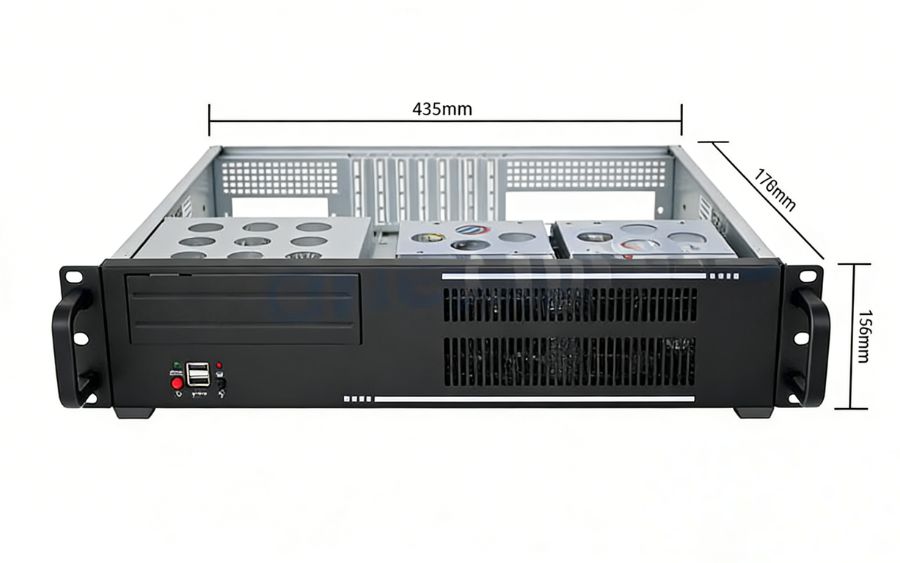
When selecting an enclosure that balances robust protection with exceptional functionality, the OneChassis Server Case stands out as a premier solution. Designed to meet the rigorous demands of modern enterprise computing, this case offers everything IT professionals need to build powerful, reliable, and space-saving servers. It expertly addresses many of the common challenges associated with high-density builds.
- Durable Build: The OneChassis Server Case is constructed from premium, heavy-duty cold-rolled steel, ensuring maximum physical protection for your internal components. This robust, rigid frame resists flexing and dampens vibrations from hardware, which is critical for extending the lifespan of mechanical hard drives. It is engineered to withstand the demanding environments of busy data centers, providing long-term reliability that IT administrators can trust.
- Optimized Cooling: Thermal management is a standout feature of the OneChassis Server Case. The enclosure supports an array of high-speed, hot-swappable cooling fans positioned to drive massive volumes of air directly across the motherboard and storage bays. This optimized thermal pathway effectively dissipates heat from high-performance CPUs and GPUs, ensuring your system maintains peak operational speeds without the risk of thermal throttling.
- Scalable Design: Built with future growth in mind, the OneChassis Server Case maximizes internal space to support massive hardware configurations. It easily accommodates large E-ATX motherboards, multiple full-length expansion cards, and redundant power supplies. Furthermore, its numerous drive bays provide ample storage flexibility, allowing administrators to scale data capacity smoothly as organizational requirements evolve.
- Tool-less Maintenance: To minimize costly downtime, the OneChassis Server Case features an intuitive, tool-less maintenance design. Drive caddies, expansion slot covers, and top access panels can be removed quickly without the need for screwdrivers. This user-friendly feature allows technicians to swiftly swap out failed hard drives or upgrade system memory, making routine maintenance remarkably efficient even within the compact confines of the server rack.
- Cable Management System: Despite its high-density capacity, the OneChassis Server Case offers a meticulously designed cable management system. It includes strategically placed routing holes and secure tie-down points that keep power and data cables neatly organized and out of the primary airflow pathways. This ensures a clean, easily serviceable build that promotes better cooling and faster hardware troubleshooting.
- Dust Prevention: To protect sensitive electronics from environmental contaminants, the OneChassis Server Case is equipped with washable dust filters at primary air intake points. By catching airborne particles before they enter the chassis, these filters prevent dust from clogging heat sinks and fans. This simple but effective feature significantly reduces internal maintenance requirements and improves overall system longevity.
Why Choose OneChassis Server Case?
The OneChassis Server Case is the perfect enclosure for organizations that demand uncompromising reliability and performance. Whether you are building an enterprise database, outfitting a commercial data center, or establishing a powerful home server, this case provides the structural integrity and cooling capacity required for top-tier hardware. Its thoughtful design elements, from tool-less access to superior cable management, make it an outstanding investment for any serious IT infrastructure project.
Understanding the function and value of your hardware enclosures is the first step toward building a resilient IT environment. A server case is a highly specialized chassis designed to house, protect, and cool critical computing components, ensuring your network operates smoothly around the clock. While they present challenges such as high initial costs and complex assembly requirements, their benefits in spatial efficiency, structural durability, and cooling performance are unmatched.
When evaluating market options, the OneChassis Server Case is a prime example of industry-leading design. By offering optimized airflow, scalable hardware support, and heavy-duty construction, it provides the perfect foundation for high-performance server builds. Whether you manage a sprawling corporate network or a dedicated home lab, choosing a quality server case is a vital investment in the long-term success and stability of your digital infrastructure.
