


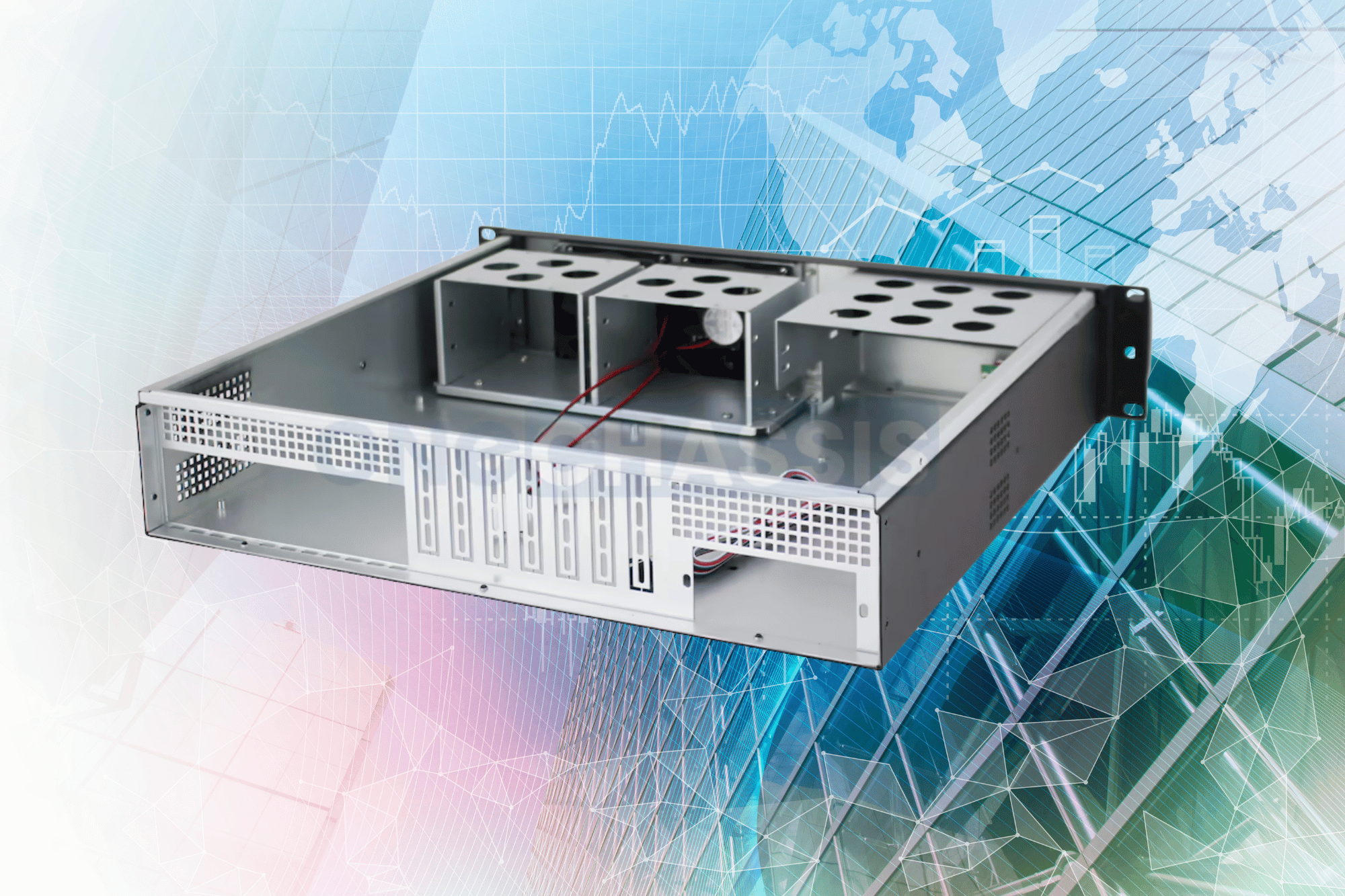
Explore the four main sizes of rack-mount enclosures—1U, 2U, 3U, and 4U—and find out which hardware housing solution best fits your business needs. Understand the pros, cons, and use cases for each enclosure model, from basic space-saving servers to massive enterprise hardware arrays.
Rack-mount enclosures form the essential foundation of any modern IT infrastructure. Whether you are building a localized network for a small office or architecting a massive regional data center, you will need a structural housing solution that securely and efficiently meets your enterprise’s unique hardware demands. As the ways businesses manage and process physical data continue to expand—especially with the increased demand for high-density computing and virtualization—so too do the number of rack enclosure configurations available.
Choosing the correct size is a critical operational decision; it requires a deep understanding of your thermal management requirements, spatial constraints, and long-term hardware expansion goals. By examining their distinct physical dimensions, advantages, and limitations, we can provide you with the exact knowledge needed to choose the best rack-mount enclosure for your specific hardware requirements, ensuring optimal system performance and seamless scalability.
What are rack-mount enclosures?
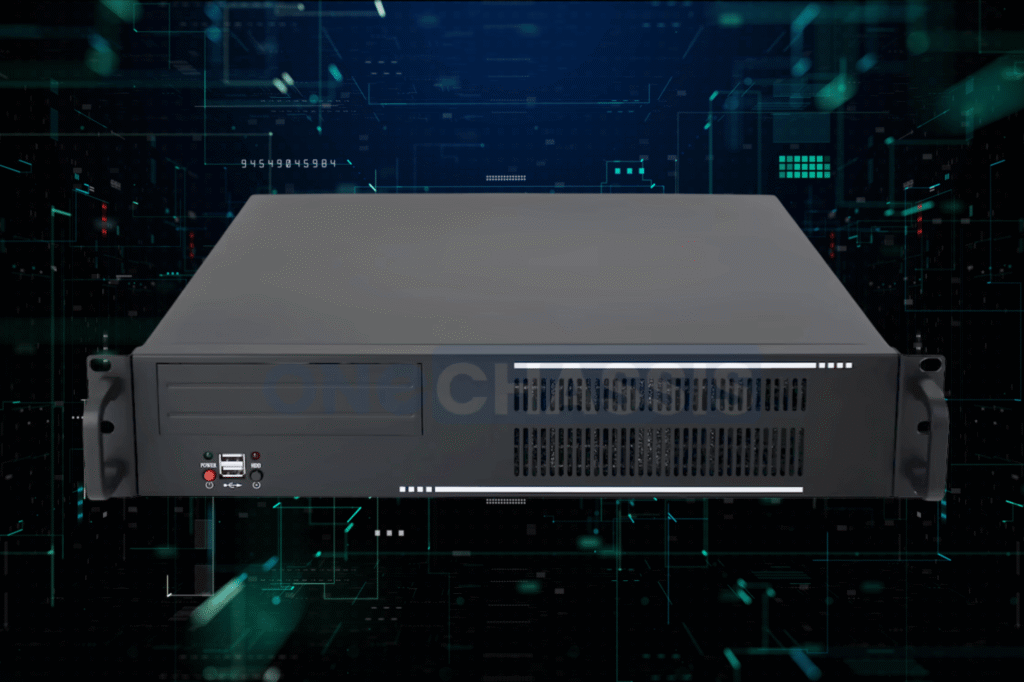
Put simply, rack-mount enclosures are standardized metal frames or cabinets designed specifically to house, organize, and secure multiple hardware devices within a centralized location. These enclosures enable businesses to securely store their critical servers, networking switches, and storage arrays in a highly organized, vertical format. They eliminate the need to scatter individual computing units across random desks or floors by consolidating physical hardware into a unified, modular system that is easily accessible.
IT professionals rely on these standard enclosures to effectively manage large bundles of network cabling, distribute power evenly, and maintain proper airflow for cooling across dozens of high-performance computing systems simultaneously.
Compared with other common hardware mounting options, rack-mount enclosures offer a distinct balance of high density and structural expandability, making them incredibly versatile. Tower cases, which resemble standard desktop computer towers, are bulky and occupy significant floor space, making them inefficient and unsuitable for environments that require multiple machines to run simultaneously. On the other hand, proprietary blade enclosures offer high density but restrict you to specific vendor hardware and require massive upfront investments.
By utilizing rack-mount enclosures, businesses sit perfectly in the middle. They provide significantly greater space efficiency than standalone tower cases while offering universal compatibility to accept standard hardware from virtually any manufacturer, making them the most flexible choice. The evolution of these enclosures mirrors the rapid growth of the internet and corporate networks. Originally adapted from the 19-inch rack standards used by the telecommunications industry, these enclosures revolutionized IT infrastructure by enabling computing hardware from different manufacturers to fit seamlessly into the same physical space.
Why choose rack-mount enclosures?
Rack-mount enclosures are a popular physical infrastructure solution for a handful of crucial reasons:
- Space efficiency: by maximizing the use of extremely limited floor space in expensive server rooms. Because they are meticulously designed to stack hardware vertically in standardized slots, businesses can easily place multiple servers and switches on top of one another. This vertical orientation allows network engineers to pack immense processing power and massive storage capacity within a remarkably small physical footprint.
- Cost-effectiveness: you do not get locked into proprietary mounting systems. Standardized enclosures accept standard rack-mountable equipment from any manufacturer, allowing procurement teams to shop for the most competitive hardware pricing available. Centralizing the hardware also enables shared power distribution and focused cooling paths, thereby lowering ongoing utility costs.
- Ease of maintenance: maintenance workflows are heavily streamlined due to the racks’ open accessibility. IT technicians can quickly access both the front and rear panels of the servers to swap out failed hard drives, manage complex cable routing, or upgrade memory without having to extract the entire machine.
- Modular scalability: scaling your physical infrastructure is incredibly straightforward. As your operational demands increase, expanding your network is as simple as purchasing a new piece of hardware and sliding it into an empty mounting slot on the existing rack.
Rack-mount enclosures are measured in standardized Rack Units (U), with the most common sizes being 1U, 2U, 3U, and 4U. Each of these specific vertical dimensions presents its own unique strengths, physical weaknesses, and ideal industry use cases. But what exactly are the differences between these four types, and which one could best meet your business needs?
4 types of rack-mount enclosures
1U Rack-Mount Enclosures

A 1U rack-mount enclosure is the most compact standard size, measuring exactly 1.75 inches in height and typically spanning the standard 19-inch width. These highly slim enclosures are engineered specifically to maximize vertical density, allowing IT administrators to pack the greatest number of individual servers or network appliances into a single physical rack. They are universally utilized to house standard entry-level processing servers, basic network switches, firewall appliances, and simple power distribution units.
Because of their minimal vertical profile, 1U enclosures are the primary building blocks for large-scale data centers that prioritize pure hardware density over internal expandability. They provide a standardized housing structure that allows companies to deploy dozens of independent processing nodes or routing devices within a single standard 42U cabinet.
The pros
Benefits of using a 1U rack-mount enclosure include:
- Unparalleled space efficiency – by occupying the absolute minimum vertical space on the rack, these enclosures enable organizations to achieve high processing density within a highly constrained physical footprint.
- Cost-effective deployment – standard 1U chassis are generally less expensive to manufacture and purchase than their larger counterparts, making them an affordable option when procuring infrastructure at mass scale.
- Lightweight handling – their slim design keeps the total weight of individual units relatively low, which significantly simplifies physical installation for IT technicians working in tightly packed server rooms.
The cons
- Zero hardware expandability – because the internal height is strictly limited to less than two inches, these cases offer practically no room for adding large expansion cards, multiple high-capacity hard drives, or full-sized graphics processing units.
- Severe thermal challenges – the extreme lack of internal airspace makes thermal management a massive hurdle. The enclosure must use very small, extremely high-speed fans to force air over densely packed components, raising the risk of overheating.
- High acoustic noise – the tiny, high-speed cooling fans required to keep these slim units operating generate significantly higher noise levels than larger enclosures.
Use cases
1U rack-mount enclosures are ideal for businesses that require high-density server farms or organizations deploying dedicated, single-purpose network appliances across multiple physical locations. This makes them perfect for massive web hosting providers and large-scale cloud storage operators that rely on thousands of identical, low-profile nodes to manage distributed computing tasks.
For example, an internet service provider can stack 40 different 1U routing and switching enclosures into a single rack to efficiently manage massive amounts of consumer web traffic.
Additionally, 1U enclosures serve excellently as dedicated hardware firewalls or proxy servers within corporate IT closets. By using a 1U form factor for these essential security tasks, network administrators can conserve valuable rack space for larger, more demanding database servers while maintaining a highly secure physical network layout.
2U Rack-Mount Enclosures
A 2U rack-mount enclosure measures exactly 3.5 inches in height, effectively doubling the internal vertical volume compared to the slimmest 1U models. These mid-sized enclosures are the most popular and versatile housing option in the IT industry, offering the perfect balance between space-saving density and robust internal hardware capacity. They are engineered to provide sufficient internal clearance to accommodate standard-profile PCIe expansion cards, dual processors, and significantly larger hard drive arrays.
2U enclosures serve as the primary housing for mainstream enterprise servers, mid-sized database machines, and robust network-attached storage arrays. By offering a balanced structural footprint, these enclosures allow IT departments to build powerful, multi-purpose computing nodes.
The pros
- Exceptional hardware balance – they provide the physical space required for extensive internal upgrades. Administrators can easily install multiple network interface cards, advanced RAID controllers, and up to a dozen hot-swappable hard drives.
- Improved thermal management – the increased internal vertical space allows for the installation of much larger, highly efficient cooling fans and substantial CPU heatsinks, dramatically reducing the risk of thermal throttling.
- Quieter operation – thanks to the ability to use larger cooling fans that spin at lower speeds, 2U enclosures generate significantly less acoustic noise than screaming 1U fans.
The cons
- Reduced rack density – utilizing 2U enclosures halves the total number of independent machines you can physically fit into a standard rack compared to deploying 1U units, which can be a drawback for massive hyperscale data centers.
- Higher procurement costs – the larger metal chassis and more robust internal cooling components generally make 2U enclosures slightly more expensive per unit.
- Wasted space for simple tasks – if a business attempts to use 2U enclosures for simple, lightweight tasks like basic routing, it will end up paying a premium for internal physical space it will never actually utilize.
Use cases
2U rack-mount enclosures are best suited for medium-sized enterprises and large corporate departments that demand reliable, highly expandable hardware platforms to support critical daily operations and comprehensive virtualization strategies.
Industries like local government, regional healthcare networks, and mid-sized financial institutions frequently rely on 2U servers to host dynamic customer databases, extensive accounting software, and unified internal communication systems. For instance, a regional hospital network could deploy several 2U enclosures to house the dedicated servers that run its electronic medical record system. The 2U size provides ample physical space for redundant internal power supplies and massive arrays of mirrored hard drives, ensuring absolute data integrity and continuous uptime.
Additionally, these enclosures are ideal for video surveillance systems that require substantial local storage capacity and the processing power to instantly analyze high-definition camera feeds across multiple facility locations.
3U Rack-Mount Enclosures
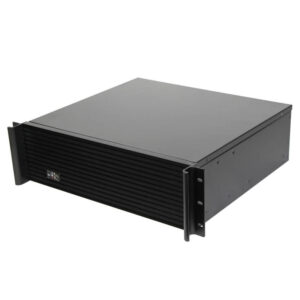
A 3U rack-mount enclosure measures precisely 5.25 inches in height, stepping firmly into the realm of heavy-duty, high-capacity enterprise hardware housing. These substantial enclosures are specifically designed for applications that require extensive physical space for complex hardware configurations that simply cannot be squeezed into standard 1U or 2U chassis. They provide immense internal volume, allowing for the installation of massive motherboards, an abundance of full-length PCIe expansion cards, and highly advanced internal cooling loops.
3U enclosures are primarily utilized to house massive storage area networks, complex telecommunications switching gear, and dedicated audio-visual processing hubs. They serve as the foundational housing for specialized enterprise hardware that prioritizes maximum component flexibility over vertical stacking density.
The pros
- Extraordinary hardware flexibility – offering over five inches of internal vertical clearance, IT technicians can easily install oversized, high-performance components, including massive power supply arrays and specialized cooling systems.
- Superior thermal dissipation – the vast internal space eliminates cramped cable-routing nightmares, preventing localized heat pockets and keeping incredibly hot processors running at peak efficiency.
- Massive storage capacity – 3U enclosures can easily accommodate highly complex storage configurations, holding over a dozen high-capacity drives alongside multiple dedicated hardware accelerators.
The cons
- Large physical footprint – by occupying three standard vertical slots, these enclosures drastically reduce the total number of distinct machines a business can install in a single rack.
- Significant weight issues – the heavy-duty steel construction required to support massive internal components makes 3U cases exceptionally heavy, often requiring mechanical lifts to avoid dropping expensive equipment.
- Higher overall costs – the specialized nature and robust build quality of 3U enclosures make them substantially more expensive to purchase and ship.
Use cases
3U rack-mount enclosures are frequently used in environments where specialized internal hardware, massive physical storage capacity, and superior structural cooling are absolutely critical to the core mission. Large-scale media production companies, dedicated telecommunications hubs, and advanced research laboratories heavily rely on 3U enclosures to house their most unique and complex systems.
For example, a major television broadcasting studio might utilize 3U enclosures to hold its high-end video encoding and streaming hardware. The large internal capacity effortlessly accommodates multiple heavy-duty video capture cards and the robust cooling fans needed to keep the system running smoothly while rendering high-definition live feeds.
Similarly, enterprise data centers use 3U enclosures for massive archival storage arrays, leveraging the vast front-panel real estate to pack in dozens of mechanical hard drives, ensuring that decades’ worth of critical corporate data is securely housed in a highly resilient physical format.
4U Rack-Mount Enclosures
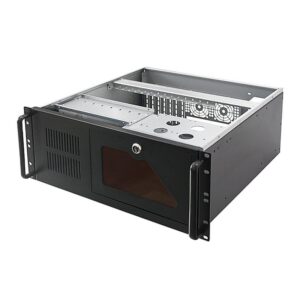
A 4U rack-mount enclosure measures a massive 7.0 inches in height, the largest standard size commonly used in mainstream IT server racks. These colossal enclosures are engineered to provide the maximum possible internal volume, essentially acting as standard full-sized computer towers turned on their sides and fitted with heavy-duty rack mounting rails. They offer completely uncompromised internal physical space, easily housing the largest enterprise motherboards, four-socket processor configurations, and extensive arrays of full-length, double-width graphics processing units.
4U enclosures are exclusively deployed for the most demanding, specialized applications imaginable, including massive artificial intelligence training nodes, complex industrial control systems, and ultra-dense hyper-converged infrastructure blocks.
The pros
- Unconstrained hardware capacity – by offering a full seven inches of vertical height, these enclosures remove virtually all physical limitations on internal component selection and easily accommodate massive graphics cards.
- Maximum structural customization – IT architects can install standard consumer-grade or specialized enterprise components with complete freedom, including massive liquid-cooling reservoirs or multiple oversized power supplies.
- Incredible physical durability – the massive chassis provides outstanding structural strength and vibration resistance, making it ideal for housing highly sensitive equipment in rugged environments.
The cons
- Complete lack of density efficiency – taking up four full vertical units means you can fit only 10 of these enclosures in a standard 42U rack, which heavily limits the scale of your facility if deployed broadly.
- Extreme weight – fully loaded 4U enclosures packed with massive power supplies and dozens of hard drives can easily weigh over 100 pounds, requiring specialized rails for safe installation.
- Wasteful for standard workloads – because they are designed for extreme configurations, using a 4U enclosure for standard IT workloads is wildly inefficient and wastes a massive amount of highly expensive data center real estate.
Use cases
4U rack-mount enclosures are ideal for organizations operating within niche technical industries that demand highly specific, physically massive hardware configurations or extreme computational acceleration. The artificial intelligence sector, heavy industrial manufacturing, and advanced military defense networks rely heavily on these customized housing solutions.
For example, an autonomous vehicle research facility will deploy racks of 4U enclosures to serve as dedicated machine-learning hubs. These 4U cases easily accommodate massive arrays of liquid-cooled graphics processors and oversized power delivery systems necessary to process and analyze petabytes of driving data, significantly reducing algorithmic training times.
In the defense and energy sectors, ruggedized 4U enclosures are deployed inside mobile command vehicles or on offshore platforms. The massive internal space allows for heavy shock-absorbing mounts to be installed around the motherboards, ensuring the hardware survives extreme physical impacts and constant vibration in harsh operational environments.
The verdict
While there are compelling physical use cases for each of the four key rack-mount enclosure sizes, depending on the hardware solutions your business requires, it is always a good idea to opt for a housing solution that perfectly balances your current physical capacity with your anticipated future hardware expansion.
With 1U enclosures, you establish a highly dense, space-saving foundation for basic routing and scaled web server deployment. 2U enclosures offer a highly versatile middle ground, providing the improved cooling and flexible PCIe capacity necessary to handle robust enterprise databases. 3U models deliver the extreme internal volume required for massive specialized storage arrays and heavy-duty broadcasting equipment. Finally, 4U enclosures sacrifice density efficiency entirely to provide uncompromised internal space for complex artificial intelligence rendering hardware or for extreme physical ruggedization in harsh industrial environments.
When choosing the right enclosure size, carefully evaluate your precise internal hardware needs, rigid facility space constraints, and overall infrastructure budget. Organizations operating in tight urban server closets should heavily favor 1U enclosures to manage workflows efficiently. Growing mid-sized enterprises should standardize around 2U enclosures, capitalizing on their scalable drive bays. If your organization relies heavily on highly specialized expansion cards, moving up to a 3U enclosure is a strict necessity. For companies pushing the boundaries of machine learning, bypassing standard constraints and using large 4U enclosures will prevent physical bottlenecks.
Whether it is a slim 1U networking hub or a massive 4U artificial intelligence processing node, selecting the appropriate rack-mount enclosure ensures your IT physical infrastructure remains highly organized, thermally efficient, and perfectly scaled for long-term success.
