


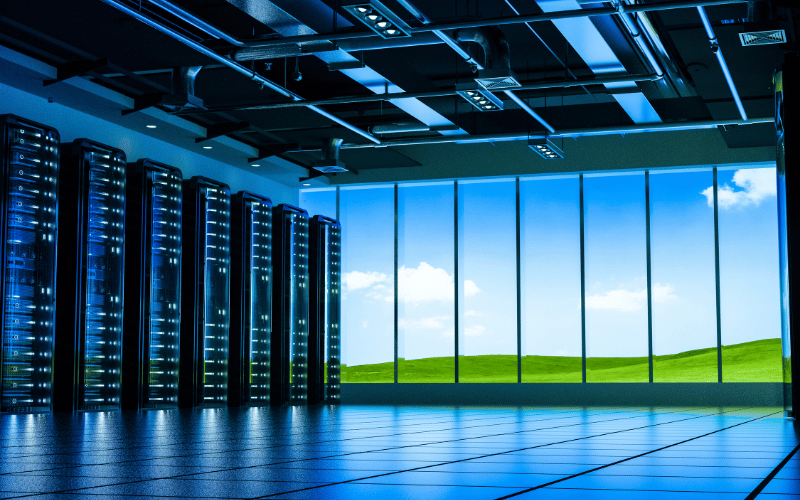
A green data center is a facility designed to maximize energy efficiency and minimize environmental impact. Its primary purpose is to store, manage, and disseminate data while utilizing sustainable technologies and strategies to reduce its carbon footprint. Unlike standard facilities that consume massive amounts of electricity and water, green data centers prioritize renewable energy, advanced cooling techniques, and eco-friendly building materials. This approach ensures that the growing demand for digital services does not come at the expense of the planet’s health.
Businesses today are increasingly adopting green data centers to align with global sustainability goals and corporate social responsibility (CSR) initiatives. Beyond environmental stewardship, these facilities offer significant operational benefits, such as reduced energy costs and compliance with stricter environmental regulations. By optimizing power usage effectiveness (PUE) and leveraging clean energy, companies can achieve long-term financial savings while bolstering their brand reputation. This shift represents a strategic move towards a more resilient and responsible IT infrastructure.
In this blog, we will explore the concept of green data centers in depth. We will start by comparing them to traditional facilities to highlight key differences in efficiency and impact. Next, we will examine the relationship between green practices and colocation models. We will also discuss the rapid global growth of sustainable data centers driven by market demand and regulation. Finally, we will break down the essential features that define a green facility, including renewable energy integration and advanced cooling systems, before concluding with actionable advice for adoption.
Green Data Centers vs. Traditional Data Centers
Traditional data centers are notorious for their substantial energy consumption and significant carbon footprint. Historically, these facilities were designed with a singular focus on uptime and performance, often at the expense of energy efficiency. They typically rely heavily on fossil-fuel-based power grids and use inefficient cooling systems that consume vast amounts of water and electricity. This legacy infrastructure results in high Power Usage Effectiveness (PUE) ratios, meaning a large portion of the energy consumed is wasted on non-computing tasks such as cooling and lighting rather than on actual data processing.
In contrast, green data centers are engineered from the ground up to minimize energy use and carbon emissions through sustainable practices. They integrate intelligent power management systems that optimize electricity flow and reduce waste. These facilities often employ free cooling techniques, utilizing outside air or nearby water sources to cool servers naturally, drastically reducing the reliance on energy-intensive air conditioning units. By prioritizing efficiency at every level—from the server rack to the building shell—green data centers significantly lower the environmental impact of digital operations.
The advantages of green data centers extend beyond environmental responsibility; they also offer compelling economic benefits. The superior energy efficiency translates directly into lower operational costs, providing a competitive edge in a market where energy prices are volatile. Furthermore, adopting green infrastructure future-proofs businesses against tightening environmental regulations and carbon taxes. By reducing dependence on non-renewable resources, these facilities offer a sustainable path forward, balancing the exponential growth of data with the urgent need for ecological preservation.
Green Data Centers vs. Colocation
Green data centers are defined by their intrinsic focus on renewable energy and sustainable operations, regardless of their ownership model. They can be private, enterprise-owned facilities or large-scale shared environments. The core philosophy revolves around achieving a net-zero carbon footprint through the use of solar, wind, or hydroelectric power. These facilities invest heavily in certifications like LEED (Leadership in Energy and Environmental Design) to validate their commitment to sustainability. Their operational strategies are centered on continuous improvement in energy metrics and waste reduction.
Colocation data centers, on the other hand, operate on a rental model where a provider leases space, power, and cooling to multiple businesses. While not all colocation facilities are “green” by default, many top-tier providers are aggressively adopting sustainable practices to attract environmentally conscious tenants. By consolidating the IT infrastructure of many companies into a single, highly efficient facility, colocation inherently offers better energy efficiency than multiple small, inefficient private server rooms. Leading colocation providers now offer “green colocation” options, allowing tenants to power their rented racks with 100% renewable energy credits.
Each model presents distinct benefits and trade-offs in terms of cost, scalability, and sustainability. Building a private green data center offers total control over environmental metrics but requires massive capital investment and expertise. Using a green colocation provider provides immediate access to sustainable infrastructure with lower upfront costs and high scalability. However, tenants in colocation facilities rely on the provider’s claims and reporting for their sustainability data. For many businesses, green colocation serves as the most practical bridge to sustainability, offering the benefits of an eco-friendly facility without the burden of construction and management.
The Growth of Green Data Centers
The growth of green data centers is accelerating globally, driven by a surge in demand for sustainable IT solutions and a heightened awareness of climate change. As data consumption skyrockets due to streaming, AI, and cloud computing, the internet’s energy footprint has come under scrutiny. Consequently, corporations are under increasing pressure from investors, customers, and regulators to decarbonize their supply chains. This has transformed sustainability from a “nice-to-have” feature into a critical business requirement, fueling a construction boom for energy-efficient facilities.
Regionally, Europe leads the charge in green data center adoption, driven by strict EU regulations and the availability of renewable energy sources in Nordic countries. North America follows closely, with major tech hubs retrofitting older facilities and building new net-zero campuses. The Asia-Pacific region is also witnessing significant growth, particularly in countries such as Singapore and Japan, where government initiatives are driving the adoption of greener digital infrastructure. These trends indicate a global shift where geographical location is increasingly selected based on access to green power grids and favorable climates for cooling.
Significant tech investments and government incentives play a pivotal role in this expansion. Hyperscale giants like Google, Microsoft, and Amazon are investing billions into renewable energy projects to power their massive data centers, effectively kickstarting the market for green power. Governments are supporting this transition through tax breaks for energy-efficient equipment and grants for renewable energy integration. These financial drivers are lowering the barrier to entry, making green data centers not just an environmental imperative, but a financially sound investment for the future of the digital economy.
Key Features of a Green Data Center
Energy Efficiency
Energy efficiency is the cornerstone of a green data center, aimed at maximizing computing output per watt of electricity consumed. The primary goal is to reduce “overhead” energy—power used for cooling, lighting, and distribution—so that the majority of energy goes directly to the servers. This is often measured by Power Usage Effectiveness (PUE), where a ratio of 1.0 signifies perfect efficiency. Green data centers strive to get as close to this ideal as possible by eliminating waste throughout the power delivery chain.
To achieve this, these facilities utilize energy-efficient hardware, such as high-efficiency power supplies (PSUs) and low-power processors that automatically scale down during periods of low activity. Advanced software management tools monitor energy consumption in real-time, identifying inefficiencies and optimizing server loads. Furthermore, virtualization technologies allow multiple applications to run on a single physical server, drastically reducing the number of physical machines needed and, consequently, the facility’s power draw.
Renewable Energy
A defining feature of a truly green data center is its reliance on renewable energy sources rather than fossil fuels. Solar, wind, geothermal, and hydropower are the primary sources used to decarbonize operations. Facilities may generate this power on-site using rooftop solar panels or wind turbines, or they may purchase it from the grid through Power Purchase Agreements (PPAs). This shift is critical in decoupling the growth of digital services from greenhouse gas emissions.
Many leading technology companies have committed to powering their data centers with 100% renewable energy. For example, some facilities are located near hydroelectric dams to take advantage of consistent, clean power, while others in windy regions utilize wind farms. By securing direct access to these clean energy sources, data centers can operate continuously without contributing to climate change. This commitment often extends beyond just consumption, with some data centers contributing excess renewable energy back to the local grid, furthering community sustainability.
Advanced Cooling Systems
Cooling accounts for a massive portion of a data center’s energy usage, making advanced cooling systems essential for any green facility. Traditional air conditioning is highly inefficient. Green data centers employ innovative methods, such as liquid cooling, in which fluid circulates directly over hot components to remove heat more effectively than air. This method is crucial for handling the high-density heat generated by modern AI and high-performance computing workloads.
Other sustainable techniques include hot/cold aisle containment, which physically separates the cold air intake from the hot air exhaust to prevent mixing and improve efficiency. Additionally, “free cooling” is widely used in cooler climates. This involves using outside air or cold water from nearby lakes or oceans to cool the facility, bypassing energy-hungry mechanical chillers entirely for large parts of the year. These sophisticated thermal management strategies significantly lower the facility’s PUE and water consumption.
Sustainable Materials and Design
The physical construction of a green data center reflects a commitment to sustainability through the use of eco-friendly building materials and low-impact design. This includes using recycled steel, low-emission concrete, and sustainable insulation materials during construction. The design often incorporates modular architecture, which allows the facility to expand incrementally, reducing waste associated with overbuilding idle capacity.
Furthermore, these facilities implement comprehensive recycling initiatives for electronic waste (e-waste). Servers and storage devices are often refurbished, repurposed, or responsibly recycled at the end of their lifecycles to prevent toxic materials from entering landfills. The building design may also feature green roofs to manage rainwater runoff and provide insulation, or heat recovery systems that capture waste heat from servers to warm nearby offices or homes. This holistic approach ensures that the facility contributes positively to its local environment.
Conclusion
A green data center is a vital evolution in IT infrastructure, merging technological capability with environmental stewardship. By prioritizing energy efficiency, harnessing renewable power, employing advanced cooling, and utilizing sustainable materials, these facilities address the urgent need to reduce the digital world’s carbon footprint. They offer a pathway for businesses to scale their digital operations responsibly, ensuring that the benefits of technology do not compromise the planet’s future.
As the digital economy grows, the importance of green data centers cannot be overstated. For organizations looking to future-proof their operations, adopting sustainable data center solutions—whether through retrofitting private facilities or partnering with green colocation providers—is a strategic imperative. By making this shift, businesses not only reduce their operational costs and regulatory risks but also demonstrate a commitment to a sustainable future, building trust with customers and stakeholders alike.
