


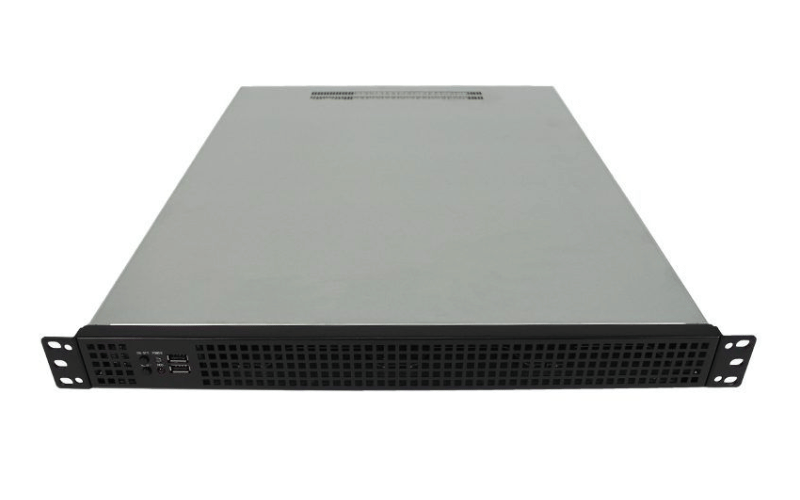
Planning a server purchase this year? The 1U rackmount form factor is still the go-to choice for data centers, MSPs, and enterprise IT teams that need high-density compute without burning through rack space. But the market is crowded, and comparing models across Dell, HPE, Lenovo, Supermicro, and others takes real time.
This 2026 server buying guide cuts through the noise. We cover 10 of the best 1U servers available today — from budget-friendly SMB options to high-core-count enterprise workhorses — with plain-language summaries of specs, positioning, and price ranges. By the end, you’ll know which models are worth shortlisting and which ones fit your specific use case.
Important note on pricing: All price figures in this article are indicative only. Actual costs vary by configuration, region, and reseller channel. Always request a formal quote from an authorized vendor before making any purchasing decision.
How We Chose These 10 1U Servers
Not every 1U server makes the cut. We focused on models that meet all of the following criteria:
- Current-generation processors: Intel Xeon Scalable or AMD EPYC support
- DDR5 memory: Now the mainstream standard for new deployments
- Storage flexibility: NVMe, SAS, or SATA hot-swap support
- Remote management: Dedicated out-of-band management (iDRAC, iLO, XCC, IPMI, or equivalent)
- Proven vendor support: Warranty coverage, service availability, and platform longevity
- Use case range: Models that collectively cover general compute, virtualization, edge, storage-intensive workloads, and HPC
The list spans from entry-level to flagship models, so there’s a suitable option for any budget or workload.
The 10 Best 1U Rackmount Servers for 2026
1. Dell PowerEdge R450
Best for: Mid-market enterprise computing and virtualization
The PowerEdge R450 is Dell’s mainstream 1U server for medium-sized businesses and enterprise data centers. It supports 4th Gen Intel Xeon Scalable processors and strikes a strong balance between compute performance, storage flexibility, and remote manageability — making it one of the most reliable general-purpose 1U options on the market.
Key specs and features:
- 1 or 2 x 4th Gen Intel Xeon Scalable processors
- Up to 16 DDR5 memory slots
- NVMe and SAS/SATA hot-swap drive support
- iDRAC9 out-of-band management with OpenManage integration
- Optional redundant power supply
Indicative pricing: Entry configurations start in the low thousands of dollars. Fully loaded builds with high-capacity SSDs can exceed $20,000. Confirm current pricing with Dell or an authorized partner.
Bottom line: The R450 is a safe, proven choice for enterprise IT teams that value a mature vendor ecosystem and broad software compatibility.
2. HPE ProLiant DL320 Gen11
Best for: Entry-level enterprise deployments on a budget
HPE’s DL320 Gen11 is a single-processor 1U server designed for buyers who need enterprise reliability without a high entry price. It supports Intel Xeon E or Xeon Scalable processors, brings DDR5 memory into the entry-level segment, and includes HPE’s iLO 6 for remote management.
Key specs and features:
- Single-processor design for lower power and cost
- DDR5 ECC memory support
- HPE iLO 6 remote management
- SFF hot-swap drive bays
- Compact chassis suited to space-constrained racks
Indicative pricing: Configurations typically range from approximately $1,300 to over $9,000, depending on processor, memory, and storage. Get a configured quote before comparing options.
Bottom line: A strong starting point for SMBs, branch offices, and teams building their first rack environment.
3. HPE ProLiant DL20 Gen11
Best for: Small businesses and remote or branch office locations
The DL20 Gen11 is one of HPE’s smallest 1U servers and is purpose-built for small businesses, retail environments, and edge deployments. It delivers enterprise-grade manageability and ECC memory protection at a low total cost of ownership.
Key specs and features:
- Intel Xeon E-2400 series processor support
- Up to 128 GB DDR5 ECC UDIMM memory
- Built-in 4-port 1GbE networking
- HPE iLO 6 remote management
- Minimal chassis footprint for low-density environments
Indicative pricing: Among the most accessible HPE server options. Price varies by configuration — check with HPE or an authorized partner for current figures.
Bottom line: The go-to choice for lightweight deployments at remote sites where simplicity and low cost matter most.
4. Lenovo ThinkSystem SR250 V3
Best for: Compact, cost-effective single-socket deployments
The SR250 V3 is Lenovo’s compact 1U single-socket server targeting small and mid-sized businesses. It supports Intel Xeon E-2400 and Xeon 6300 series processors and keeps things simple — solid reliability, front hot-swap storage, and Lenovo’s XClarity Controller for remote access.
Key specs and features:
- Intel Xeon E-2400 / Xeon 6300 single-socket processor support
- 43mm tall chassis, approximately 498mm deep
- Front hot-swap drive bays
- Lenovo XClarity Controller (XCC) out-of-band management
- Front USB 2.0 and USB 3.2 ports for on-site access
Indicative pricing: Entry-to-mid price range. Configuration choices create significant price variation. Contact Lenovo or an authorized partner for an accurate quote.
Bottom line: A popular first rack server for SMBs that need dependable enterprise features without a large upfront investment.
5. Lenovo ThinkSystem SR630 V3
Best for: High-density dual-socket compute in a 1U footprint
The SR630 V3 is Lenovo’s flagship 1U dual-socket server. It supports 5th Gen Intel Xeon Scalable processors and is built for demanding workloads — large-scale virtualization, enterprise databases, and compute-intensive applications that benefit from two full processor sockets packed into a single rack unit.
Key specs and features:
- Dual 5th Gen Intel Xeon Scalable processor support
- High-capacity DDR5 memory
- NVMe and SAS hot-swap storage
- XClarity Controller remote management
- PCIe Gen5 expansion for future-ready connectivity
Indicative pricing: As a high-performance dual-socket platform, pricing is higher than single-socket options. Quotes vary significantly based on processor and memory configuration.
Bottom line: The right pick for mid- to large enterprises that need maximum compute density in a 1U chassis, especially for large VM environments or enterprise databases.
6. Supermicro SYS-111C-NR
Best for: Cloud data centers and maximum core-count deployments
Built on Supermicro’s X13 platform, the SYS-111C-NR supports 4th Gen Intel Xeon Scalable processors with up to 60 cores and up to 4 TB of DDR5 ECC RDIMM memory. Its CloudDC design is optimized specifically for hyperscale and high-density cluster environments.
Key specs and features:
- Up to 60-core 4th Gen Intel Xeon Scalable support
- Up to 4 TB DDR5 ECC RDIMM (4800/4400 MT/s)
- Dense 1U design suited to large cluster deployments
- PCIe expansion capabilities
- IPMI out-of-band management
Indicative pricing: X13 1U systems from Supermicro start at approximately $4,893 for base configurations. Higher-spec builds cost considerably more. Verify pricing with Supermicro or an authorized channel partner.
Bottom line: Ideal for cloud providers and data center operators that need to squeeze the most compute and memory into every rack unit.
7. ASUS RS300-E12 Series
Best for: SMB workloads that need proven stability and easy management
The RS300-E12 series runs on Intel’s C262 enterprise chipset and supports Intel Xeon E-2400 and Xeon 6300 series processors. ASUS has positioned it as a reliable, no-frills 1U server that hits a competitive price-to-performance ratio for small and mid-sized workloads.
Key specs and features:
- Intel Xeon E-2400 / Xeon 6300 processor support
- Intel C262 enterprise chipset
- ECC memory for improved data integrity
- ASUS ASMB10-iKVM remote management
- Well-suited to web hosting, light virtualization, and general enterprise applications
Indicative pricing: Mid-range positioning. Contact an ASUS authorized reseller for current configuration pricing.
Bottom line: A solid option for SMB IT buyers who want brand reliability and ECC memory protection without overspending.
7. ASUS RS300-E12 Series
Best for: AMD EPYC-based deployments where cost efficiency is a priority
The R113-C10 runs on AMD EPYC 4005/4004 series processors and is compatible with Ryzen 9000/7000 series processors. For buyers who want AMD’s core-count-per-dollar advantage alongside enterprise ECC memory support, this is one of the more accessible 1U options available.
Key specs and features:
- AMD EPYC 4005/4004 and Ryzen 9000/7000 processor support
- Dual-channel DDR5 ECC/Non-ECC UDIMM, 4 DIMM slots
- Dual 1GbE ports (Intel I210-AT)
- Two 2.5GbE ports
- Compact chassis: 430 x 43.5 x 393.2 mm
Indicative pricing: AMD platform pricing is typically lower than equivalent Intel configurations. Contact GIGABYTE’s authorized channel for accurate quotes.
Bottom line: The right choice for cost-focused buyers, developers, and SMBs that want AMD’s memory bandwidth and core efficiency with enterprise ECC support.
9. Inspur NF5180M5
Best for: Enterprise deployments in Asia-Pacific markets
The Inspur NF5180M5 is widely deployed across government, finance, and manufacturing sectors in China and the broader APAC region. Inspur’s main differentiator is localized support, regional compliance alignment, and procurement advantages for organizations operating within Chinese regulatory frameworks.
Key specs and features:
- 4th and 5th Gen Intel Xeon Scalable processor support
- Enterprise-grade storage expansion with multiple RAID controller options
- Full BMC out-of-band management
- Localized technical support and service coverage
- Strong fit for regulated industries with domestic procurement requirements
Indicative pricing: Primarily sold through Chinese distribution channels. Pricing varies based on configuration and volume — contact Inspur directly or through a regional authorized partner.
Bottom line: The dominant choice for APAC-focused enterprises and government agencies with local service and compliance requirements.
10. Supermicro X13 Dual-Socket 1U (SYS-121H Series)
Best for: HPC and AI inference, where performance density is the top priority
The SYS-121H series is Supermicro’s dual-socket flagship in the 1U form factor. Supporting two 4th or 5th Gen Intel Xeon Scalable processors with PCIe Gen5 expansion, it delivers extreme compute density in the smallest possible chassis — built for HPC clusters, AI inference edge nodes, and enterprise environments that need maximum performance per rack unit.
Note: The SYS-121H family includes multiple sub-models. The details below reflect the platform’s general capabilities. Check Supermicro’s official QuickSpecs for the specific model you’re evaluating.
Key specs and features:
- Dual 4th/5th Gen Intel Xeon Scalable processor support
- High-capacity DDR5 ECC RDIMM memory
- Multiple PCIe Gen5 expansion slots
- Optional high-speed networking (25GbE/100GbE configurations available)
- Designed for high-density compute clusters and AI inference pipelines
Indicative pricing: Dual-socket high-performance configurations command a premium. Costs depend on processor model, memory, and storage choices. Request a formal quote from Supermicro or an authorized partner.
Bottom line: Best suited to HPC teams, AI infrastructure builders, and large-scale data center operators that need peak dual-socket performance in a single rack unit.
1U Server Comparison Table
| Model | Processor Platform | Max Memory | DDR5 | Management | Best Use Case | Price Tier |
|---|---|---|---|---|---|---|
| Dell PowerEdge R450 | Intel Xeon Scalable Gen4 | High | ✅ | iDRAC9 | General compute / virtualization | Mid–High |
| HPE ProLiant DL320 Gen11 | Intel Xeon E / Scalable | Mid | ✅ | iLO 6 | Entry-level / SMB | Entry–Mid |
| HPE ProLiant DL20 Gen11 | Intel Xeon E-2400 | 128 GB | ✅ | iLO 6 | Small business/edge | Entry |
| Lenovo ThinkSystem SR250 V3 | Intel Xeon E-2400 / 6300 | Mid | ✅ | XCC | SMB general-purpose | Entry–Mid |
| Lenovo ThinkSystem SR630 V3 | Intel Xeon Scalable Gen5 (2S) | High | ✅ | XCC | High-density compute / virtualization | Mid–High |
| Supermicro SYS-111C-NR | Intel Xeon Scalable Gen4 | 4 TB | ✅ | IPMI | Cloud / high core count | Mid–High |
| ASUS RS300-E12 | Intel Xeon E-2400 / 6300 | Mid | ✅ | ASMB10-iKVM | SMB / light virtualization | Entry–Mid |
| GIGABYTE R113-C10 | AMD EPYC 4005/4004 / Ryzen | Mid | ✅ | BMC | Value AMD platform | Entry |
| Inspur NF5180M5 | Intel Xeon Scalable Gen4/5 | High | ✅ | BMC | APAC enterprise/government | Regional pricing |
| Supermicro SYS-121H (X13 2S) | Intel Xeon Scalable Gen4/5 (2S) | High | ✅ | IPMI | HPC / AI inference | High |
All pricing is indicative. Actual costs vary by configuration, region, and reseller. Price tiers are approximate: Entry = ~$1,000–$3,000 | Mid = ~$3,000–$8,000 | High = $8,000+.
Which 1U Server Should You Buy? Recommendations by Use Case
For General Enterprise Computing and Virtualization
Top picks: Dell PowerEdge R450, Lenovo ThinkSystem SR630 V3
Both support dual-socket configurations, large DDR5 memory pools, and full-featured remote management — the baseline requirements for running VMware vSphere or Microsoft Hyper-V at scale. The R450 offers a broader service network and a more mature ecosystem. The SR630 V3 edges ahead on raw compute density with 5th Gen Xeon support.
For SMBs and Branch Office Deployments
Top picks: HPE ProLiant DL20 Gen11, Lenovo ThinkSystem SR250 V3, ASUS RS300-E12
All three are single-socket, low-power designs that keep costs in check without sacrificing ECC memory protection or remote management capability. These are the right models for organizations that don’t need dual-socket performance but do need reliability and proper out-of-band access.
For Storage-Intensive Workloads (Databases, NAS, Backup)
Top picks: Dell PowerEdge R450 (multi-bay config), Supermicro X13 series
Storage-heavy deployments require drive-bay count, NVMe slot availability, and robust RAID controller options. The R450’s multi-bay configurations and Supermicro’s highly configurable 1U chassis both serve this well. Always check the specific storage controller spec sheet before finalizing a configuration.
For HPC and AI Inference Workloads
Top picks: Supermicro SYS-111C-NR, Supermicro SYS-121H, Lenovo SR630 V3
These workloads demand high core counts, high memory bandwidth, and PCIe Gen5 expansion. Supermicro’s X13 platform is purpose-built for density-first deployments. The SR630 V3 is also a common choice in HPC cluster builds where Lenovo’s service footprint carries weight.
For Value-First and Asia-Pacific Procurement
Top picks: GIGABYTE R113-C10, Inspur NF5180M5, HPE ProLiant DL320 Gen11
If budget efficiency is the primary driver, GIGABYTE’s AMD EPYC platform typically delivers more cores per dollar than equivalent Intel configurations. Inspur is the clear choice for organizations operating within Chinese procurement frameworks. The DL320 Gen11 bridges both needs — good value with HPE’s global support structure.
Practical Checklist Before You Buy
Run through these questions before committing to any configuration:
- Have you defined your primary workload? Virtualization, relational databases, web serving, and AI inference have very different hardware profiles. Spec your server around the actual workload, not a general estimate.
- Have you compared multiple reseller quotes? Direct vendor pricing, authorized partner quotes, and the secondary market can differ by 30% or more for the same model.
- Have you confirmed warranty terms and on-site service coverage? This matters most for remote or distributed deployments where self-service isn’t practical. Verify response SLAs and parts availability by region.
- Does the platform support DDR5 and PCIe Gen5? Both are now mainstream in enterprise 1U servers. Choosing a platform that supports them extends your hardware lifecycle.
- What’s included in the quote? Rail kits, cable management arms, OS licenses, additional NICs, and redundant PSUs are frequently sold separately. A low headline price can grow significantly once accessories are added.
FAQ: 1U Rackmount Servers
When does it make sense to choose a 1U server over a 2U?
When rack density matters most. If you need to deploy a large number of nodes in a fixed rack count, 1U maximizes your compute per unit of space. For workloads that need more drive bays, larger PCIe expansion, or more thermal headroom, 2U is the better fit. Keep in mind that 1U servers typically run louder fans to manage heat in a tighter chassis.
Can a 1U rackmount server support a GPU?
Yes, but with real constraints. The 1U form factor limits you to low-profile GPU options or specific vendor-validated cards. For GPU-intensive workloads — model training, large-scale inference, or rendering — a 2U or 4U chassis gives you far more flexibility. Some Supermicro 1U models do offer limited GPU expansion, but the selection is narrow.
What’s the practical difference between Intel Xeon and AMD EPYC in a 1U server?
Intel Xeon has a deeper software ecosystem and broader enterprise validation coverage, which matters for legacy or specialized workloads. AMD EPYC typically delivers more cores and higher memory bandwidth per dollar at similar price points. The right choice depends on your existing infrastructure, your software stack’s validation requirements, and whether raw core count or ecosystem depth is the bigger priority.
How do I evaluate the total cost of a 1U server?
Look beyond the purchase price. Factor in the cost of any accessories not included in the base quote (rails, cables, OS license), warranty tier, service response SLA, power consumption over the expected service life, and the availability of local support in your region. A server with a lower headline price can easily carry a higher TCO once all of these are included.
Conclusion: Finding the Right 1U Server for 2026
The 1U rackmount server market in 2026 is broader and more capable than ever. Dell, HPE, and Lenovo lead on ecosystem maturity and global service coverage. Supermicro stands out for density-first and custom-configured deployments. GIGABYTE and ASUS offer strong value on AMD platforms for cost-sensitive buyers. Inspur remains the clear choice for APAC-focused enterprise procurement.
There’s no universal best 1U server — only the best fit for your specific environment, workload, and budget. Use the comparison table above to narrow your options to two or three candidates, then request formal quotes from authorized channels. Where your deployment scale warrants it, validate with a proof of concept before committing to a larger rollout.
All product specifications and pricing information in this article are based on publicly available data and are provided for reference purposes only. Specifications and pricing are subject to change. Always verify with official vendor documentation or an authorized reseller before making purchasing decisions.
